
When to Repair vs Replace Your Leather Shoes and Boots - A Cobbler's Honest Guide
By Tamer Mourshed - Master Leather Craftsman, Lebanon Leather Work | Lebanon, NJ Read time: ~10 minutes
It happens the same way every September. You reach to the back of the closet, pull out the leather boots you wore all last winter, and notice something you definitely overlooked when you packed them away in April. A heel that's worn down to the rand. A sole starting to separate at the toe. A deep scuff along the vamp that no amount of polish is going to cover.
Your first instinct is to put them on the list - replace them this fall, pick something new.
Before you do that, spend ten minutes here. Because the vast majority of leather shoes and boots that people replace every year are fully repairable, often for less than a quarter of what a comparable pair would cost new. And a quality pair of leather shoes that has been properly repaired and maintained doesn't just survive the next season - it lasts another decade.
This guide gives you everything you need to make the right call: what a cobbler can actually fix, what genuinely can't be saved, how much each type of repair costs, and when replacement is the honest answer.
How Long Should Leather Shoes Actually Last?
The answer depends almost entirely on the quality of the leather and the construction method - not the price tag on the box.
Full-Grain and Top-Grain Leather: A Lifetime Investment
A well-made pair of full-grain leather shoes or boots, constructed with a Goodyear welt or a Blake stitch, should last decades with proper care and periodic professional maintenance. The sole can be replaced multiple times. The upper, if genuine full-grain leather, ages and develops character rather than deteriorating. A pair of quality leather boots from a reputable maker is genuinely a lifetime purchase for anyone willing to maintain them.
The key word is maintenance. Leather footwear that is conditioned regularly, stored correctly, and repaired promptly when something wears out will outlast five or six pairs of shoes bought in its price range from brands that use lower-grade materials and adhesive-only construction.
Lower-Grade and Synthetic Leather Shoes: Different Expectations
Shoes made from bonded leather, split leather, or synthetic materials behave very differently. The uppers are more susceptible to cracking, the adhesive bonding on the soles is less durable than welted construction, and the overall lifespan is typically 2–4 years under regular use regardless of how well you care for them.
For footwear in this category, the repair vs replace calculation is different - not because repair isn't possible, but because the cost of repair relative to the replacement cost and the remaining useful life changes the math. We'll cover that calculation in detail below.
If you're not sure which category your shoes fall into, our guide to leather types and grades covers every grade of leather with clear identification methods.
5 Things a Cobbler Can Fix That Most People Assume Are Gone Forever
This is where most people are surprised. Over two decades at our workshop in Lebanon, NJ, we've repaired shoes and boots that customers brought in convinced they were beyond saving. Most of them weren't.
1. Worn-Down or Fully Detached Soles
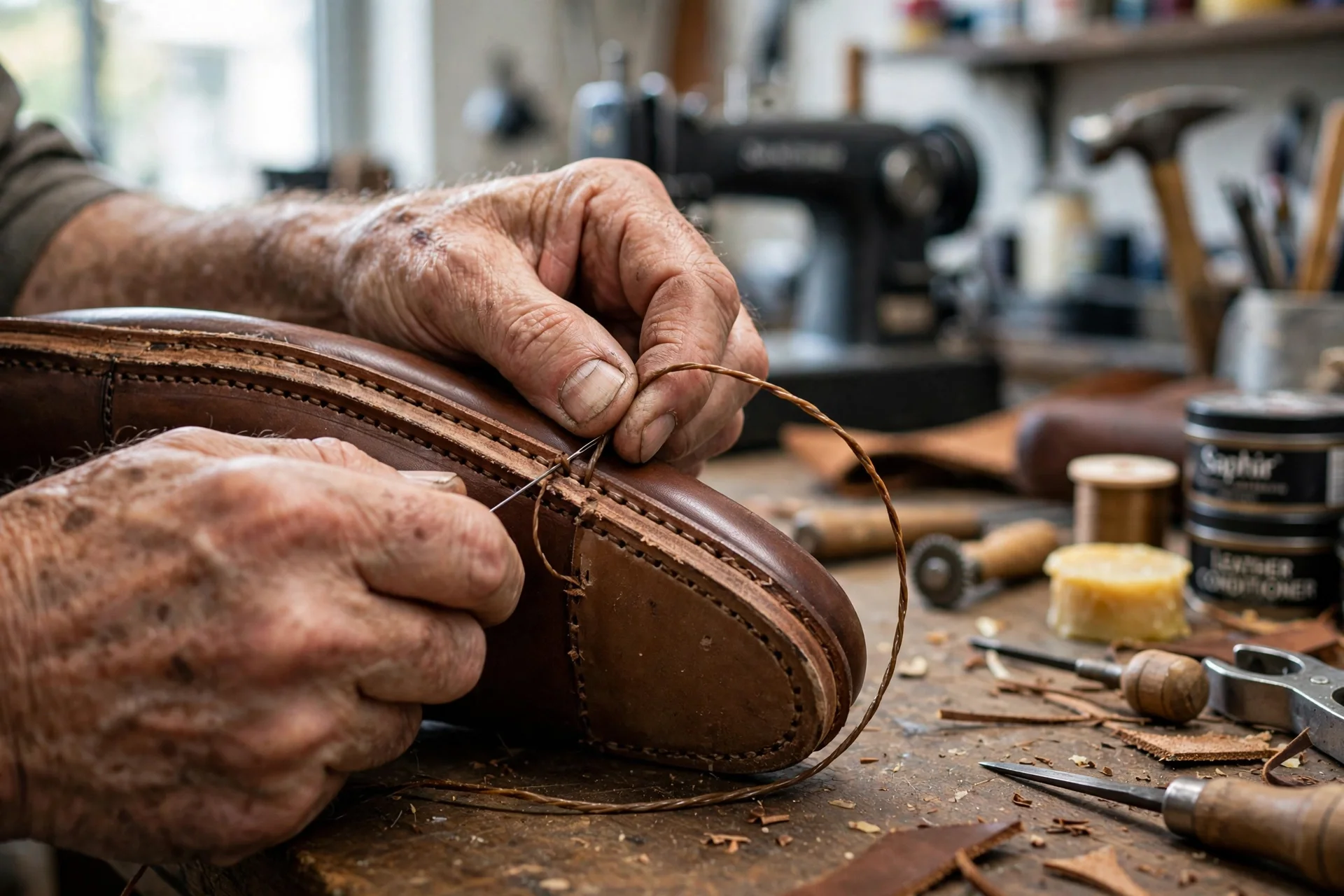
A sole that has worn through at the ball of the foot, separated at the toe, or detached completely along one side is one of the most common and most repairable conditions we see.
For welted shoes (Goodyear welt or Blake stitch construction), resoling is a straightforward process. The worn sole is removed, the welt is inspected and repaired if needed, and a new sole is stitched or bonded in place. The result is structurally identical to the original - the same repair method used when the shoe was manufactured.
For shoes built with adhesive-only construction, resoling is still possible using high-strength bonding compounds, though the attachment isn't as permanent as a welted resole. How long it holds depends on the shoe's construction and the conditions it's worn in.
A half-sole repair - where only the front half of the sole is replaced rather than the full sole - is also an option when the heel area is still in good condition. It's less expensive and appropriate for shoes where the wear is concentrated at the ball and toe.
2. Damaged or Collapsed Heels
Heel wear is the fastest type of damage on any shoe, because the heel strikes the ground with every step. Most leather shoes need a heel repair long before the rest of the shoe shows any significant wear.
Heel tips (the rubber or leather cap at the base of the heel stack) can be replaced quickly and inexpensively. A full heel replacement - where the entire stacked heel is rebuilt - is a larger job but well within the scope of professional repair for dress shoes, boots, and work footwear.
Heels that have been allowed to wear past the tip and into the heel stack itself need immediate attention. Once the stack begins to collapse unevenly, it puts stress on the upper and can start to distort the shape of the shoe. The longer this is left, the more complex the repair becomes.
3. Broken or Damaged Uppers
Cracks, tears, and scuffs on a leather upper are repairable in most cases, with the outcome depending on the severity and the quality of the leather.
Surface scuffs and minor scratches respond well to professional cleaning, conditioning, and color restoration. Deep scuffs that have removed the surface finish can be filled, re-finished, and color-matched to a result that is very difficult to see in normal use.
Tears and cuts in the upper are more involved - the repair requires cleaning the edges, bonding with a specialist adhesive, and finishing to blend the repair into the surrounding leather. On full-grain leather, this works well. On thinner or lower-grade leathers, the repair is more visible but still meaningfully extends the life of the shoe.
Cracks from dryness - the kind that develop across the vamp or toe box when leather hasn't been conditioned - can be filled and reconditioned when caught early. Left long enough, the cracks go through the full thickness of the leather and the upper loses its structural integrity, which is the point at which a repair becomes impractical.
4. Zipper, Buckle, and Hardware Failure
A broken zipper on a leather boot is one of the most common reasons people give up on footwear that is otherwise in excellent condition. It shouldn't be.
Zipper replacement on leather boots - where the old zipper track is carefully removed and a new one is stitched in along the original seam - is a standard cobbler repair. The result is indistinguishable from the original. Buckles, D-rings, eyelets, and other hardware can similarly be replaced when they corrode, break, or lose their function.
These are often the quickest and least expensive repairs we do, and they rescue footwear that most people assume is finished.
5. Staining, Scuffing, and Color Loss
Professional cleaning and color restoration can address a range of surface conditions that home polish and conditioner can't reach. Deep staining that has penetrated the leather surface, significant color loss from UV exposure or salt damage from winter roads, and uneven fading across the shoe can all be addressed with professional color restoration.
We use professional-grade leather pigments and dyes mixed to match your shoe's specific color, applied in thin coats that bond into the leather surface rather than sitting on top of it. The result holds through regular wear in a way that home shoe polish or spray colorant doesn't.
For guidance on what you can handle at home before bringing shoes in, our leather stain removal guide covers the safe approaches by stain type.
What Genuinely Cannot Be Repaired
Honesty matters here, because the right answer isn't always repair.
Upper leather that has cracked through its full thickness - when the leather has dried past the point of conditioning and the cracks run all the way through, the structural integrity of the upper is compromised. The shoe will continue to split regardless of surface treatment.
Midsoles that have delaminated in modern athletic or fashion construction - many contemporary shoes use foam midsoles bonded between an upper and an outsole. When this bond fails comprehensively and the midsole material itself has degraded or compressed beyond recovery, the repair doesn't hold.
Shoes where the upper has separated from the lasting board - if the leather upper has pulled away from the last across multiple areas and the internal structure has collapsed, a meaningful repair is generally not possible.
Bonded leather uppers with widespread peeling - the same material failure we described in our leather couch repair guide applies to footwear. Bonded leather that is peeling across the toe box and vamp cannot be restored - the polyurethane surface is failing across the whole piece.
If you're not sure which category your shoes fall into, bring them in. We'll tell you honestly within minutes.
The Repair vs Replace Decision: An Honest Framework
If the repair costs less than half of what you'd spend to replace the shoe with something of comparable quality - repair. Every time.
This is the rule of thumb that holds across almost every situation we see. Here's how to apply it.
When Repair Makes Clear Financial Sense
A pair of quality leather boots costs $250–$600 new. A full resole and heel replacement at a professional workshop costs $80–$140. That's 20–30% of the replacement cost, and the result is a boot that is structurally renewed - not just cosmetically improved.
At that math, even three or four repairs over the life of a quality pair of boots still costs less than buying a comparable replacement pair once. And the repaired boot that you've broken in over several seasons fits and performs better than any new boot you'd buy to replace it.
When the Calculation Changes
For lower-cost footwear - shoes that retailed under $100, were made with synthetic or bonded leather uppers, or were constructed with adhesive-only soles - the math is different. A $70 resole on a $90 shoe is a different decision than a $70 resole on a $400 boot.
Our honest advice in these situations: if the repair cost exceeds 50–60% of what you'd spend on a comparable replacement, and the shoe has other issues developing alongside the primary damage, replacement may be the more sensible call.
The Quality Lesson Worth Taking Forward
If you find yourself repeatedly replacing lower-cost shoes every 2–3 years, the cumulative spend over a decade almost always exceeds what you would have paid for a quality pair maintained with periodic professional repair. It's not a lecture - it's just the math, and it's worth knowing.
How Much Does Shoe and Boot Repair Cost? Honest Pricing by Repair Type
Pricing varies by workshop, material costs, and the specific condition of the shoe. These are representative ranges based on our work in Lebanon, NJ - enough to give you a genuine sense of what to budget before you walk in anywhere.
| Repair Type | Typical Range | Notes |
|---|---|---|
| Heel tip replacement | $15–$30 per pair | Quick turnaround, most common repair |
| Full heel replacement | $40–$75 per pair | Includes rebuilding the heel stack |
| Half-sole repair | $45–$85 per pair | Replaces ball-to-toe section only |
| Full resole (adhesive) | $65–$100 per pair | Adhesive-construction shoes |
| Full resole (welt stitch) | $90–$150 per pair | Goodyear or Blake welted boots/shoes |
| Zipper replacement | $40–$80 per zipper | Depends on zipper length and boot construction |
| Upper crack repair | $30–$70 | Depends on size and severity |
| Color restoration (partial) | $35–$65 | Single area or panel |
| Color restoration (full shoe) | $60–$120 per pair | Full re-dye and finish |
| Deep cleaning and conditioning | $20–$40 per pair | Standard maintenance service |
These ranges are for genuine leather footwear in repairable condition. If there is uncertainty about what your shoes need, a free assessment resolves that before any commitment is made.
What Professional Shoe and Boot Repair Looks Like at Lebanon Leather Work
When shoes come into our Lebanon, NJ workshop, the first thing we do is assess the whole shoe - not just the problem that brought it in. It's common for someone to bring in a boot for a resole and for us to notice that the upper is starting to dry out, or that the welt stitching is fraying in a second area. Catching everything at once means one visit instead of three.
What We Look at First
We examine the construction method (welted, Blake, or adhesive), the condition of the welt and insole board, the leather grade and current moisture level of the upper, the sole material and wear pattern, and the condition of any hardware, stitching, or lining. This takes a few minutes and gives us a complete picture.
The Repairs We Do Most Often
Resoling and heel work make up the majority of our shoe repair volume - boots coming back for their second or third resole, dress shoes brought in with heels worn to the rand, work boots with soles that have separated at the toe from heavy use. Color restoration is a close second - shoes that have faded significantly, been marked by road salt, or developed scuffs that go past the surface finish.
Zipper repairs on leather boots are a consistent part of our work, particularly in the fall when people pull out last year's boots and find the zipper that started sticking in February has now given up entirely.
We also handle leather reconditioning as a standalone service - bringing dried-out, stiff leather back to flexibility before damage sets in. This is the cheapest and highest-value thing you can do for quality leather shoes. Prevention costs a fraction of repair.
Turnaround Time
Most repairs are ready in 3–5 business days. Resoling work that requires welting or significant reconstruction is typically 5–7 business days. We give you a clear timeline when you drop the shoes off, and we contact you as soon as the work is done.
Walk-ins are welcome at our Lebanon, NJ workshop. Bring your shoes in and we'll tell you exactly what they need and what it will cost - no charge for the assessment. See our shoe and boot repair service →
How to Make Repaired Shoes Last Much Longer
A fresh resole or repair is an investment. Getting the most out of it comes down to a few consistent habits.
Condition the Leather Regularly
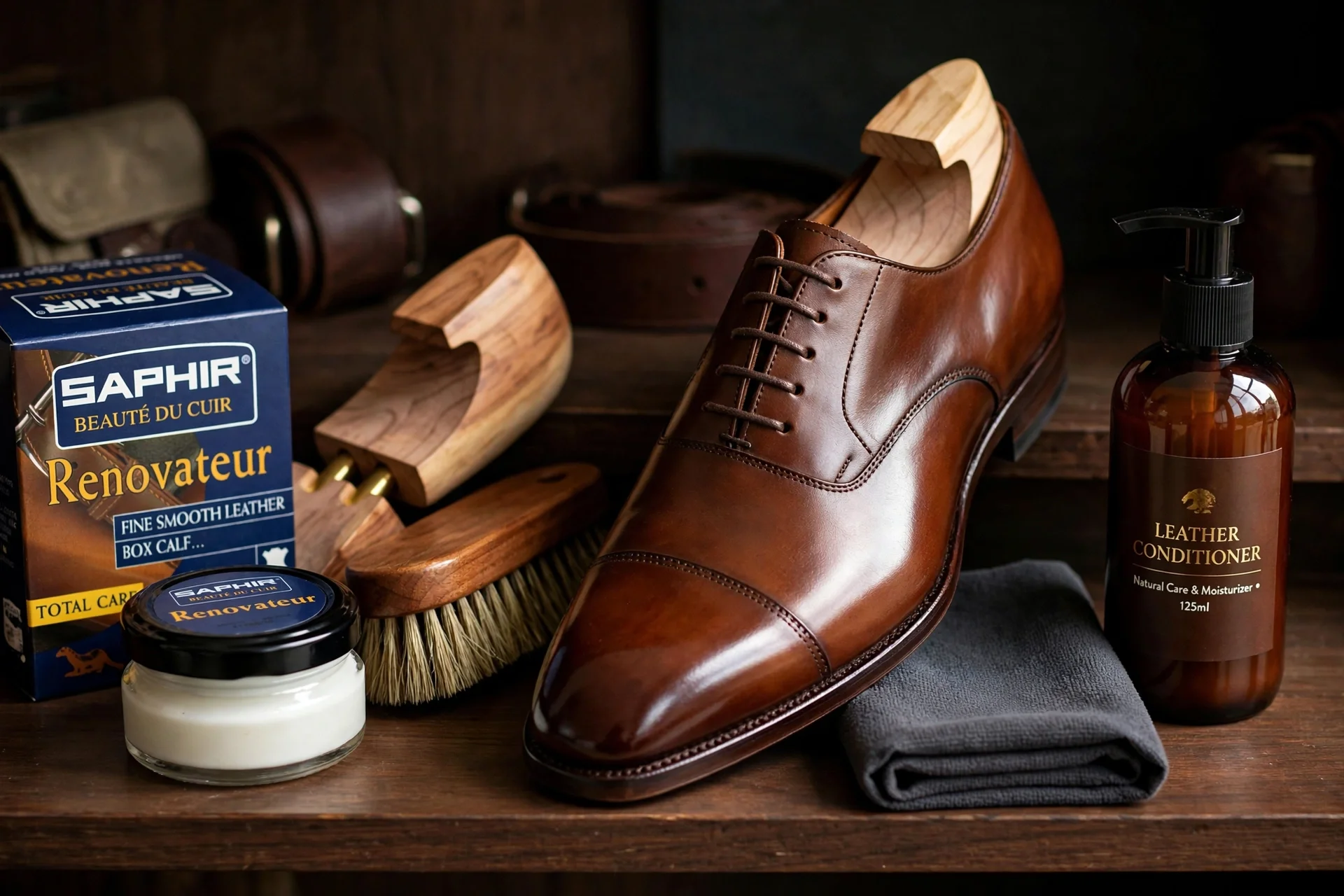
Leather that dries out cracks. Cracks turn into tears. Tears end the life of the upper. A quality leather conditioner applied every 3–4 months - more frequently for shoes worn in dry or winter conditions - keeps the fiber structure flexible and resistant to cracking.
Avoid shoe polishes that contain silicone, which sits on the surface and prevents proper conditioning. Use a dedicated leather conditioner first, then a wax-based polish over the top if you want the shine.
Rotate Your Footwear
Leather needs time to dry between wears. Shoes worn every day without a day's rest retain moisture from foot perspiration, which breaks down the internal structure over time. Rotating between two or three pairs extends the life of each pair significantly - and gives you more variety, which most people consider a reasonable bonus.
Store Leather Shoes Correctly
Shoes stored without shape support collapse inward over time, which creases the upper permanently and stresses the leather at the crease lines. Wooden shoe trees - cedar, ideally, which also absorbs moisture and odor - maintain the shape of the last when the shoes aren't being worn. For boots, boot shapers or rolled magazines in the shaft prevent the leather from creasing and flopping over in storage.
Avoid storing leather footwear in plastic bags or airtight containers. Leather needs to breathe, and sealed storage traps moisture that promotes mold and mildew.
Ready to See What Your Shoes Are Worth Saving?
Bring your boots or shoes into our workshop in Lebanon, NJ before boot season is in full swing. We'll assess them, tell you what they need, give you a straight quote, and you decide whether to proceed. No pressure, no charge for the assessment.
We've been doing this work since 2003. Quality leather footwear deserves better than the bin, and most of the time - the repair is simpler and less expensive than you expect.
Workshop: 1271 US-22, Lebanon, NJ 08833
Email: lebanonleatherwork@gmail.com
Phone: (551) 333-8186
Instagram: @lebanonleatherworkllc
Contact us for a free assessment →
Frequently Asked Questions
How long should leather shoes last?
A well-made pair of full-grain leather shoes or boots, built with welted construction and properly maintained, should last 20–30 years or more with periodic professional repair. The sole is replaceable multiple times. The upper, if genuine full-grain leather, develops character rather than deteriorating. Lower-grade leather shoes and synthetic leather footwear have a significantly shorter lifespan regardless of care - typically 2–5 years.
Can a cobbler fix any leather shoe
Most leather shoes in genuine leather with repairable damage - worn soles, damaged heels, cracked uppers, broken zippers — can be professionally repaired. Shoes with uppers that have cracked through their full thickness, bonded leather that is peeling across the whole shoe, or internal structural failure that has collapsed the lasting board are generally beyond repair. A 5-minute assessment at our workshop tells you clearly which category your shoes fall into.
How much does it cost to resole leather boots?
Resoling leather boots costs between $65 and $150 at most professional workshops, depending on the sole material, the construction method, and the scope of the work. Goodyear-welted and Blake-stitched boots sit at the higher end of that range because the work is more involved. Adhesive-construction shoes are at the lower end. To put it in context, a comparable pair of quality leather boots costs $250–$600 or more to replace - resoling typically costs less than 30% of that.
What is the difference between a half-sole and a full resole?
A half-sole repair replaces only the front section of the sole - from the ball of the foot to the toe - leaving the heel section intact. It's the right choice when the heel area is still in good condition and the wear is concentrated at the ball and toe, which is common in dress shoes and lighter everyday footwear. A full resole replaces the entire sole from heel to toe and is appropriate for heavier wear or when the sole has deteriorated across its full length.
How do I know if my shoes are worth repairing?
If the repair cost is less than half of what you'd spend replacing the shoe with something of comparable quality, repair is almost always the right call. For quality leather shoes in the $200–$600 range, professional repair is consistently the better financial decision. For lower-cost footwear, the calculation depends on the extent of the damage - bring them in and we'll give you an honest answer rather than a default recommendation to repair.
How long does shoe repair take at Lebanon Leather Work?
Most repairs are ready in 3–5 business days. Resoling work that involves welting, significant reconstruction, or color restoration may take 5–7 business days. We give you a clear timeline at drop-off and contact you as soon as the work is complete. Walk-ins are welcome - no appointment needed.
Do you repair all types of leather footwear?
Yes. We work on dress shoes, leather boots, work boots, riding boots, western boots, leather sandals, and leather sneakers with genuine leather uppers. We also repair leather bags and accessories that come in alongside footwear see our full range of leather repair services for the complete list.
Do you offer shoe and boot repair in New Jersey?
Yes. Our workshop is in Lebanon, NJ (1271 US-22, Lebanon, NJ 08833) and we serve customers across Hunterdon County and the wider New Jersey area. Walk-ins are welcome during business hours - bring your shoes in for a free assessment, no appointment required.