
How to Safely Remove Stains from Leather: A Step-by-Step Guide
Leather is beautiful, durable, and full of character. But because it is a natural, porous material (just like our own skin), it easily absorbs spills, oils, and ink. Figuring out how to safely remove a stain without ruining your favorite bag, jacket, or sofa can be stressful.
This guide skips the risky home remedies and walks you through the safe, proven methods professionals use to treat stains without damaging the leather.
Step 1: Know Your Leather Before You Start
Before a single drop of cleaner touches your item, you need to know what kind of leather you are dealing with. The success of removing a stain comes down to this one simple detail.
Finished Leather (Also called Protected or Pigmented): This leather has a protective color coating on top. If you drop a little water on it, the water will bead up and sit on the surface. This guide is designed for finished leather.
Unfinished Leather (Aniline, Suede, or Nubuck): This leather has no protective coating. A drop of water will soak in immediately and turn dark. Stop here. If you have a stain on unfinished leather, take it to a professional. Cleaning it at home usually makes the stain spread or darkens the leather permanently.
Assessing the Damage
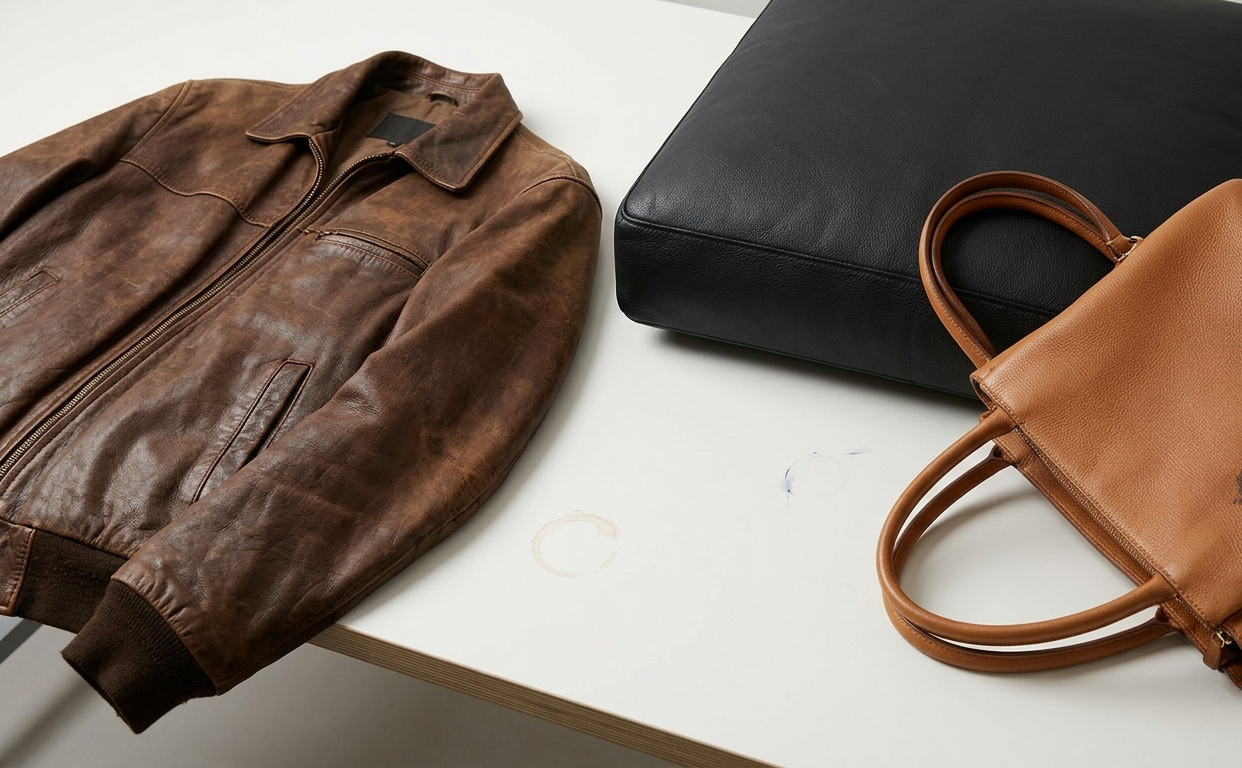
The first step is simply taking a close look at the problem. In the image below, you can see a variety of leather goods in good lighting. You need to clearly identify the issue-whether it's a water ring on a tan bag, a pen mark, or a dark grease spot-so you know exactly which method to use.
Step 2: The Basics of Gentle Cleaning
The golden rule of leather care is to start with the gentlest method possible. Scrubbing hard is the worst thing you can do; it ruins the texture and strips away the leather's color. Your goal is to gently lift the stain out, not scrub it deeper in.
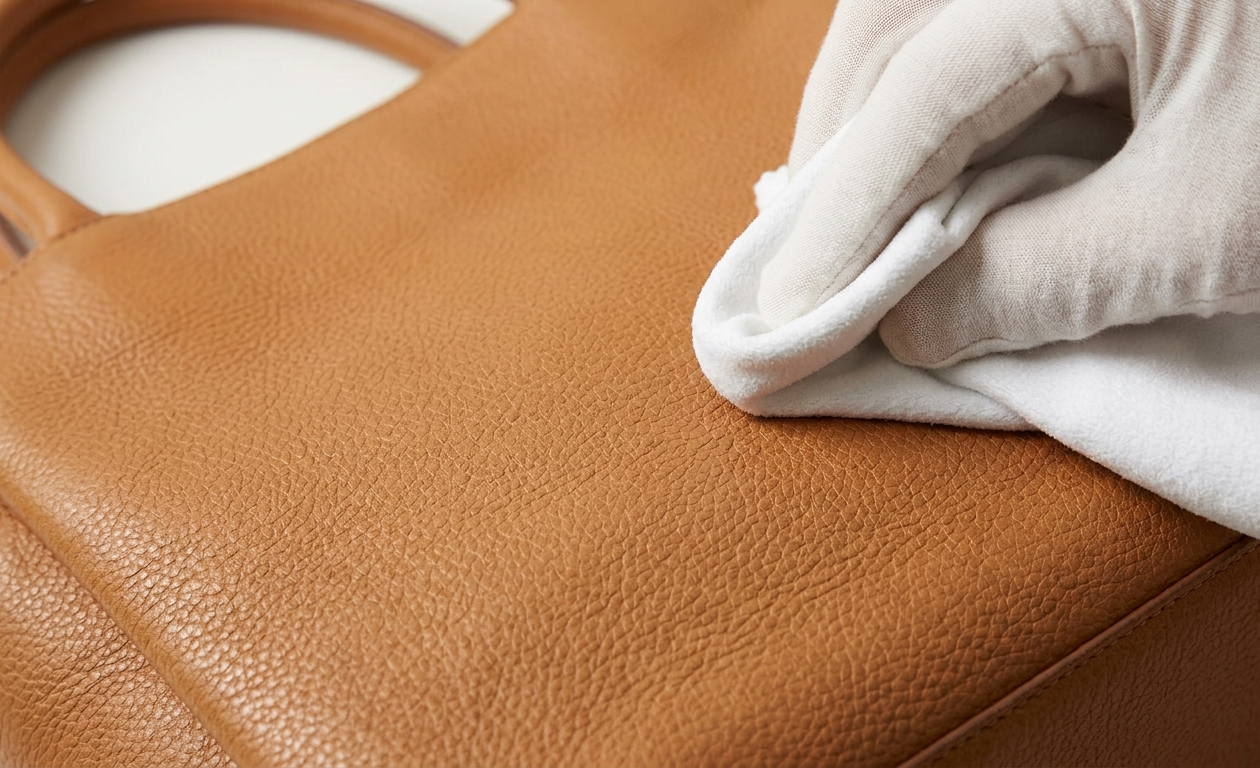
The Cleaning Method:
Dust it off: Wipe the area with a clean, dry microfiber cloth to remove any loose dirt or dust. You don't want to accidentally scratch the leather while rubbing.
Use the right cleaner: Use a gentle, dedicated leather cleaner. Avoid dish soap or household sprays, as these are too harsh and will dry the leather out until it cracks.
How to wipe: Apply the cleaner to a soft, white cloth (never spray directly onto the leather). Always test it on a hidden spot first to make sure the color doesn't rub off. Once you know it's safe, gently dab the stained area, working from the outside of the stain toward the center so it doesn't spread.
Step 3: Tackling Stubborn Stains
When basic leather cleaner isn't enough, you need a specific approach for the type of stain you're fighting.
1. Removing Ink Stains (Pens and Markers)
Ink is tough because it dries fast and dyes the leather. Standard cleaners won't touch it. You will need a cotton swab and either rubbing alcohol or a specialized leather ink remover.
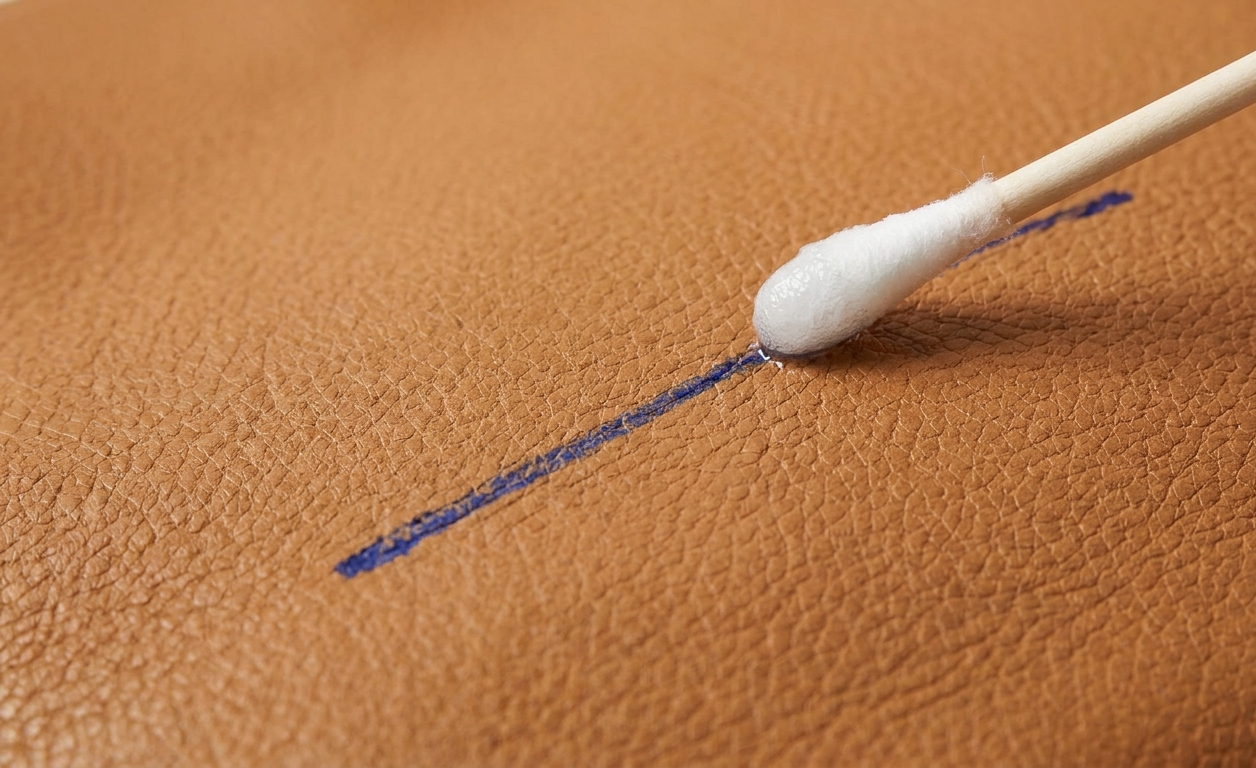
How to do it:
Be precise: Dip a cotton swab into the alcohol.
Roll, don't rub: Gently roll the wet cotton swab exactly over the ink line. Do not press hard or scrub back and forth. You want the ink to transfer up onto the cotton swab. As soon as the swab gets dirty, switch to a clean one so you don't wipe the ink back onto the bag.
2. Lifting Grease and Oil Stains
Oil stains are tricky because they soak deep into the leather. Liquid cleaners often just smear the grease around. Instead, you need a dry powder to soak it up like a sponge.
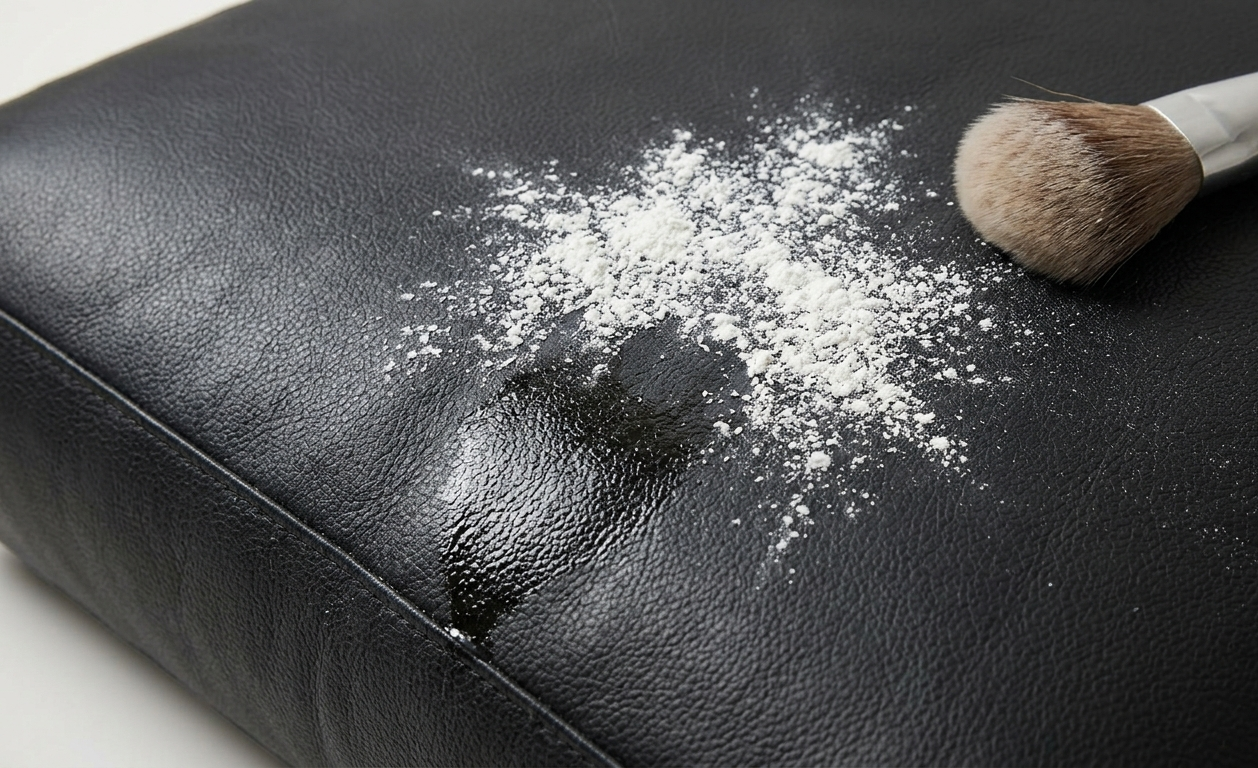
How to do it:
Wipe the surface: Gently dab away any wet oil with a dry tissue.
The Powder Method: Cover the entire grease spot with a thick pile of cornstarch or baby powder.
Wait it out: Let the powder sit there for several hours, or even overnight. The dry powder will slowly pull the oil out of the leather.
Clean up: Gently brush the powder away with a soft brush. If the stain is lighter but still there, repeat the process with fresh powder until the oil is completely gone.
Step 4: Condition and Protect (Crucial Final Step)
After you remove a stain-especially if you used alcohol or powder-the leather in that spot will be very dry. If you leave it like this, it can crack over time.
Moisturize: Rub a high-quality leather conditioner into the cleaned area (and ideally the whole item). Think of this like applying lotion to your hands after washing them. It restores the moisture and keeps the leather soft.
Protect: Once the conditioner is completely dry, you can use a leather protector spray. This creates an invisible shield that makes future spills bead up, making your next cleanup much easier.
Your Turn at the Workbench
Taking care of leather doesn't have to be intimidating once you know the right steps. Every piece of leather is a little different, and finding the right fix can sometimes take a bit of patience.
Have you successfully rescued a favorite jacket or bag, or are you currently dealing with a stain that won't budge?
Drop a comment below with your questions or success stories. Let’s figure out the best solutions together.