
Leather Couch Peeling? Here's Why It Happens - and What You Can Actually Do About It
By Tamer Mourshed - Master Leather Craftsman, Lebanon Leather Work | Lebanon, NJ Read time: ~11 minutes
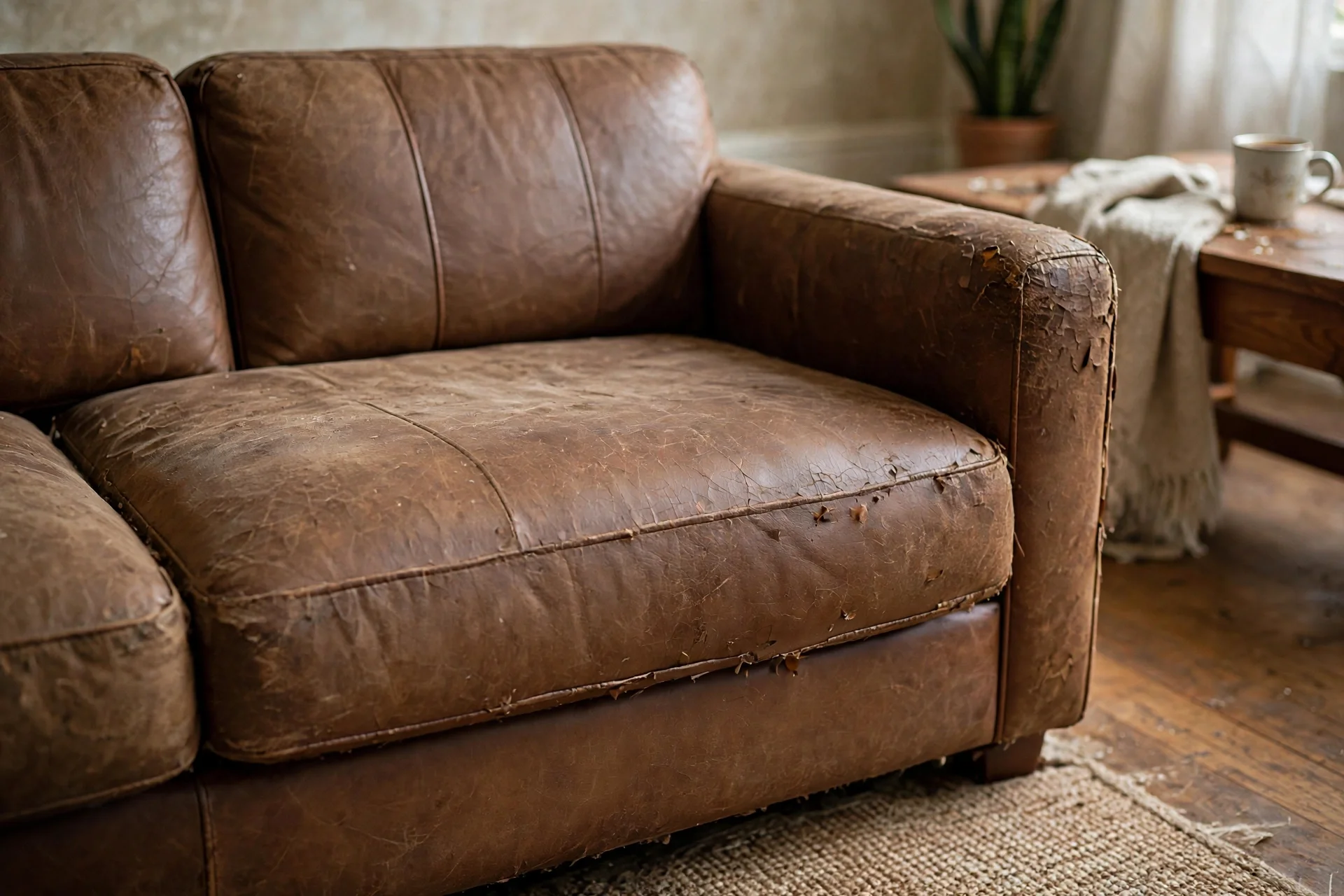
You noticed it on a Tuesday morning, probably while sitting down with your coffee. A small flake near the armrest. Then another. Then you look closer and realize the entire corner is lifting - the surface bubbling and coming away in strips.
Your leather couch is peeling. And your first instinct is that it's ruined.
It's usually not. But what you do in the next few weeks matters a great deal. Peeling leather follows a predictable path: small damage gets bigger fast, and the point at which a repair goes from simple to complicated moves quickly once deterioration starts.
After more than two decades repairing leather furniture at our workshop in Lebanon, NJ, we've seen this situation hundreds of times. We've also seen every home remedy imaginable tried on it - some harmless, some that genuinely made the repair harder. This guide gives you the honest picture: why it's happening, what you can do yourself, and when it makes sense to hand it to a professional.
Why Is Your Leather Couch Peeling? (The Actual Causes)
Before you spend a dollar on any product or any repair, you need to understand what's actually failing - because the answer changes everything.
You Probably Have Bonded Leather, Not Real Leather
This is the most common cause of peeling sofas, by a significant margin.
Bonded leather is not leather in the traditional sense. It's made from shredded leather scraps and dust, mixed with a polyurethane binder and pressed onto a fabric backing. The result looks like leather. It feels like leather - at first. And it's often sold as leather, or as "genuine leather," which is technically true in the loosest possible sense.
The problem is what happens after 3–5 years of regular use. The polyurethane surface layer begins to separate from the fabric backing. When it goes, it goes in sheets and flakes - not the gradual cracking you'd see in real leather, but a peeling failure that accelerates once it starts.
You cannot stop bonded leather from peeling once the process begins. You can slow it. You can improve the appearance. But the material does not have the structural integrity needed to fully reverse this kind of failure.
If your sofa is peeling in large sheets or flaking off in pieces, bonded leather is the most likely explanation. We cover the full hierarchy of leather grades in our guide to leather types, which will help you identify exactly what you're working with.
Your Genuine Leather Is Cracking from Dryness and Neglect
Real leather - full-grain, top-grain, or corrected-grain - doesn't peel the way bonded leather does. But it does crack. And if the cracking has been left untreated long enough, the surface can start to flake away at the crack lines, which people sometimes mistake for peeling.
Leather is a natural material that needs moisture. Without regular conditioning, the fibers dry out, lose flexibility, and eventually crack under the stress of normal use - the weight of people sitting, the repeated flexion of cushions, the friction of everyday contact. In dry climates, near radiators, or in rooms that get a lot of direct sunlight, this process happens faster.
The good news: genuine leather that is cracking from dryness is one of the most repairable conditions we work with. If caught before the cracks become structural, deep conditioning and surface reconditioning can restore a great deal of the original look and feel.
UV Exposure, Heat, and Age Accelerate Both Failure Modes
Whether your sofa is bonded leather or genuine leather, certain conditions speed up the damage:
Direct sunlight - UV radiation degrades the surface coating on top-grain and corrected-grain leather and accelerates the polyurethane failure in bonded leather.
Heat sources - Sofas placed near radiators, heating vents, or fireplaces lose moisture faster than the leather can naturally replace it.
Low humidity - Especially common in winter when central heating runs constantly. Leather in a dry house age faster.
Lack of conditioning - The most controllable factor. Leather that is never conditioned will fail earlier, regardless of grade.
Quick Self-Diagnosis: What Type of Leather Do You Have?
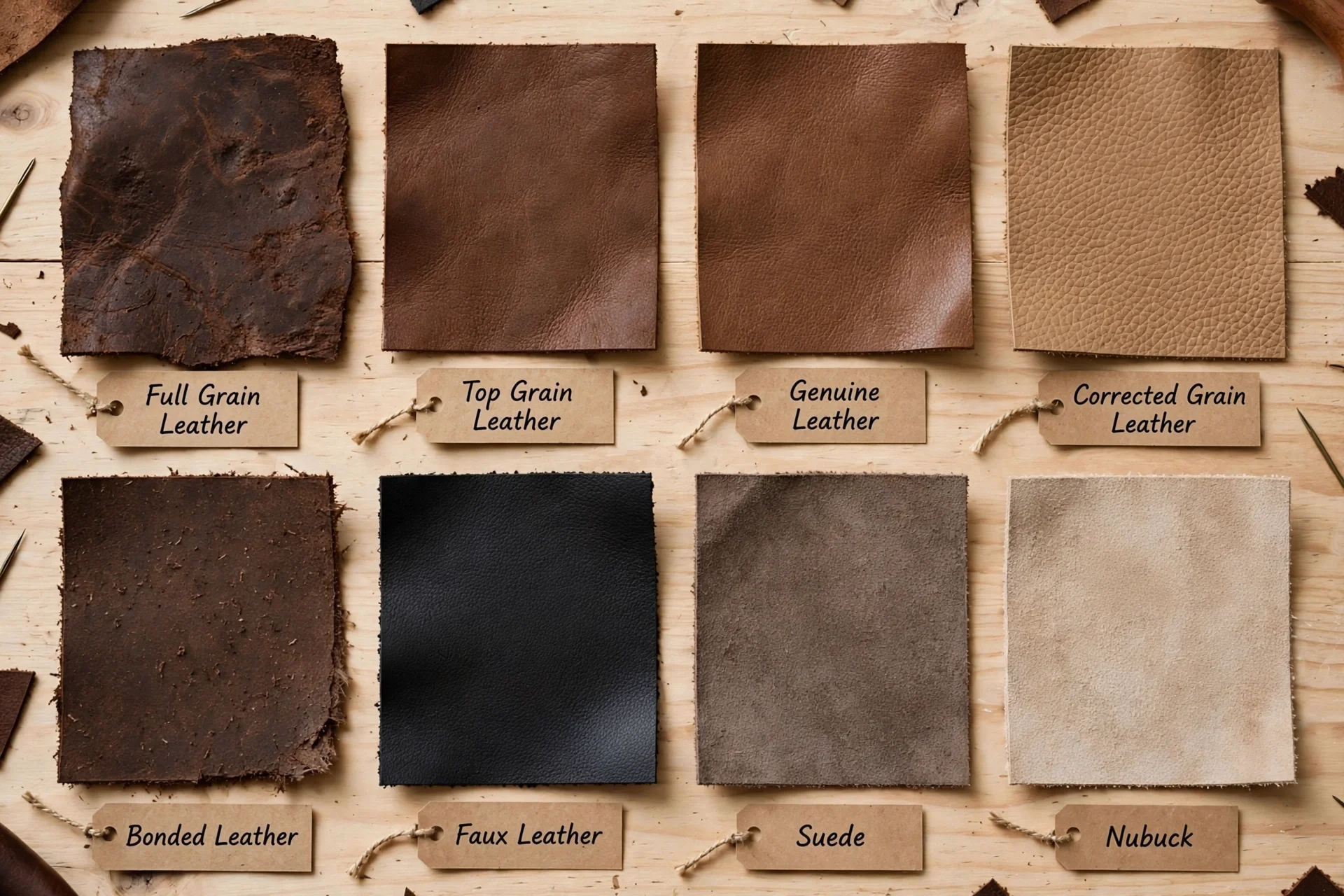
Your repair options depend almost entirely on what you're dealing with. Here's how to figure it out in under two minutes - no tools required.
The Edge Test
Find a hidden edge - inside a cushion seam, underneath a flap, or along the back hem of the sofa. Look at the cross-section of the material.
Real leather shows a natural fibrous cross-section. It looks organic, slightly textured, like the interior of the material is made of actual fibers. It doesn't have a clean, uniform sandwich structure.
Bonded leather typically shows a very clear sandwich: a thin surface layer, a visible adhesive or foam layer, and a fabric backing. It looks manufactured rather than natural. You may also see the fabric backing exposed in areas where peeling has already started.
The Water Drop Test
Place a single small drop of water on an inconspicuous area of the surface.
Genuine leather (full-grain, top-grain) will absorb the drop slightly - you'll see the leather darken for a moment before it dries. Some finished leathers repel the drop slightly but not completely.
Bonded leather repels the drop entirely. The water sits on the surface without any absorption at all, because the polyurethane surface film is completely impermeable.
What You Can Actually Try at Home (Honest Assessment)
There are a few things worth trying at home, depending on what type of leather you have. There are also some things that will make the situation worse. Here's the honest breakdown.
For Cracking Genuine Leather: Deep Conditioning First
If your genuine leather sofa is cracking but the cracks are surface-level rather than deep structural splits, start with a high-quality leather conditioner.
Apply it generously to the entire sofa - not just the affected areas. Use a clean, soft cloth and work the conditioner in with slow circular motions. Let it absorb fully, then apply a second coat. For a badly dried-out sofa, this process alone can produce a significant visible improvement within a few hours.
After conditioning, a leather filler (available from specialist leather care suppliers) can address individual cracks. Apply a small amount with a flexible spatula, let it cure, then lightly sand with very fine paper and apply a color-matched leather pigment or paint. This work rewards patience. Rush it, and the repair will be obvious.
Honest expectation: for small, isolated cracks in genuine leather, a careful home repair can achieve a good result. For large cracked areas or areas where the surface layer has started to lift, professional reconditioning and color restoration will produce a far more uniform, lasting result.
For Peeling Bonded Leather: Damage Control, Not Reversal
If you have bonded leather that is peeling, you cannot repair it the way you can repair genuine leather. The material simply doesn't have the structural properties needed for true restoration.
What you can do:
Remove the loose pieces carefully. Don't try to push them back down with glue. Peeling that is lifting will continue to lift regardless. Removing the loose flakes reduces the jagged appearance and stops the loose pieces from catching and tearing further.
Apply a leather repair compound over the exposed area. Some leather repair kits include a flexible compound that can fill exposed patches and be painted to match the surrounding color. This is a cosmetic improvement, not a structural repair, but it can extend the usable life of a sofa and significantly improve its appearance.
Protect remaining intact areas with a leather conditioner. Even on bonded leather, regular conditioning can slow the deterioration of areas that haven't started peeling yet.
Honest expectation: if bonded leather peeling is advanced and covering multiple areas, professional repair can meaningfully improve the appearance, but there are real limits. At a certain point, the honest conversation is about whether repair makes more financial sense than replacement. We'll always tell you which applies to your piece.
What You Should Never Use on a Peeling Leather Sofa
These are the interventions we most often see that make repair more difficult - or impossible:
Superglue or household adhesive - Gluing peeling sections back down creates a hard, inflexible bond that cracks immediately under use and leaves a residue that prevents proper repair treatment.
Baby oil or olive oil - These are not leather conditioners. They temporarily darken and soften leather but leave a residue that turns rancid over time and repels proper care products.
Household cleaning sprays - Multipurpose cleaners, bleach, and most bathroom sprays contain chemicals that strip the surface treatment from leather. On an already-compromised surface, this significantly accelerates deterioration. Our guide to safely removing stains from leather covers what actually works.
Sandpaper - Without specialist knowledge, sanding a leather surface removes the finish unevenly and creates a problem far harder to color-match than the original damage.
If the peeling covers more than a handspan, is happening in more than one location, or the fabric backing is already visible - this is the point where professional assessment makes sense. A diagnosis costs nothing at Lebanon Leather Work. Bring it in or email us photos and we'll tell you plainly what we can do. Get a free assessment →
4 Signs DIY Is Not Enough
There's no shame in recognizing when a job needs professional tools and materials. These are the four situations where home repair reliably falls short:
The peeling is spreading. If you treated an area and the peeling continued beyond it within a few weeks, the material failure is structural. Home repair products address the surface symptom, not the underlying cause.
The color cannot be matched. Leather pigments in repair kits are approximations. For a small repair in a dark color, the mismatch may be barely noticeable. For a large repair in any light or unusual color, the difference will be visible across the room. Professional color matching uses specialist pigments mixed to the exact hue of your specific sofa.
Multiple failure types are present at once. Peeling in one area, cracking in another, stitching that's coming loose - when several things are failing simultaneously, they're often related. A professional assessment identifies the root cause.
The sofa is genuine leather and the cracks are deep. Surface cracks can be managed at home. Cracks that have gone through the surface layer and into the hide itself need professional filling, conditioning, and reconditioning to prevent further splitting. Left untreated, deep cracks in genuine leather spread quickly and become structural.
What Professional Leather Furniture Repair Looks Like at Lebanon Leather Work
When a piece comes into our workshop, we start with the assessment that most people skip at home: identifying exactly what we're working with and being honest about what the repair will and won't achieve.
Surface Repair and Crack Filling
For genuine leather that is cracking, our process involves deep cleaning the affected area to remove any product residue or contamination, followed by professional-grade leather filler applied in thin, flexible layers. Each layer is cured and assessed before the next is applied. The goal is to rebuild the surface without creating a hard spot that will crack again under normal use.
For bonded leather where the surface has lifted, we remove any unstable sections, prepare the exposed area, and apply a flexible repair compound that bonds to both the surface layer and the backing. The result is a surface that is stable, flexible, and far more uniform in appearance than what home repair kits achieve.
Color Restoration and Re-Dyeing
Color is where professional repair makes the most visible difference. We use professional leather pigments and dyes mixed to match your sofa's specific color, applied in multiple thin coats that bond into the leather surface rather than sitting on top of it.
The result holds up to normal use in a way that painted-on home repair colors don't. It also looks natural - not like a patch. For sofas where the color has faded significantly across the whole piece, full color restoration brings the entire surface back to a uniform, refreshed appearance.
Honest Expectations by Leather Type
We don't make promises we can't keep. Here is what we can tell you clearly, based on years of this work:
Full-grain and top-grain leather in good structural condition can be restored to near-original appearance with professional repair. The fiber structure accepts conditioning, filler, and color treatment well. These are the most satisfying repairs we do.
Corrected-grain leather repairs well, though color matching requires more care because the embossed surface pattern needs to be replicated in the repair area.
Bonded leather with limited, localized peeling can be significantly improved. Bonded leather with widespread peeling across multiple areas is a different conversation - we'll tell you honestly whether repair makes financial sense, and we won't take money for work that won't deliver meaningful results.
For a clear picture of which type you're dealing with, our full guide to leather grades and types walks through every category with identification tests. You can also read about our full range of leather repair services for more detail on how we approach each kind of damage.
See our leather furniture repair service →
Repair vs Replace: The Honest Cost Comparison
This is the question we get asked most often. Here's the math.
A mid-range leather sofa costs between $800 and $2,500 to replace. A high-quality genuine leather sofa costs considerably more. Professional leather furniture repair at a specialist workshop typically runs between $150 and $500 for most jobs, depending on the extent of the damage and the work required.
In straightforward terms: professional repair almost always costs between 15% and 40% of what a comparable replacement would cost.
When Repair Clearly Wins
The sofa is genuine leather - full-grain, top-grain, or corrected-grain
The damage is localized - one problem area, not the whole sofa
The sofa has sentimental value - a family piece, a color or style you love
The frame, cushions, and stitching are still structurally sound
You'd need to spend significantly more to replace it with something of comparable quality
When Replacement Might Make More Sense
The sofa is bonded leather, and the peeling has spread across the majority of the piece
The frame or cushion structure has also failed alongside the leather
The repair cost approaches or exceeds 60% of what a comparable replacement would cost
The sofa has simply reached the end of its expected lifespan regardless of leather condition
Our honest advice: for any genuine leather sofa, repair almost always makes financial and practical sense. For bonded leather, it depends on how far the damage has progressed. If you're unsure, the assessment is free - bring it in or send us photos and we'll give you a plain answer rather than a sales pitch.
How to Stop This from Happening Again
Whether you've just had a repair done or you're maintaining a sofa that's still in good condition, these habits make a meaningful difference.
Set a Conditioning Schedule
Leather loses moisture constantly - through contact, through the air, through light. For a sofa in regular daily use, conditioning every six months is a minimum. For a sofa in a room with low humidity, near a heat source, or in direct sunlight, every three to four months is better.
Use a dedicated leather conditioner - not a multi-surface product, not a furniture polish, not any oil from your kitchen. Apply it to the whole sofa, not just the areas that look dry.
Manage Sun and Heat Exposure
If your sofa sits in direct sunlight for several hours a day, this is the single biggest thing accelerating its deterioration. UV exposure degrades leather finish, causes fading in genuine leather, and accelerates polyurethane breakdown in bonded leather. A curtain, a blind, or simply repositioning the sofa makes a measurable difference.
Keep the sofa at least three feet from any fixed heat source - radiators, floor vents, fireplaces. Leather in direct heat range loses moisture faster than conditioning can replace it.
Clean It Correctly
For everyday cleaning, a slightly damp cloth handles most surface grime. For anything more stubborn - food, ink, grease - our guide to safely removing stains from leather covers the right approach by stain type.
What not to use: baby wipes, antibacterial wipes, household cleaning sprays, and any product with alcohol as a primary ingredient. These remove the surface oils that keep leather flexible and accelerate the drying and cracking that leads to the problems this whole guide covers.
Ready to Give Your Sofa a Second Life?
Walk-ins are welcome at our Lebanon, NJ workshop. Bring the piece in for a look, or send us photos by email and we'll give you a free assessment and a clear quote before any work begins. Nothing moves forward until you say so.
Workshop: 1271 US-22, Lebanon, NJ 08833
Email: LebanonLeatherWork@gmail.com
Phone: (551) 333-8186
Contact us for a free assessment →
Frequently Asked Questions
Why is my leather couch peeling?
The most common cause is bonded leather - a material made from shredded leather scraps bonded with polyurethane, which peels rather than cracks as it ages. If the peeling is happening in flakes or sheets, bonded leather is the likely culprit. Real leather (full-grain, top-grain) doesn't peel in the same way - it cracks from dryness instead, which is a different problem with different solutions.
Can peeling leather be repaired?
Yes, in most cases - but the approach and the realistic outcome depend entirely on the leather type. Genuine leather with cracking and surface lifting can be professionally restored to near-original condition. Bonded leather with localized peeling can be significantly improved in appearance. Bonded leather with widespread, advanced peeling has real limits, and we'll tell you honestly if replacement makes more financial sense than repair.
How much does leather sofa repair cost?
Most leather furniture repairs at Lebanon Leather Work fall between $150 and $500, depending on the extent of the damage, the leather type, and whether color restoration is needed. A comparable replacement sofa typically costs $800–$2,500 or more. Professional repair almost always costs a fraction of replacement - and you keep the piece you already own.
How do I know if my sofa is bonded leather or real leather?
Two quick tests work reliably. The edge test: look at the cross-section of the material on a hidden edge - real leather shows organic fibers, bonded leather shows a clear layered sandwich of surface coating, adhesive, and fabric backing. The water drop test: real leather absorbs a drop slightly; bonded leather repels it completely. Both tests are explained with full detail in the self-diagnosis section above.
What is the best product for a peeling leather sofa?
For genuine leather with surface cracking: a high-quality leather conditioner first, followed by a flexible leather filler and color-matched pigment for visible cracks. For bonded leather: a flexible leather repair compound over exposed areas, followed by careful color matching. Avoid superglue, household oils, baby wipes, and any multi-surface cleaning spray - these consistently make the situation worse and can make professional repair harder.
Is it worth repairing a leather couch, or should I just buy a new one?
For genuine leather sofas, repair is almost always worth it. The repair cost is typically 15–40% of what replacement costs, and genuine leather that is properly restored can last decades more. For bonded leather sofas, it depends on how advanced the damage is - localized damage is worth treating, but widespread failure across the whole piece is a different calculation. Bring it in or send photos and we'll give you a straight answer.
How long does professional leather furniture repair take?
Most repairs at our workshop are completed in 3–7 business days. More extensive work - full color re-dyeing, large area reconditioning, structural stitching - may take up to 10 business days. We give you a clear timeline when you drop off your piece or when we review your photos.
Do you repair leather sofas in New Jersey?
Yes. Our workshop is in Lebanon, NJ (1271 US-22, Lebanon, NJ 08833), and we serve customers across Hunterdon County and the wider New Jersey area. We also accept pieces sent in from further afield - contact us and we can work out the logistics.
Lebanon Leather Work - 1271 US-22, Lebanon, NJ 08833 lebanonleatherwork@gmail.com · (551) 333-8186 Handcrafted leather goods, bespoke custom orders and expert leather repair - serving Lebanon, NJ and all counties