
By Tamer Mourshed - Master Leather Craftsman, Lebanon Leather Work | Lebanon, NJ Read time: ~12 minutes
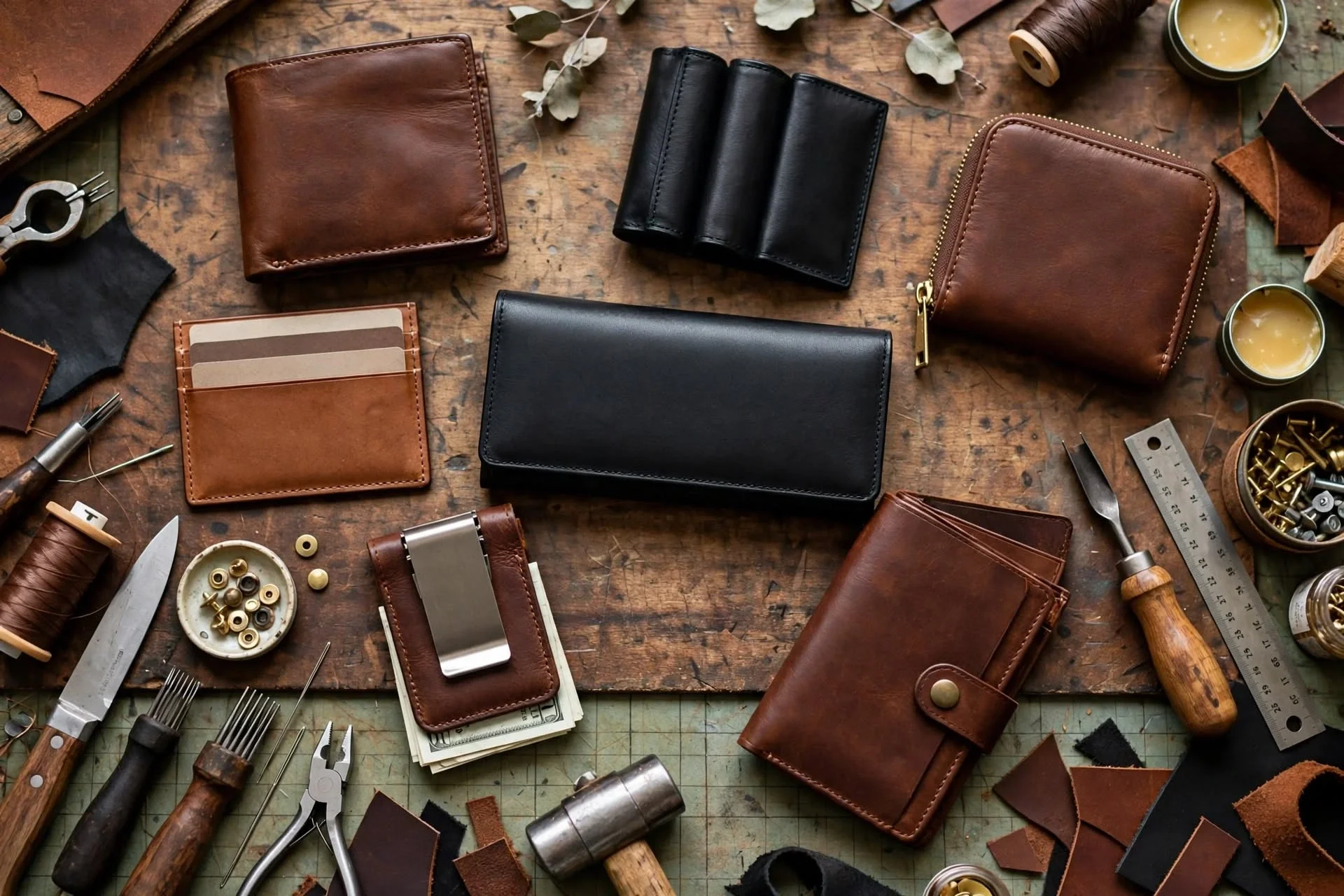
A Craftsman's Complete Guide to Every Style, What Lasts, and What to Look for Before You Buy. The main types of leather wallets are bifold, trifold, card holder, money clip, long or continental, zip-around, travel or passport, checkbook, coin purse, wristlet, phone wallet, and front pocket wallet. They differ primarily in storage capacity, how they fold, and intended carry style. The leather grade full-grain, top-grain, genuine leather, or faux determines how long a wallet lasts and how it ages, more than any other single factor. A full-grain leather wallet, properly made, lasts 5–15 years and improves with daily use.
A wallet is the most handled leather object most people own. It is touched 20–30 times a day, carried against the body, subjected to heat, friction, and constant mechanical stress at the fold. No other leather accessory receives as much daily contact which makes the quality of the leather matter more in a wallet than in almost any other piece.
This guide covers wallet types, the leather grades that determine lifespan, how genuine leather wallets age over time, and what to look for before you spend a dollar. As leather craftsmen building and repairing leather goods since 2003 in Lebanon, NJ, this is the information we use every day.
4 Questions to Answer Before Choosing a Wallet Type
1. How many cards do you actually carry? Count them most people are surprised to find fewer than they think once they remove the duplicates and expired cards. Under 6 cards: card holder or slim bifold. 6–10 cards: standard bifold or trifold. More than 10: long wallet or zip-around.
2. Do you carry cash? If yes, do you fold it (bifold bill compartment) or prefer it unfolded (long/continental wallet)? If no, a card holder or minimalist wallet works perfectly.
3. Front pocket or back pocket carry? Front pocket carry demands something slimmer a slim card holder, a front pocket wallet, or a slim bifold. Back pocket carry allows more depth.
4. Do you travel frequently? If passports, foreign currency, and travel documents need to be together, a dedicated travel wallet or zip-around makes more sense than a standard bifold with a passport jammed in.
These four answers will narrow a field of twelve types down to two or three candidates before you look at a single product.
12 Types of Leather Wallets Explained
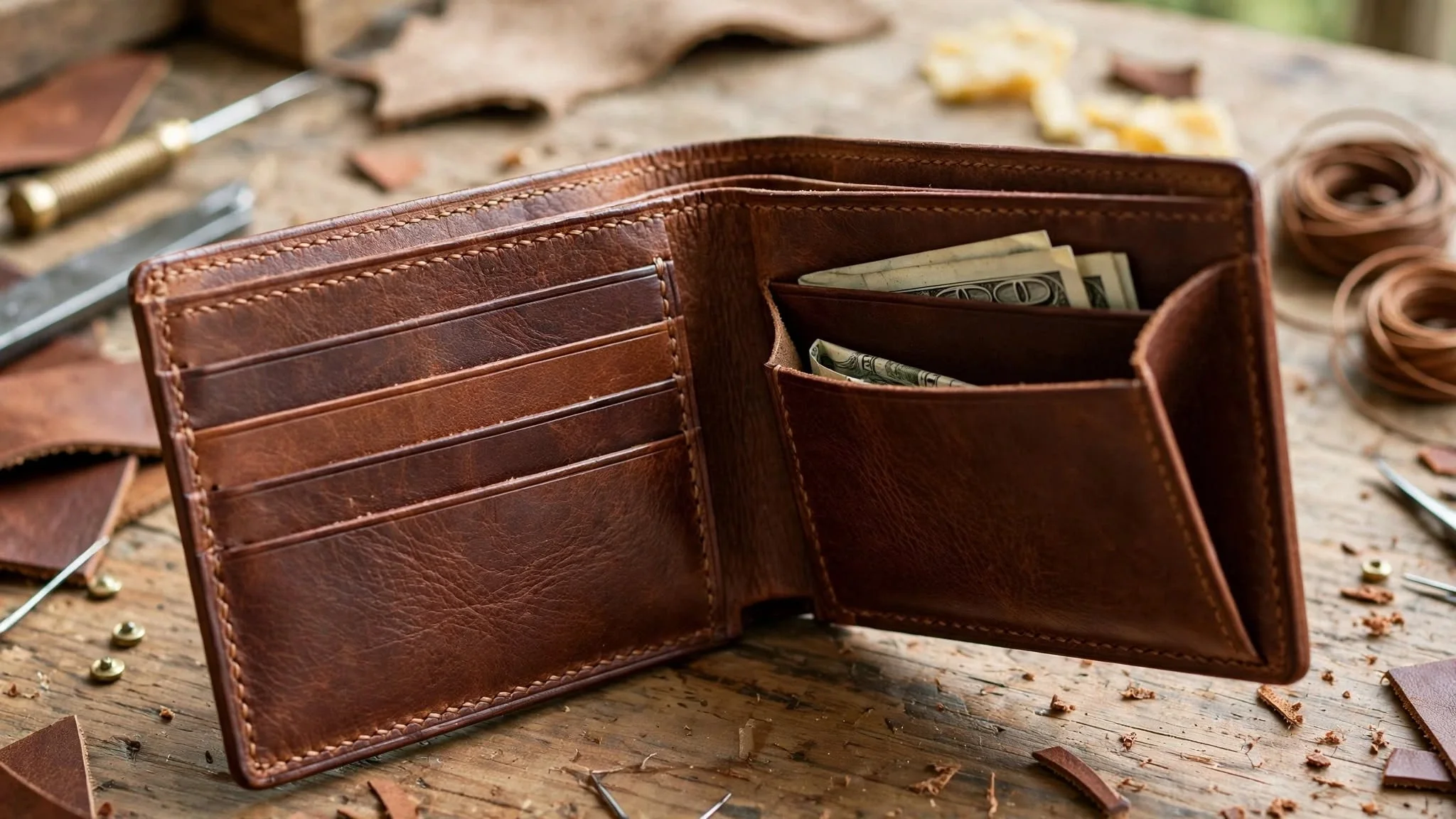
1. Bifold Wallet
The most widely owned wallet design in the world. A single fold creates two panels, a bill compartment on one or both sides, and a set of card slots typically holding 4-8 cards. The bifold sits flat in a back or jacket pocket, offers quick access to cards and cash, and works for essentially any daily carry need.
Why it remains dominant: The balance between capacity and size is near-perfect. You can find quality Bifold at every price point, and the design is simple enough that poor construction is easy to spot before you buy.
Best leather: Full-grain or top-grain cowhide or calfskin. The single fold means the leather at the spine is flexed thousands of times per year lower-grade leather cracks at this point within a few years; full-grain develops a natural flex break that becomes part of the wallet's character.
Longevity notes: A well-made full-grain bifold in daily use should last 10–20 years. The stitching at the card slots is the first thing to watch it should be saddle-stitched with waxed linen, not machine-stitched with polyester thread.
Best for: Everyone. It's the default for good reason.
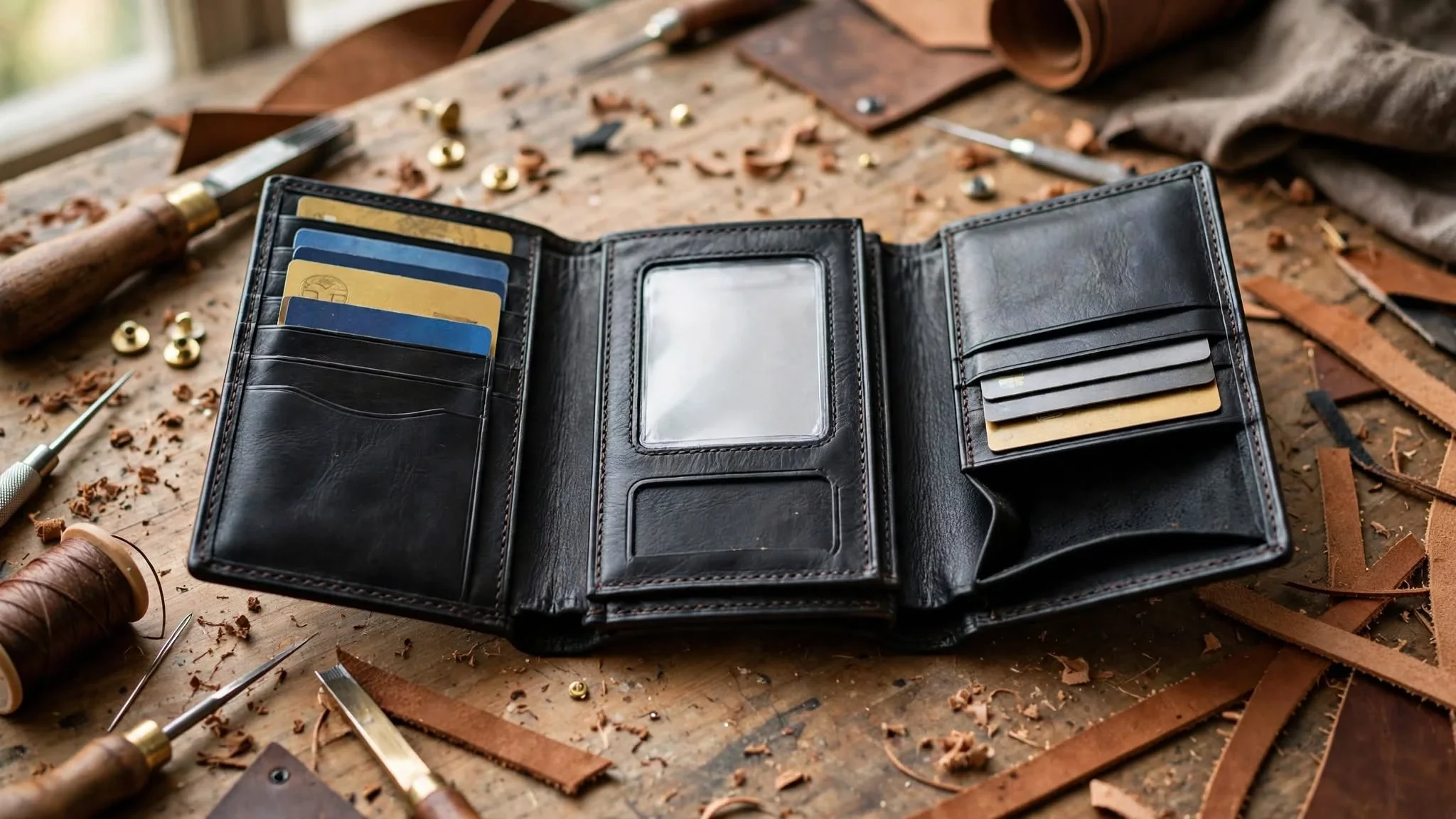
2. Trifold Wallet
Two folds create three panels, providing significantly more card storage than a bifold typically 8–12 slots, plus compartments for coins, ID windows, and multiple bill sections. The outer thirds fold inward over the central panel when closed, creating a wallet that is more secure but thicker.
The trade-off: Capacity vs. bulk. A fully loaded trifold is noticeably thicker than a bifold, which some people find uncomfortable in a pants pocket. In a jacket or bag, the extra thickness is irrelevant.
Best leather: Full grain leather but look for evidence of skiving the process of thinning leather layers at fold and seam points to manage bulk without sacrificing strength. A trifold that hasn't been skived properly is unnecessarily thick when closed.
Longevity notes: The two-fold points experience more stress than a Bi-fold's one. Quality construction at both folds’ reinforcement, consistent stitch density, and proper skiving is what separates a trifold that ages well from one that cracks and separates at the folds within 3–5 years.
Best for: People who carry many cards, need strong organizational structure, or frequently show multiple IDs.
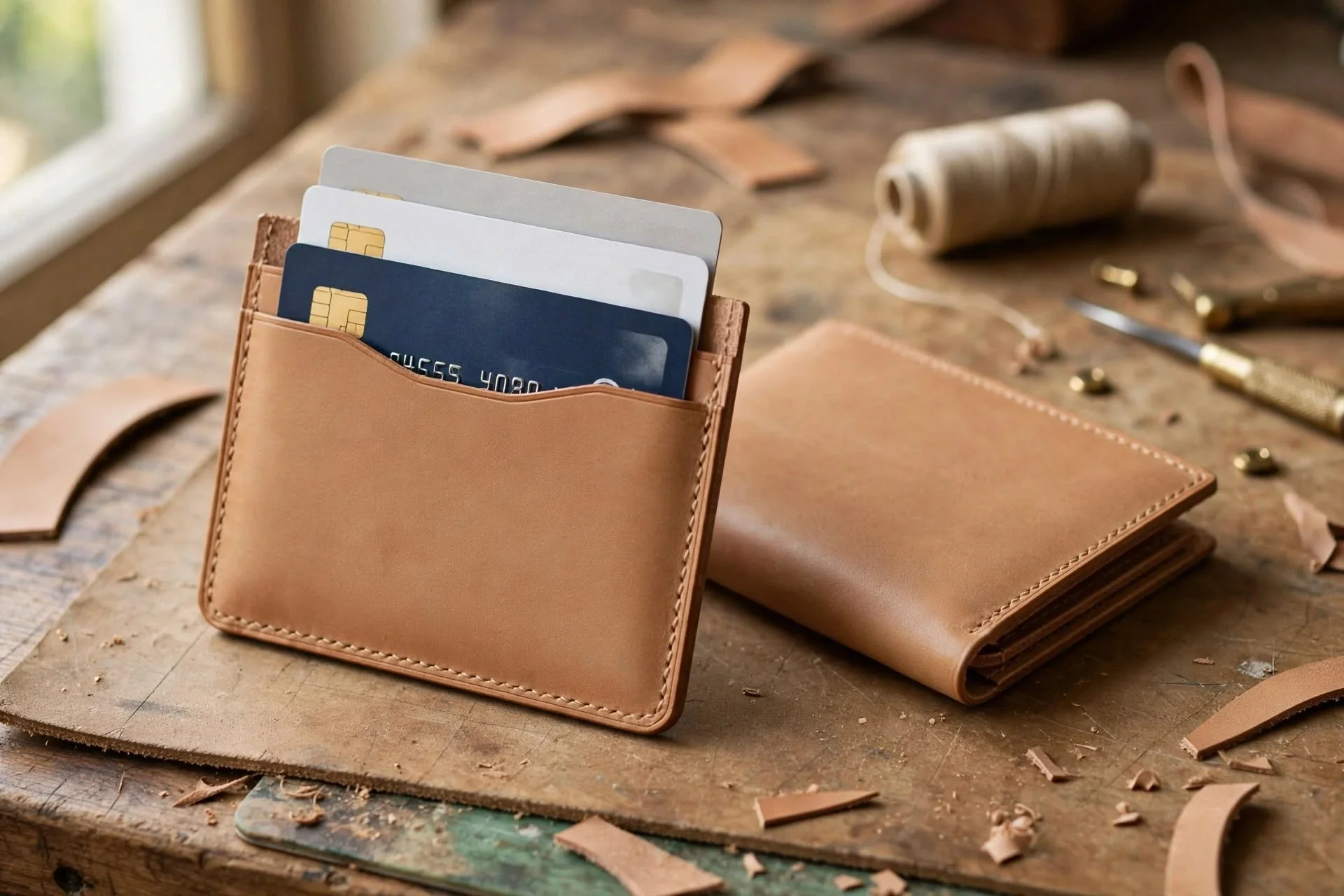
3. Card Holder and Slim Wallet
Technically two different objects, though the distinction is thin. A card holder is a non-folding or single-fold design with card slots only typically 4-8 cards, sometimes with a central pocket for folded cash or a few bills. A slim wallet typically implies the same form with a slightly more structured construction.
Both are products of the contactless payment era designed for people who carry a phone for digital payments and only need a small number of physical cards and a bit of emergency cash.
Best leather: Full-grain or top-grain in a relatively thin gauge the primary benefit of this wallet type is its slim profile, which thick leather defeats. Calfskin and goatskin are both excellent choices for their natural lightness.
Longevity notes: Because the card slots receive the majority of the wear cards go in and out dozens of times per day the construction of the slot openings matters enormously. Reinforced slot openings in quality card holders outlast simple folded-leather slots by years.
Best for: Minimalist carry. Someone who uses contactless or phone payment for most transactions and only needs 3–5 cards and an emergency bill.
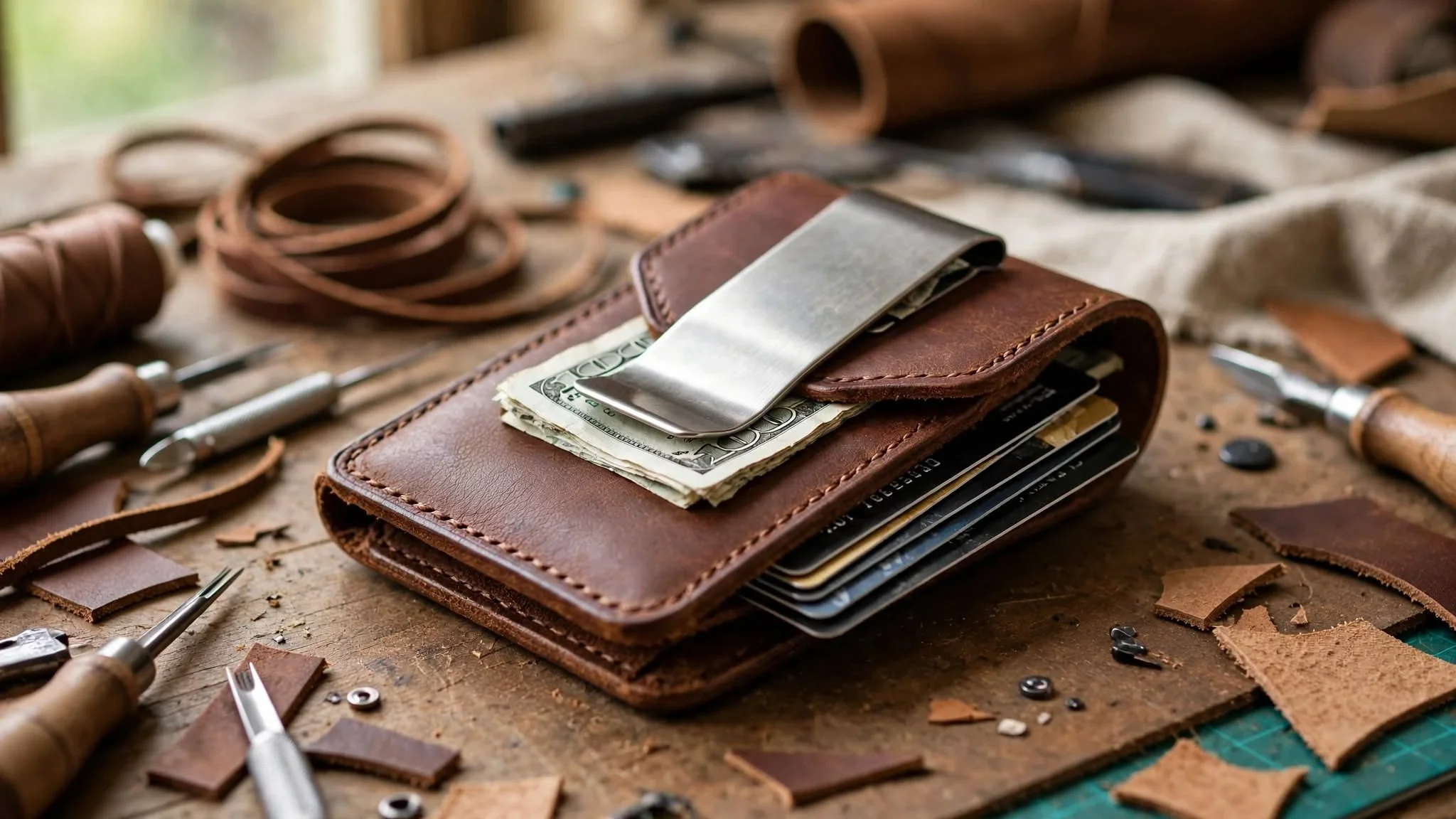
4. Money Clip Wallet
Combines card slots with a spring-loaded or magnetic clip mechanism that holds folded banknotes on the exterior. Eliminates the traditional bill compartment in favor of immediate, unimpeded access to cash.
Money clip wallets are typically slimmer than standard bifold because the clip whether integrated into a card case or attached to the exterior replaces the interior bill section entirely.
Best leather: Full-grain or top-grain in a moderate gauge. The clip mechanism is the component most likely to fail look for a well-machined spring-clip mechanism in stainless steel or brass. A cheap magnetic clip loses its tension within months.
Longevity note: The leather portion of a quality money clip wallet lasts as long as any other full-grain leather piece. The metal clip's longevity depends entirely on the quality of the mechanism this is the component worth scrutinizing.
Best for: People who primarily carry cash and want fast, unrestricted access to bills. Also suits suit jacket carry the slim profile sits flat in a breast pocket without visible bulk.
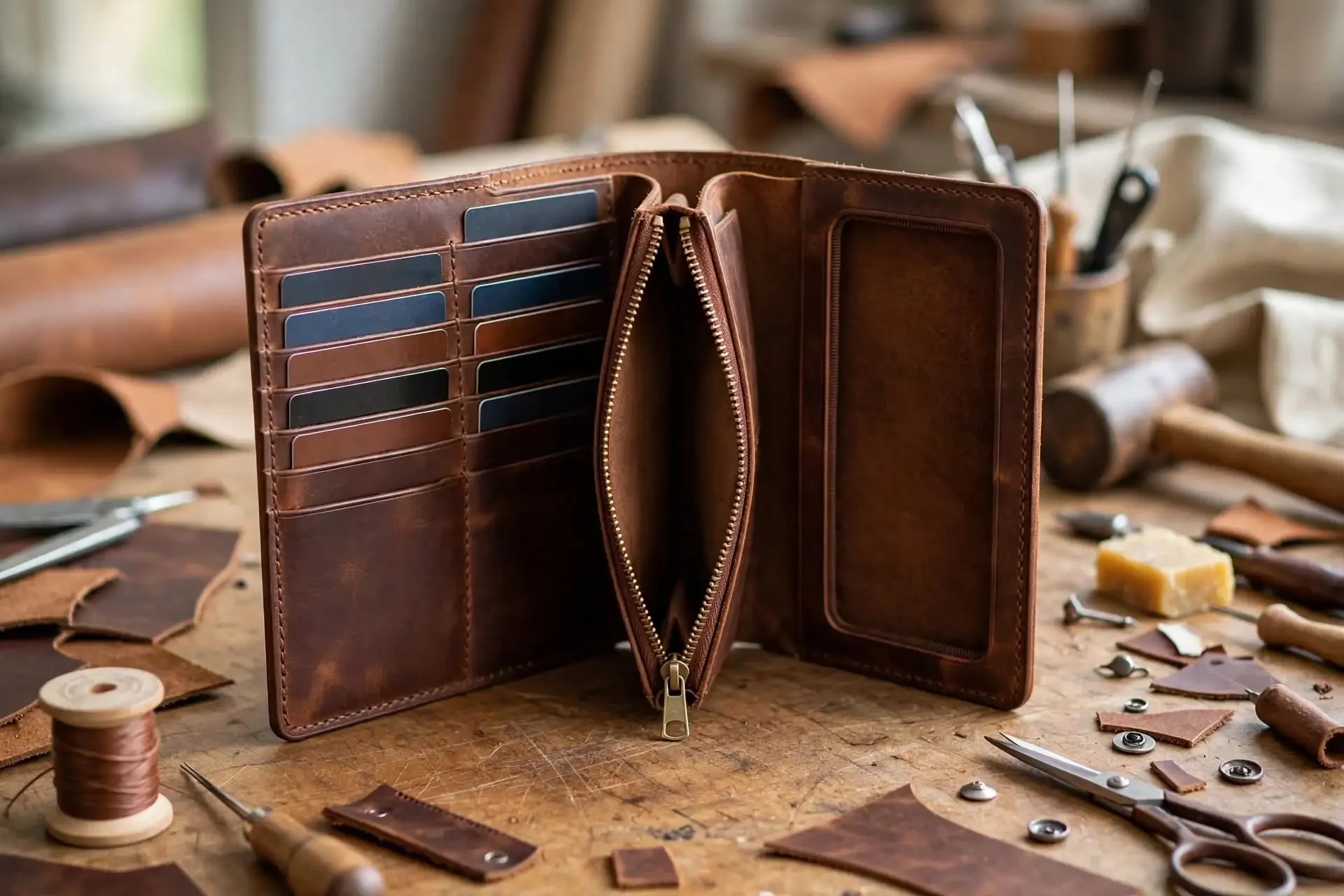
5. Long Wallet / Continental Wallet
An extended format where banknotes lie flat, unfolded. Significantly larger than a bifold typically 7–8 inches long when closed with generous card storage, document pockets, and sometimes a zip coin compartment.
The long wallet is common in Japanese and European carry culture, where it is seen as a more deliberate, refined choice than a folded bifold. The no-fold design means banknotes never crease, which matters both aesthetically and practically in cultures where presenting crisp, flat notes are expected.
Best leather: Full-grain leather in a slightly heavier gauge the larger surface area benefit from leather with enough body to hold its structure without collapsing. Beautiful in bridle leather or veg-tanned cowhide.
Longevity notes: Long wallets don't have fold stress points, which actually improves their longevity compared to bifold and trifolds. The primary wear points are the card slot openings and the edge finishing along the long edges.
Best for: People who carry cash frequently and don't want to fold it. Also suits those who carry business cards, receipts, and documents alongside cards. Typically stored in a jacket, bag, or back pocket it won't fit comfortably in a front pants pocket.
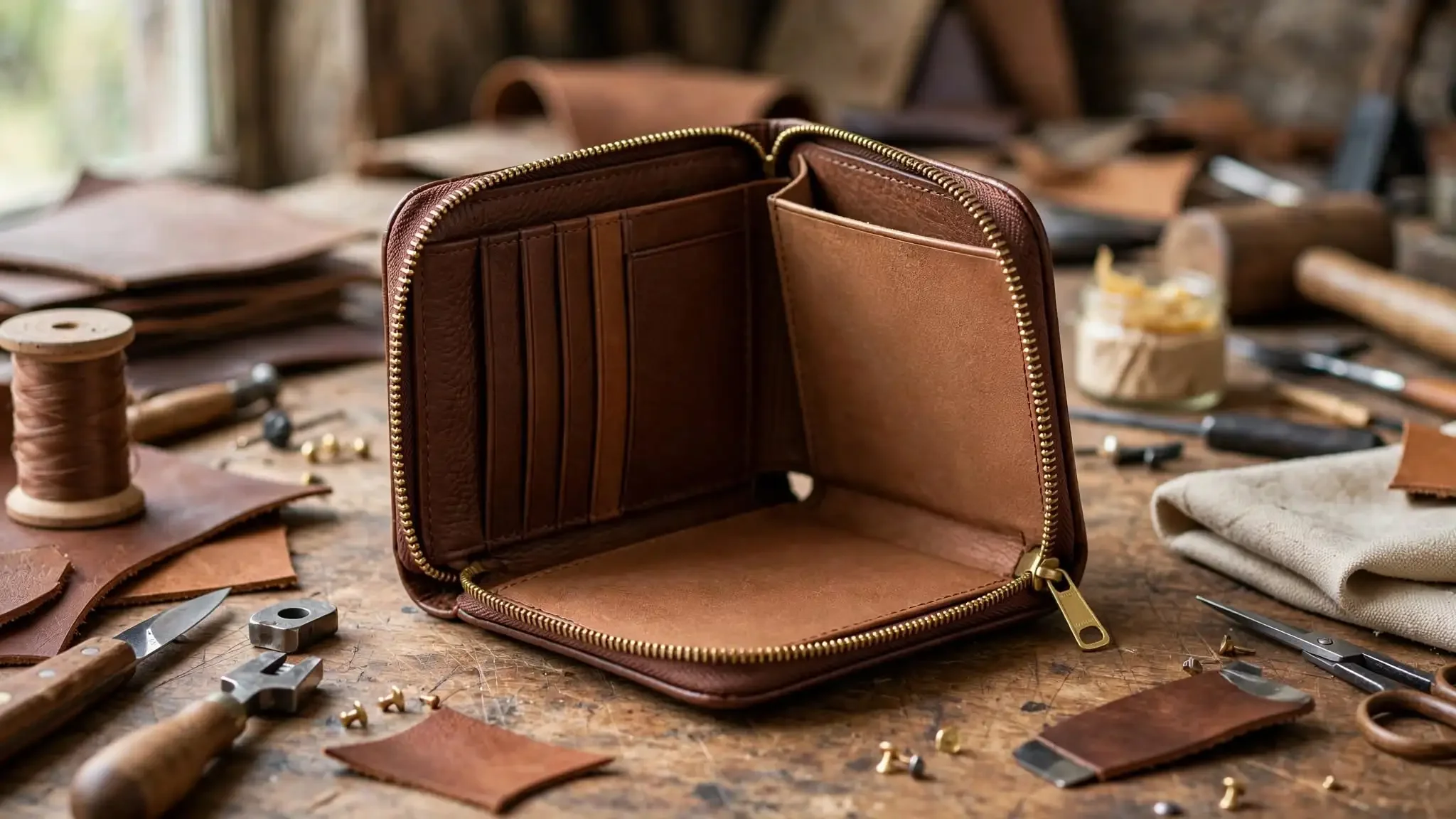
6. Zip-Around Wallet
A wallet that closes with a zipper running around three of its four sides. When open, it unfolds to reveal a full organization system multiple card slots, bill compartments, coin pockets, and document sections. When zipped, it is completely secure.
The zip-around is the most capacious everyday wallet available in a compact form. It's a popular style in women's fashion for its security and organization, though it appears across men's offerings from heritage leather brands as well.
Best leather: Full-grain leather, but the zipper quality matters as much as the leather. A YKK zipper in a zip-around wallet is a quality signal it will outlast inferior zipper mechanisms by years. The zipper track is subject to more mechanical stress than any other component.
Longevity notes: Quality leather will outlast a cheap zipper reliably. If the zipper fails, a skilled craftsman can replace it the same repair we perform frequently on leather bags and jackets at our Lebanon, NJ workshop. A quality leather zip-around wallet with a proper zipper replacement can be maintained indefinitely.
Best for: People who need complete security and maximum organization. Common as a wristlet-sized fashion wallet; also appropriate as a travel or daily-carry wallet for those who carry many items.
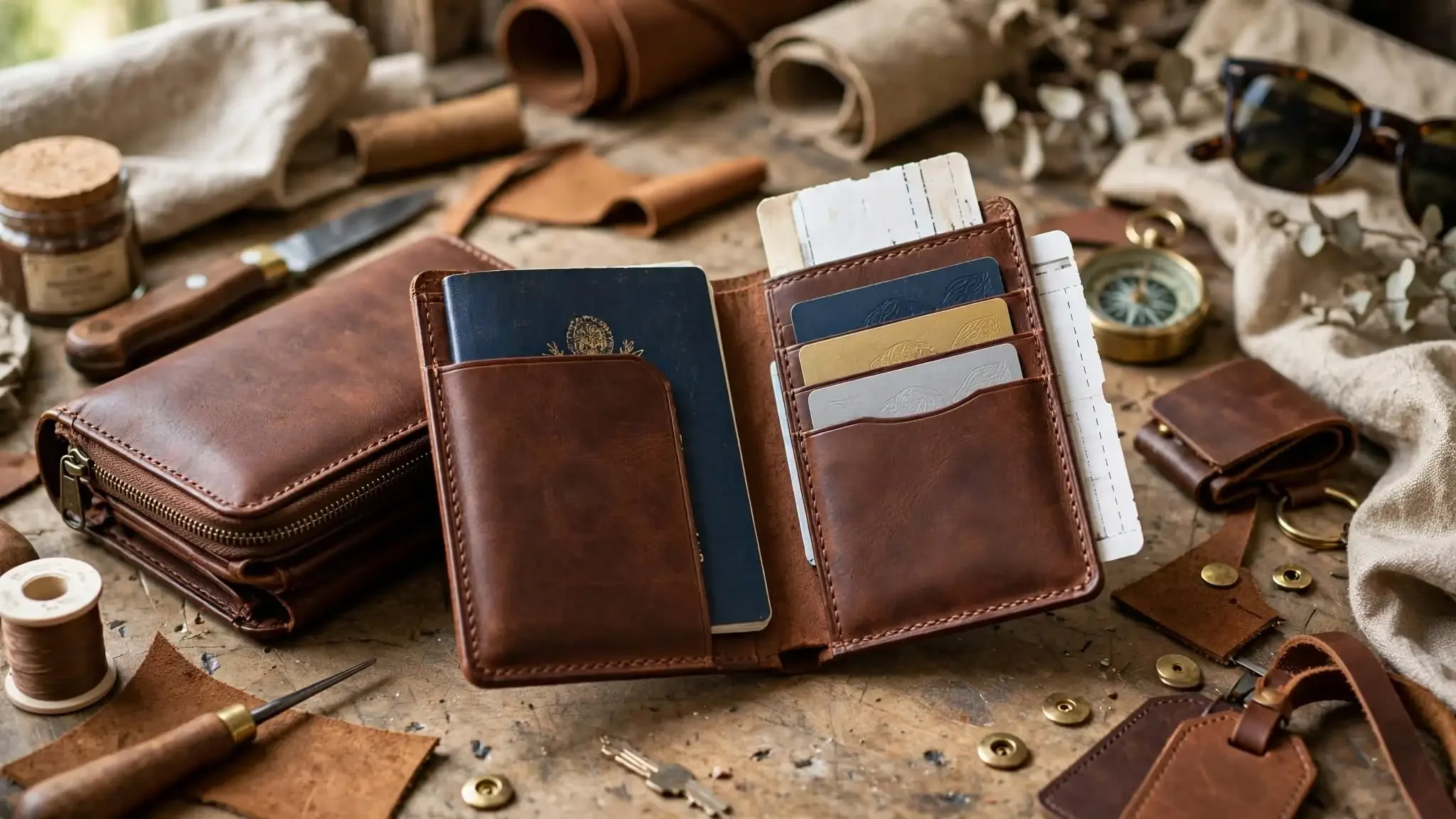
7. Travel Wallet and Passport Wallet
Travel wallet: A larger format designed to consolidate all travel documents passport, boarding passes, foreign currency, multiple payment cards, travel insurance documents into a single organized piece. Typically closes with a zip, snap, or magnetic clasp.
Passport wallet: A more compact travel-focused wallet designed specifically around passport dimensions, with card slots and currency pockets alongside the passport sleeve. Smaller and lighter than a full travel wallet; appropriate as a combined every day and light travel piece.
Best leather: Full-grain or top-grain cowhide in a moderate-to-heavy gauge. Travel wallets are subjected to more environmental stress than everyday wallets temperature changes, humidity at airports, physical handling during security checks. Quality leather is more resilient.
Longevity notes: The dimensions and stress pattern of a travel wallet make it a natural fit for quality construction. They are also used intensively during travel and then stored for weeks or months between trips the storage best practices from our leather garment storage guide apply equally to leather wallets in long-term storage.
Best for: Frequent travelers. Anyone who has ever struggled at a customs desk digging through a bag for a passport that isn't in the same place as their boarding pass.
8. Checkbook Wallet
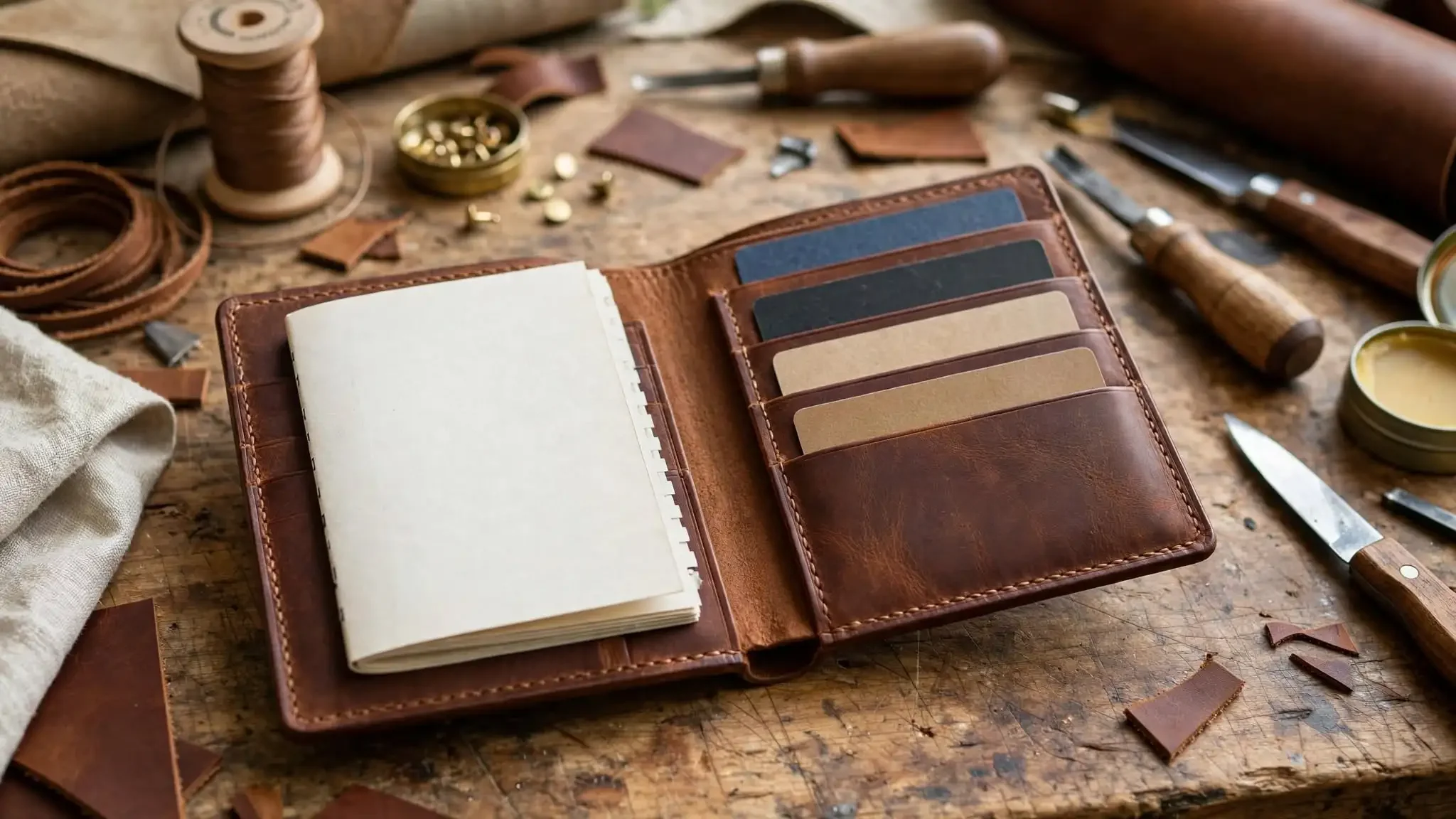
An extended format similar in length to a continental wallet designed specifically to hold a personal check register and book without folding. A good checkbook wallet includes card slots, a full-length bill section, and sometimes a zip coin compartment alongside the checkbook sleeve.
Best leather: Full-grain or top-grain in a moderate gauge. The primary care consideration for checkbook wallets is that they are opened and closed frequently at the spine quality stitching and proper edge finishing at the snap or magnetic closure matter more than in other formats.
Best for: Anyone who still writes personal checks regularly a smaller population than it once was, but the format also functions excellently as a large everyday wallet for those who simply want maximum capacity.
9. Coin Purse and Accordion Wallet
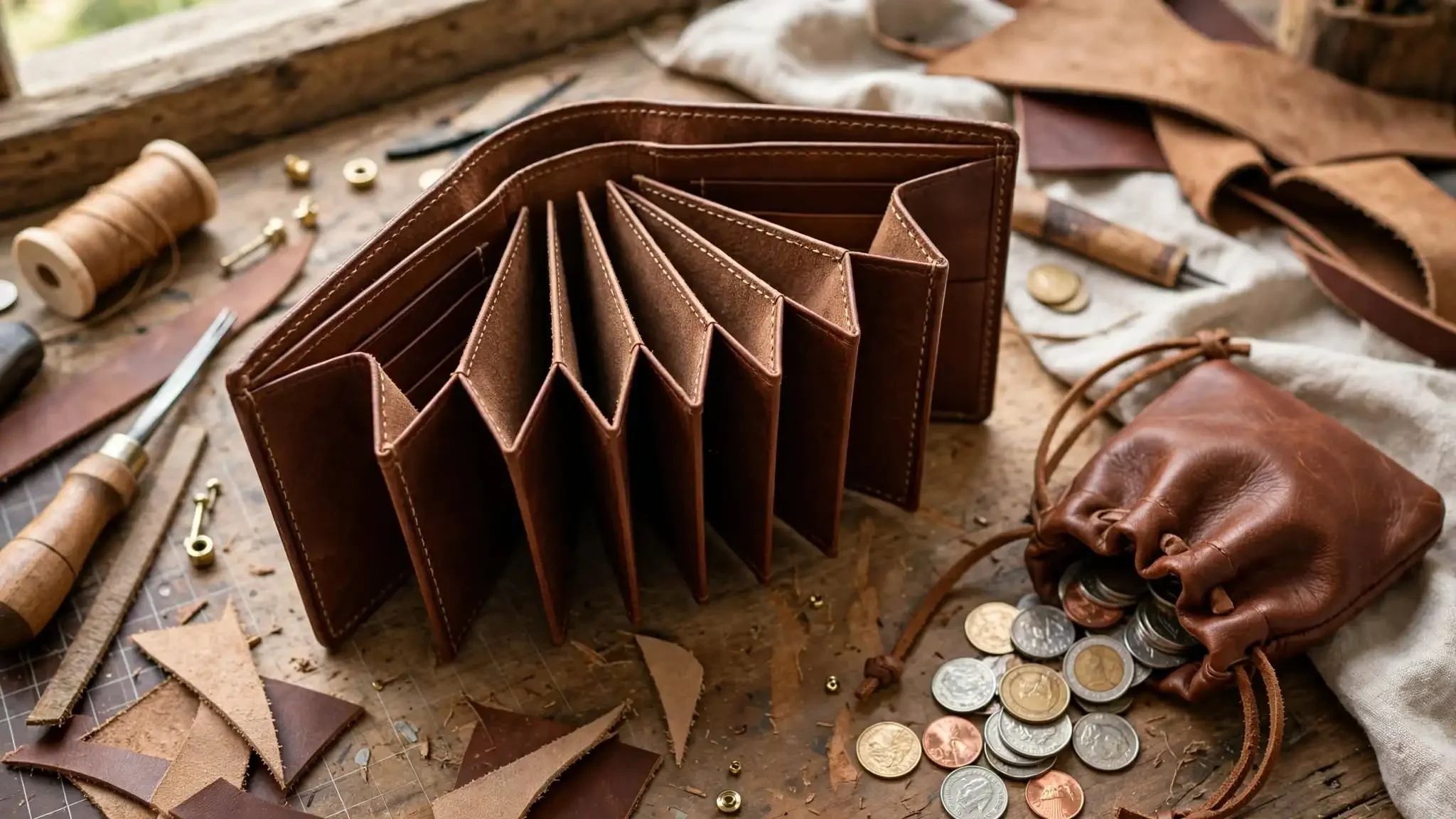
A compact wallet designed primarily for coins, with additional pockets for a small number of cards. Common construction methods include a zip closure, a snap flap, or an accordion fold that expands to reveal multiple pockets.
The accordion wallet which fans out like a folded piece of paper to reveal many pockets simultaneously is an increasingly popular format for both men and women who want to see all their cards at once without digging.
Best leather: Full-grain or top-grain. For coin purses specifically, look for gusseted construction at the coin compartment a flat-bottomed coin purse that doesn't gusset will not accommodate more than a few coins without losing its shape.
Best for: Anyone who still uses physical coins regularly. Also suits people who want a very organized, easy-to-search wallet layout.
10. Wristlet Wallet
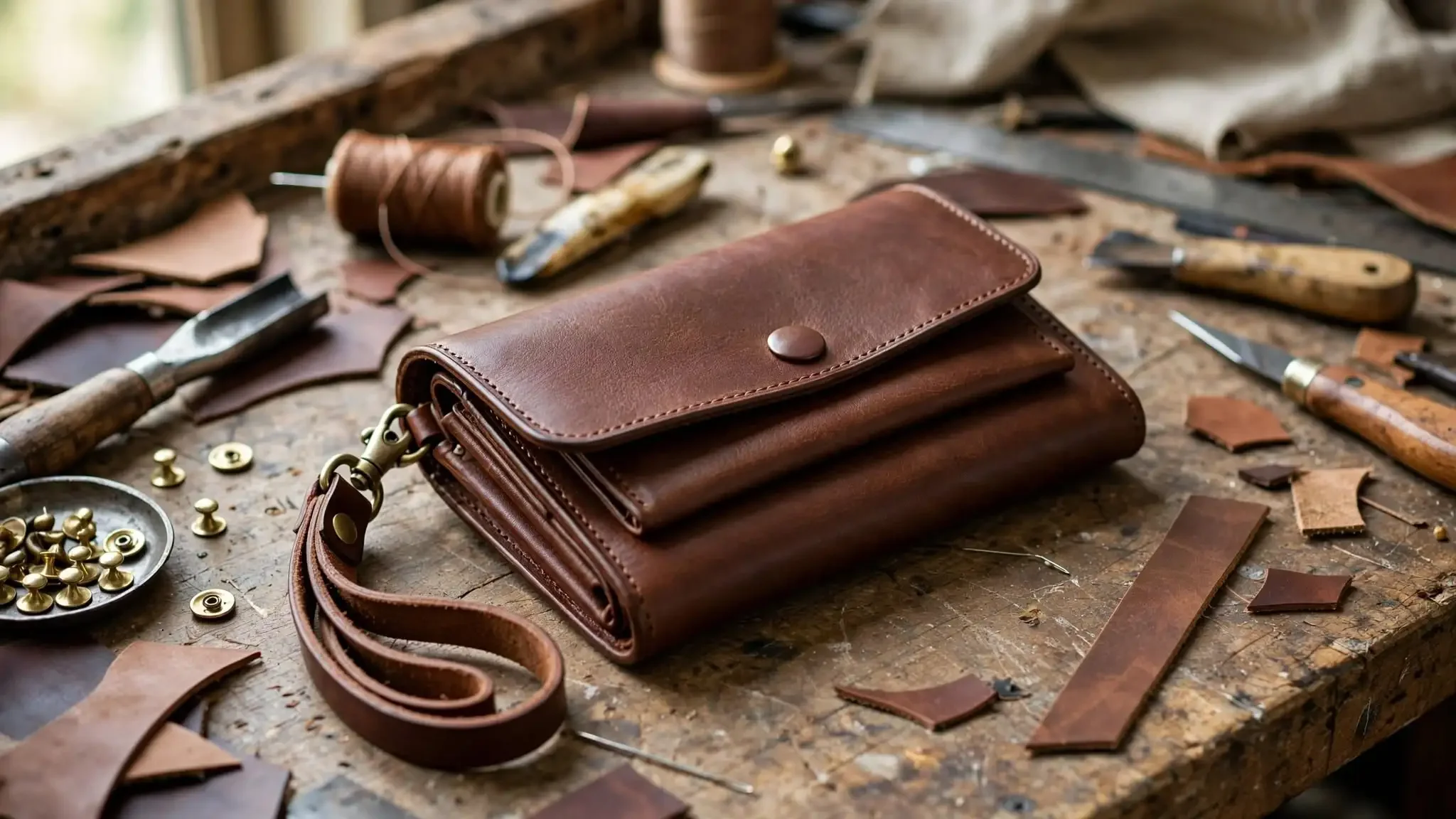
A wallet with an attached wrist strap typically a loop of leather or chain that allows it to be carried on the wrist rather than in a bag or pocket. Wristlets bridge the gap between a small clutch and an oversized wallet. They typically include card slots, a bill compartment, and sometimes a zip coin pocket.
Best leather: Full-grain calfskin or lambskin the wristlet is primarily a fashion accessory as much as a functional one, and the softer, more draping leathers that suit the format. The strap attachment points should be stitched and reinforced, as they bear the weight of the entire wallet on the wrist with every carry.
Best for: Evening occasions, shopping trips, and situations where a full bag is inconvenient. The most common women's fashion wallet format for compact day carry.
11. Phone Wallet
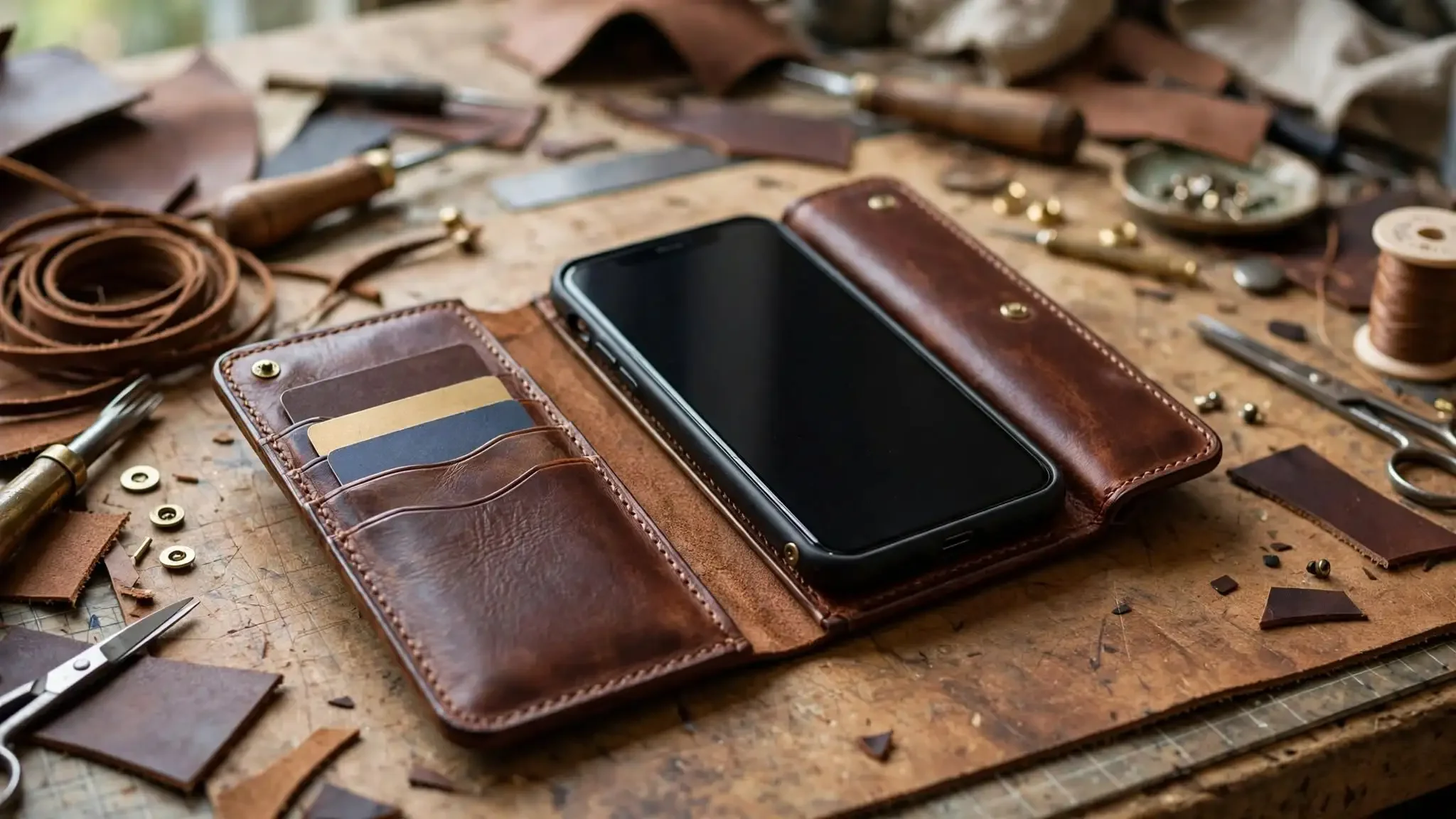
A phone case with integrated wallet functionality typically a folio-style case that holds 2–4 cards in a sleeve on the interior alongside the phone. The phone itself provides structure, eliminating the need for a separate rigid wallet framework.
Best leather: Top-grain or full-grain calfskin thin enough to keep the combined phone-and-wallet profile manageable. Some makers use leather only for the card sleeve rather than the full case, reducing bulk while maintaining leather quality where the cards sit.
Important note: The phone in this combination absorbs more daily handling pressure than any dedicated wallet does. The leather of the card sleeve typically outlasts the phone it encases by several years.
Best for: Absolute minimalists who want one item where they previously carried two. Not appropriate for anyone who carries more than 3 cards or who prefers keeping phone and wallet fully separate.
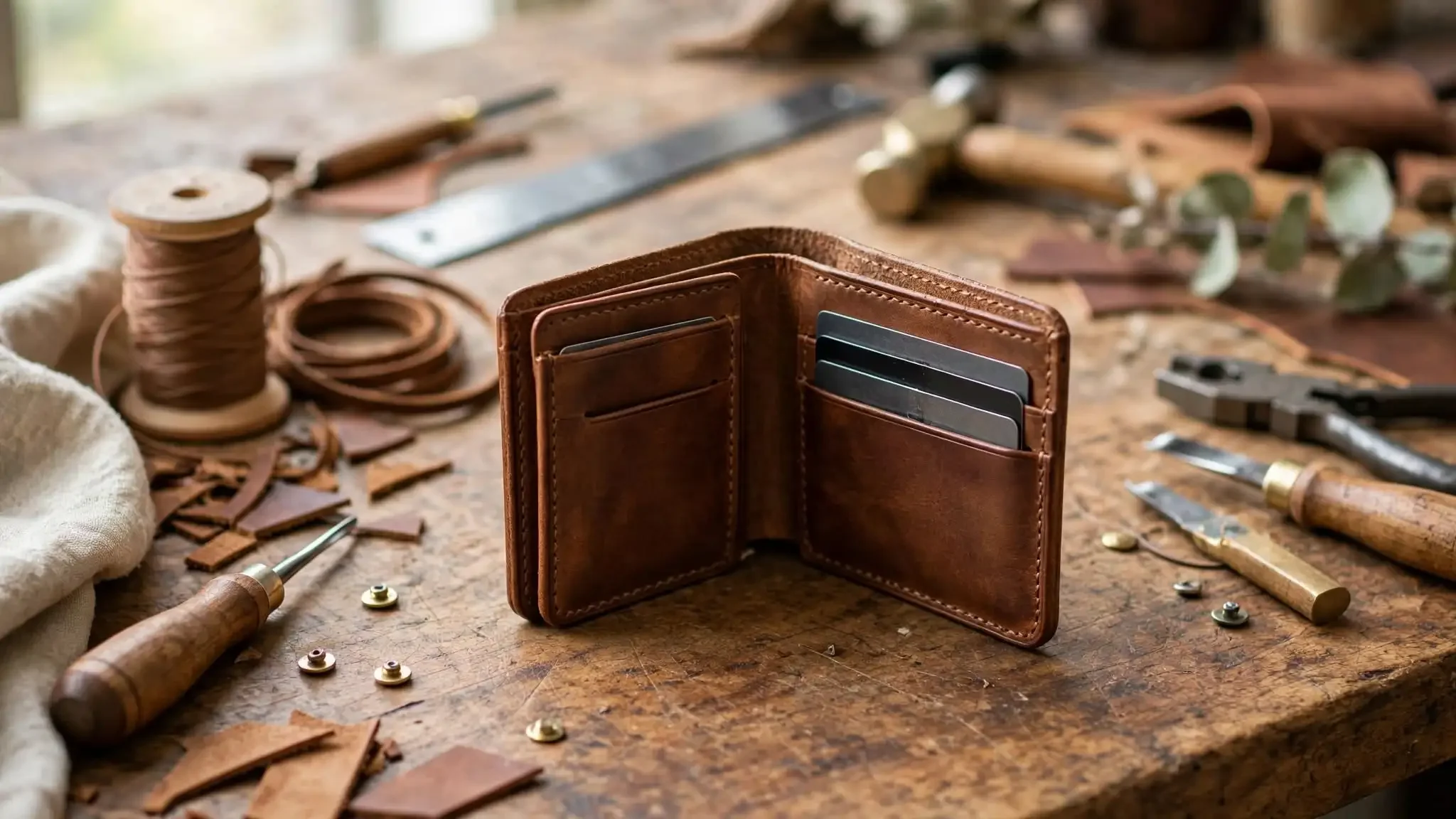
12. Front Pocket Wallet
A slim design engineered specifically for front-pants-pocket carry flat, compact, and horizontal rather than vertical to match the pocket geometry. Front pocket wallets reduce the risk of back-pocket-related spinal alignment issues and are significantly more pickpocket-resistant than back pocket carry.
Best leather: Full-grain or top-grain in a thin gauge. The flat, low-profile design is the point heavy leather or bulky construction defeats the purpose.
Best for: Men who carry minimally and prefer front pocket carry for comfort and security reasons.
The Leather Grades That Determine How Long a Wallet Lasts
This is the section every competitor skip, and it's the information that matters most when you're deciding how much to spend.
Full-grain leather the highest grade available retains the complete outer surface of the hide with no sanding, buffing, or correction. The natural fiber density at the surface is intact, making it the strongest, most moisture-resistant, and most durable leather available. In daily wallet use the most demanding use any leather object experiences full grain is the only grade that consistently ages well rather than simply wearing out.
Top-grain leather has been lightly sanded to remove surface imperfections and given a finish coat. Slightly less durable than full grain; significantly more uniform in appearance. Most mid-range quality wallets use top-grain. It's a genuinely good material not a compromise but it doesn't develop the same depth of patina that full grain does.
"Genuine leather" sounds like an assurance of quality. It is not. "Genuine leather" is a specific grade designation referring to lower layers of the hide, heavily processed to create a uniform surface. It is the third tier of a four-tier hierarchy. Wallets labeled "genuine leather" are typically made with this grade functional for a few years, but it will not age gracefully.
Bonded leather / faux leather ground leather scraps mixed with adhesive and bonded to a backing, or synthetic polyurethane with a leather-look surface. It begins peeling and cracking at flex points (the wallet fold, the card slot openings) within 1–3 years. The look of deterioration is familiar to anyone who has owned a budget wallet for more than two seasons.
How long each leather grade lasts in daily wallet use
| Leather Grade | Expected Lifespan | Patina Development | What Happens with Age |
|---|---|---|---|
| Full-grain (vegetable-tanned) | 15-25+ years | Exceptional - deep, personal, unique | Softens, darkens at wear points, becomes more beautiful |
| Full-grain (chrome-tanned) | 10-20 years | Good - more subtle than veg-tanned | Softens and conforms; less dramatic color development |
| Top-grain leather | 5-15 years | Limited - surface finish limits patina | Wears but doesn't patina in the same way |
| Corrected-grain / "Genuine leather" | 2-5 years | None - surface is processed | Wears uniformly, eventually cracks at fold and slot points |
| Bonded / faux leather | 1-3 years | None - deterioration, not aging | Peels, flakes, and falls apart at flex points |
Vegetable tanning vs chrome tanning: The tanning process matters for wallets more than for most other leather goods, because the constant handling accelerates the patina process. Vegetable-tanned leather processed with natural plant tannins rather than industrial chromium salts develops a richer, faster, more dramatic patina under daily handling. Chrome-tanned leather is more uniform, more water-resistant, and produces a more predictable surface. For wallets used as long-term investment pieces, vegetable tanning is the choice.
How Genuine Leather Wallets Age: The Patina Story
A full-grain leather wallet starts its life firm, sometimes stiff, with a surface that is essentially factory-fresh. What happens next, over years of daily use, is something no synthetic material can replicate.
Your hands transfer natural oils to the leather surface every time you handle the wallet. The heat of your body carried in your pocket through the day gradually softens the leather fibers and helps those oils penetrate. The friction of cards going in and out polishes the surface. The leather conforms to your specific carry position, gradually breaking in to your particular pocket geometry.
The result, at year three or five or ten, is a wallet that is uniquely yours. The high-contact areas the card slot openings, the bill compartment edge, the fold darken and polish. The lower-contact areas retain more of the original color. The overall effect is a patina that records the years of use in the leather itself.
Vegetable-tanned leather develops the most dramatic patina. It starts in a natural tan or light brown, and under daily handling, progressively darkens and deepens over years a process leather enthusiasts refer to as "toning." At fifteen years of daily carry, a quality full-grain veg-tanned wallet is often at its visual best.
Top-grain leather ages it softens and conforms but the processing that creates its uniform surface also limits how deeply oil can penetrate and how dramatically the patina develops.
Faux and bonded leather don't age they deteriorate. There is no patina, no character, no individual story. There is only the slow failure of the polyurethane surface layer peeling away from the backing. The opposite of beautiful.
When someone picks up a thirty-year-old full-grain leather wallet and calls it remarkable, they're looking at this process in its most complete expression
What Separates a $50 Wallet from a $500 Wallet: Quality Markers
Stitching: Run your finger along the seam lines. Quality leather wallets use saddle stitching two needles passing through the same hole from opposite sides which means if one thread breaks, the stitch holds. Machine stitching uses a loop mechanism; when one thread breaks, the seam unravels. Count the stitches per inch: 8–10 is quality; fewer means the seams will fail first. The thread should be waxed linen it won't rot, won't absorb moisture, and holds its tension over years.
Edge finishing: The cut edges of the leather along the wallet's perimeter and each card slot opening are one of the clearest quality signals. Edges should be burnished (hot-polished to a smooth, rounded finish), not painted with raw edge paint. Painted edges crack and peel; burnished edges age gracefully. Run your fingernail along the edge a quality burnished edge is smooth and firm; a painted edge shows the raw fibers beneath a thin coat of paint.
Skiving: Fold the wallet at its natural crease and look at the cross-section. Quality wallet makers thin (skive) the leather at fold and seam areas to reduce bulk without sacrificing structural integrity. A wallet that hasn't been skived is unnecessarily thick at the fold a sign that the maker didn't pay attention to the fine detail.
Hardware: On wallets with snaps, buckles, or closures, the hardware tells you what you need to know. Brass snaps and closures hold their finish; plated zinc hardware shows the base metal within a year. A magnet closure should have a strong, clean action a weak or imprecise magnet will fail.
The bend test: Fold the corner of the wallet back and release it. Full-grain leather returns to position smoothly. Faux or bonded leather holds a crease.
The smell test: Genuine leather has a distinctive earthy, slightly mineral smell. Faux leather smells chemical or plasticky. Heavily processed "genuine leather" often smells of adhesive or finish chemicals rather than natural hide.
Custom Leather Wallets: Made Exactly for You
A custom leather wallet is the wallet that fits your exact specification the grain, the color, the closure style, the exact number of card slots in the configuration that suits your carry, any personalization or embossing. Nothing about it is a compromise with what was available in a store.
At Lebanon Leather Work, we make custom leather wallets from scratch at our Lebanon, NJ workshop. Every element is specified by you: leather type and color, wallet style, slot configuration, edge finish, hardware, lining, and any personalization. We cut, stitch, and finish by hand.
Custom wallets are also a genuinely meaningful gift a piece made specifically for one person, in their colors and to their carry habits, that they will use daily for decades. We make them for individuals, as wedding gifts, as corporate recognition pieces, and as personalized keepsakes.
Turnaround: typically 2–4 weeks from consultation to delivery.
Inquire about a custom leather wallet →
How to Care for a Leather Wallet
Wallets receive more natural conditioning than any other leather piece the oils from your hands are conditioning the leather every time you handle it. For most full-grain wallets in daily use, this natural contact is enough to maintain the leather without dedicated conditioning.
Occasional conditioning: Every 6–12 months, apply a small amount of leather conditioner with a soft cloth. This is less frequent than for jackets or bags because of the natural oil transfer from handling. Over-conditioning a wallet can darken it faster than natural aging would.
Moisture exposure: If the wallet gets wet, allow it to dry naturally at room temperature not with heat, which can cause the leather to shrink and the stitching to pull. Once dry, apply a light coat of conditioner.
Cleaning: For everyday grime, a slightly damp cloth is enough. For more stubborn marks, see our leather stain removal guide for the safe approach by stain and leather type.
Overstuffing: The single most damaging thing people do to their wallets is overstuff them. Carrying 15 cards in a 6-card bifold creates constant lateral pressure on the seams and warps the wallet's shape. The card slot stitching is designed for the wallet's specified capacity routinely exceeding it shortens the wallet's life significantly.
Long-term storage: For a wallet being stored for more than a few months a secondary wallet you use occasionally condition lightly, wrap in a cotton cloth (not plastic), and store in a cool, dry location. For full storage best practices, our leather storage guide covers this in detail.
When a Leather Wallet Can Be Repaired
Quality leather wallets are worth repairing. At our Lebanon, NJ workshop, the most common wallet repairs we see are:
Lining failure: The interior fabric lining tears away from the leather. Re-lining a wallet is a straightforward repair that restores full function.
Stitching failure: The thread at a card slot opening or bill compartment seam breaks and begins to unravel. Re-stitching either by saddle stitch or reinforced machine stitch before the seam fully separates is a fast and inexpensive repair.
Snap or closure failure: A snap that won't hold, or a magnetic closure that has lost its strength. Hardware replacement is a standard leather repair.
Color fading or staining: Professional color restoration and re-dyeing can address significant fading or set staining on a wallet that would otherwise be discarded.
The wallets that cannot be meaningfully repaired are those made from faux or bonded leather once the surface is peeling, there is no substrate worth repairing. The correct response to a failing faux leather wallet is replacement, ideally with something in genuine full-grain leather that won't require the same conversation in eighteen months.
For more detail on what we repair and how the process works, see our leather repair service or contact us for a free assessment.
Ready to Commission a Wallet Built for You?
Walk-ins are welcome at our Lebanon, NJ workshop. Or contact us by email with your vision the style you have in mind, the leather color and finish you want, any personalization and we'll respond with a timeline and cost before anything is committed.
Workshop: 1271 US-22, Lebanon, NJ 08833
Email: lebanonleatherwork@gmail.com
Phone: (551) 333-8186
Inquire about a custom leather wallet →
Frequently Asked Questions
What are the main types of leather wallets?
The main types of leather wallets are bifold, trifold, card holder or slim wallet, money clip wallet, long or continental wallet, zip-around wallet, travel and passport wallet, checkbook wallet, coin purse, wristlet wallet, phone wallet, and front pocket wallet. They differ in storage capacity, folding structure, carry style, and intended use. The bifold is the most widely used everyday style; card holders are the most popular minimalist option.
What is the difference between a bifold and a trifold wallet?
A bifold wallet folds once along its center, creating two panels typically holding 4–8 cards and a bill compartment. A trifold folds twice across two points, creating three panels with more card slots (typically 8–12) and stronger organizational structure. The bifold is slimmer; the trifold holds more but is thicker when fully loaded.
How long does a leather wallet last?
A full-grain leather wallet in daily use lasts 15–25 years or more with normal care. Top-grain leather wallets last 5–15 years. Wallets labeled "genuine leather" (a specific lower-grade designation, not an assurance of quality) typically last 2–5 years. Faux or bonded leather wallets begin peeling and cracking at fold and slot points within 1–3 years. The leather grade is the primary determinant of lifespan.
What is the best leather for a wallet?
Full-grain leather is the best leather for any wallet intended to last. It retains the complete natural fiber structure of the hide, develops a rich patina over years of daily use, and is significantly more durable than lower grades. Vegetable-tanned full-grain leather develops the most dramatic patina and is the choice of leather enthusiasts who want a wallet that becomes more beautiful with age.
Do leather wallets get better with age?
Yes but only genuine full-grain leather wallets. Full-grain leather develops a patina over years of daily use, as natural oils from handling penetrate the surface, the leather softens and conforms to your carry habits, and high-contact areas develop a distinctive polished depth. Vegetable-tanned leather develops the most dramatic patina. Top-grain leather ages more subtly. "Genuine leather" and faux leather don't improve they deteriorate.
Can you get a custom leather wallet?
Yes. A custom leather wallet where the style, leather grade, color, number and configuration of card slots, closure type, and any personalization are all specified to your preferences can be commissioned from skilled leather craftsmen. Lebanon Leather Work in Lebanon, NJ makes custom leather wallets to order. Learn more about our bespoke leather goods service.
What is the difference between "genuine leather" and "full-grain leather"?
Despite sounding like a quality assurance, "genuine leather" is a specific leather grade designation the third tier in a four-grade hierarchy, below full-grain and top-grain. It refers to lower layers of the hide that have been heavily processed to create a uniform surface. Full-grain leather is the highest grade, retaining the complete natural grain surface and fiber structure. A wallet labeled "genuine leather" is not a premium product; a wallet labeled "full-grain leather" or "top-grain leather" is.
How do I know if a leather wallet is good quality?
Check five things: stitching (saddle-stitched with waxed linen thread, 8–10 stitches per inch), edge finishing (burnished smooth edges, not painted raw edges), skiving (the leather at the fold should be thinned for flexibility without bulk), hardware (brass or stainless steel hardware, YKK zippers where applicable), and the bend test (full-grain leather returns from a fold; faux leather holds the crease). The smell also matters genuine leather has an earthy, natural smell.
Can leather wallets be repaired?
Yes, in most cases. Torn linings can be replaced, failed stitching can be re-sewn, broken snaps and closures can be replaced, and faded leather can be color-restored. Quality leather wallets are worth repairing rather than replacing the repair cost is typically a fraction of a comparable new wallet. Faux and bonded leather wallets cannot be meaningfully repaired once the surface layer begins failing.
How should I care for a leather wallet?
Leather wallets receive significant natural conditioning from daily handling the oils from your hands penetrate the leather every time you use it. Dedicated conditioning is therefore needed only every 6–12 months. Avoid overstuffing carrying more cards than the wallet is designed for creates lateral pressure on seam stitching and warps the wallet's shape over time. If the wallet gets wet, allow it to dry naturally at room temperature, not with heat.