
How to Clean a Leather Jacket (Without Damaging It)
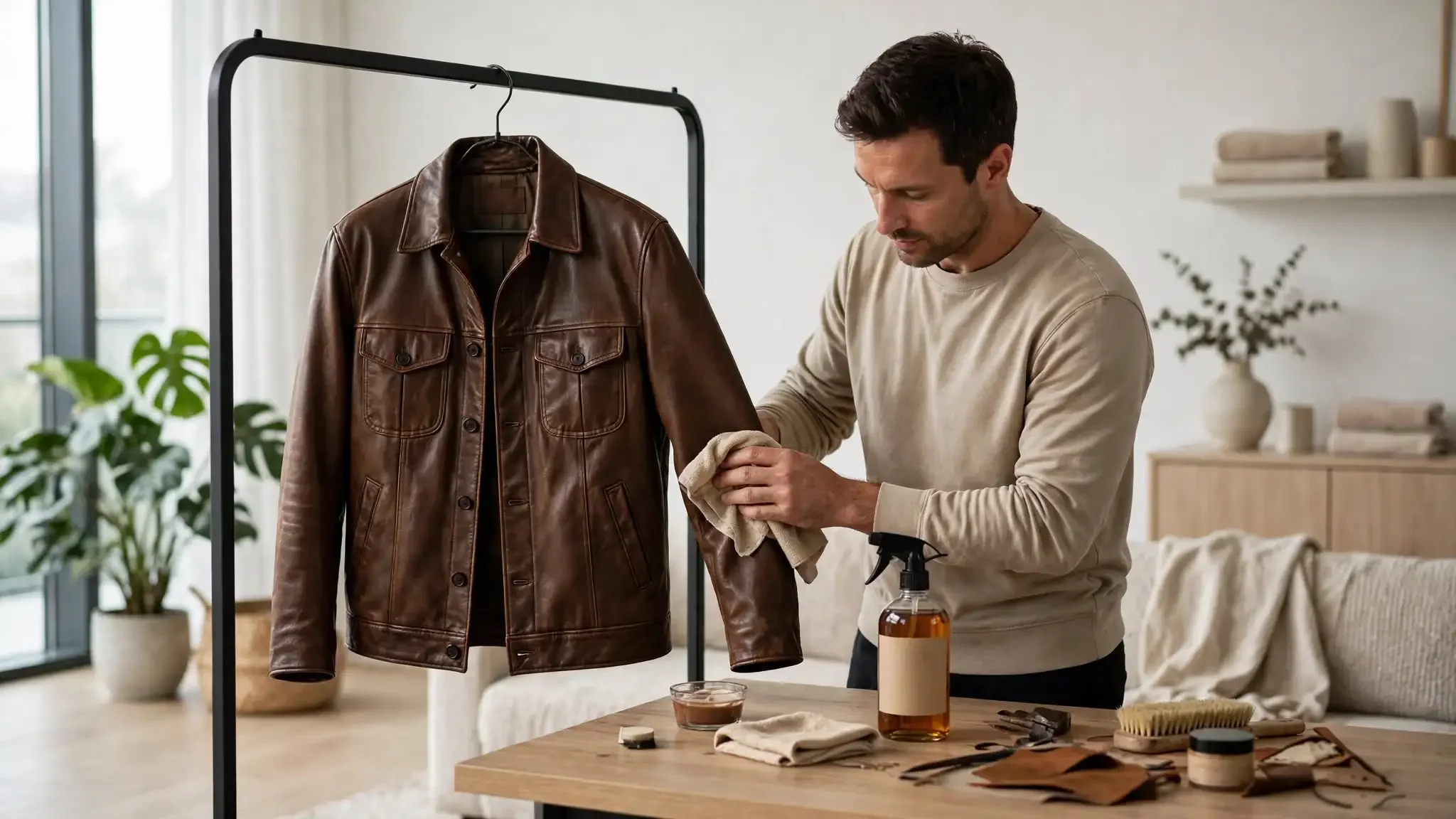
To clean a leather jacket, wipe it down with a soft cloth dampened with distilled water, treat stains with a leather-safe cleaner, dry naturally at room temperature away from heat, then condition with a leather conditioner once fully dry. Never machine wash or soak it.
That is the short version. The full version matters more, because the details are where most people go wrong. The wrong product, the wrong pressure, or skipping one step can crack the leather, strip the color, or leave a stain that was fixable become one that is not.
This guide covers every part of cleaning a leather jacket properly, including stain removal by stain type, lining care, odor removal, what products to avoid, and when the job calls for a professional instead of a home kit.
Step One: Know Your Leather Type Before You Clean Anything
This is the step almost every guide skip, and it is the most important one. Different leather types react differently to cleaning products and moisture. Using the wrong approach on the wrong leather is the most common cause of permanent damage.
Here is how to identify what you are working with:
Full-grain leather is the highest quality. It has a natural, slightly uneven texture and develops a rich patina with age. It is supple and responds well to most quality leather cleaners and conditioners.
Top-grain leather has been lightly buffed for a more uniform look. It is slightly less breathable than full grain but still very durable. Clean and condition in the same way as full grain.
Genuine leather is a lower grade made from the inner layers of the hide. It feels thinner and less substantial. It can be cleaned gently but dries out faster, so conditioning is especially important.
Bonded leather is made from ground leather fiber mixed with adhesive and coated in polyurethane. It looks like leather but peels and cracks at the surface as it ages. Clean it very gently with a barely damp cloth and a mild leather cleaner. Heavy scrubbing or any moisture-rich product will accelerate peeling.
Suede and nubuck require completely separate care from smooth leather. Do not use any liquid cleaner, soap, or conditioner made for smooth leather on suede or nubuck. Use a suede brush and a suede eraser. If you have a suede leather jacket and it has a significant stain, professional cleaning is the safest route.
If you are not sure what your jacket is made from, check the care label inside the collar or at the inner hem. If there is no label, treat it as genuine leather and proceed with the lightest approach possible.
What You Need Before You Start
Gather everything before you begin so you are not stopping to look for something mid-clean.
Two soft microfiber cloths or lint-free cloths
Distilled water (tap water can leave mineral marks on leather)
A leather-specific cleaner or a small amount of mild pH-neutral soap
A leather conditioner suitable for your jacket's leather type
A soft-bristled brush (for textured or embossed leather)
A wide padded hanger
Acid-free tissue paper or a clean rolled towel (to stuff the jacket while drying if needed)
That is all you need for a standard clean. Stain removal may require a few additional items, which are listed in the stain section below.
How to Clean a Leather Jacket: Step by Step
Step 1: Dust and Surface Debris
Before any liquid touches your jacket, remove loose dust and surface dirt. Wipe the entire jacket with a dry microfiber cloth using gentle, even strokes. Pay attention to seams, collar folds, and under the arms where dust collects.
If the jacket has any textured or embossed panels, use a soft brush to get into the grain before wiping.
Step 2: Spot Check Any New Product
If you are using a leather cleaner for the first time, test it on a hidden area first. The inner collar fold or the underside of the hem is good spots. Apply a small amount, leave it for two minutes, and check for any discoloration or reaction before moving to visible areas. This takes two minutes and can save a jacket.
Step 3: Spot Clean Stains First
Before you clean the whole jacket, deal with individual stains. Dampen a cloth lightly with your leather cleaner or mild soap solution and work on each stained area with gentle circular motions. Use very light pressure. Do not scrub. The goal is to lift the mark, not push it deeper.
For stain-specific techniques, see the stain removal section below.
Step 4: Clean the Full Jacket
Dampen a clean microfiber cloth with distilled water and add a small amount of leather cleaner. The cloth should feel barely damp, not wet. Work across the jacket in sections, using gentle circular motions. Overlap slightly between sections so you do not leave lines.
Avoid over-saturating any single area. If the leather starts to feel damp rather than just slightly moist, you have used too much liquid. Switch to a dry cloth and let that section recover before continuing.
Step 5: Wipe Down with a Clean Damp Cloth
Once you have cleaned the full jacket, go over it again with a fresh cloth dampened with plain distilled water. This removes any soap or cleaner residue, which can dry out the leather if left behind.
Step 6: Dry Properly
Hang the jacket on a wide padded hanger immediately after cleaning. Do not bunch it or fold it. Place it in a well-ventilated room away from sunlight, radiators, and heating vents. Let it air dry completely at room temperature.
This usually takes two to four hours depending on how damp the jacket got during cleaning. Do not rush the drying with a hair dryer, fan heater, or by placing it near a radiator. Heat applied during drying is one of the most common causes of leather cracking.
Step 7: Condition the Leather
Once the jacket is fully dry, apply a leather conditioner. Conditioning replaces the natural oils that cleaning removes. Skipping this step after cleaning leaves the leather slightly drier than it started, which leads to cracking over time.
Apply a small amount of conditioner to a clean, soft cloth and work it into the leather with circular motions. Cover the full jacket evenly. Let it absorb for 15 to 20 minutes, then buff off any excess with a clean dry cloth.
How to Clean a Leather Jacket Lining
The lining of a leather jacket is a separate material from the outer leather and needs separate handling. Getting water on the outer leather while cleaning the lining is a common mistake.
Fabric Lining
Turn the jacket fully inside out. Dampen a cloth with a small amount of very mild soap and water. Gently wipe the lining in sections, following the direction of the fabric. Wipe with a clean damp cloth to remove soap, then leave the jacket inside out on a hanger to air dry before turning it right-side out.
For odors in the fabric lining, see the odor removal section below.
Leather Lining
Some premium leather jackets have a leather or suede inner lining. Treat it the same way as the outer jacket: a barely damp cloth with mild leather cleaner, wiped gently, followed by conditioning once dry. Do not scrub the inner suede of a shearling jacket. Brush it gently with a suede brush when dry.
How to Remove Stains from a Leather Jacket
| Stain Type | First Action | Treatment | What to Avoid |
|---|---|---|---|
| Oil / Grease | Blot immediately, do not rub | Apply cornstarch or talcum powder, leave 4 to 6 hours, brush away gently | Water (spreads oil deeper) |
| Ink | Act immediately | Cotton swab with rubbing alcohol, dab from the edge inward, never rub | Rubbing (spreads the ink) |
| Water Stain | Dampen the full panel | Wet the entire panel around the mark with a damp cloth so the waterline dries evenly | Drying with heat |
| Food / Sauce | Scrape off solid matter gently | Mild soap and water on a cloth, blot the area, wipe clean | Scrubbing, harsh cleaners |
| Sweat / Body Oils | Wipe collar and cuffs after wear | Leather cleaner on a cloth, work in circular motions on affected areas | Leaving it to build up over time |
| Salt Stains | Brush off dried salt first | Equal parts white vinegar and water on a cloth, dab the stain, wipe clean, condition | Letting salt residue sit (it dries the leather fast) |
| Mold / Mildew | Take the jacket outside first | Equal parts white vinegar and water, wipe the affected area, dry fully, condition | Storing without fixing airflow |
| Dye Transfer | Act quickly | Leather dye transfer remover product, or professional cleaning for light-colored leather | Home bleach or any whitening product |
Oil and Grease Stains
Blot the area immediately with a dry cloth. Do not rub. Sprinkle cornstarch or unscented talcum powder over the stain and leave it for at least four to six hours, or overnight for a heavy stain. The powder draws the oil out of the leather fibers. Brush it away gently and repeat if the stain persists. Do not apply water to a fresh oil stain as it drives the oil deeper.
Ink Stains
Dip a cotton swab in rubbing alcohol and dab the edge of the stain working inward toward the center. This stops the ink from spreading. Work slowly and use a clean part of the swab each time. For dried ink, a dedicated leather ink remover product gives better results than rubbing alcohol.
Do not use nail polish remover on most leathers. Despite being a common recommendation online, acetone in nail polish remover strips leather pigment and can cause permanent discoloration.
Water Stains
Wipe a larger area around the stain with a barely damp cloth so the whole leather panel gets a similar level of moisture. This allows the watermark to dry evenly without leaving a tide line. Condition the area once completely dry.
Sweat and Body Oil Buildup
The collar, cuffs, and inner forearm areas of a leather jacket accumulate body oils more than any other part. Over time this causes darkening and can soften the leather unevenly. Wipe these areas down with a leather cleaner after heavy wear and give the full collar and cuffs a proper clean every few weeks if you wear the jacket often.
Mold and Mildew
Take the jacket outside before treating mold to avoid spreading spores indoors. Mix equal parts white vinegar and water and wipe the affected area with a cloth dampened in the solution. Vinegar kills mold spores. Wipe with a clean damp cloth, then let the jacket air dry completely before conditioning. Check the lining too, as mold often starts from the inside. Improve storage conditions (better airflow, silica gel nearby) to prevent it recurring.
Salt Stains
Salt from roads, pavements, or sweat leaves a white residue that dries out leather quickly if left. Brush off any visible dry salt first. Then dab the area with a cloth dampened in a 50/50 mixture of water and white vinegar. Wipe clean, dry, and condition. Act on salt stains as soon as you notice them.
What Never to Use on a Leather Jacket
Every competitor guide tells you what to use. Almost none tell you what to avoid. This matters because the products most people reach for instinctively are the ones that cause the most damage.
Washing machine This is the biggest one. A leather jacket cannot go in a washing machine. The agitation, detergent, and sustained water exposure will crack the leather, warp the structure, and cause the jacket to shrink and stiffen. There is no exception to this.
Tumble dryer Even if the jacket got very wet, never put it in a dryer. Heat causes leather to shrink, harden, and crack. Air dry only.
Baby wipes A very common choice because they seem gentle. Most contain alcohol, preservatives, and glycerin compounds that break down leather's protective coating over repeated use. They are fine for skin, not for leather.
Hand sanitizer High alcohol concentration. Repeated contact with leather causes drying and surface cracking over time. Wipe down any area that hand sanitizer touches.
Dish soap used repeatedly A tiny amount of mild dish soap in water is acceptable for a one-off clean. Used regularly, even gentle dish soaps strip the natural oils from leather. Use a proper leather cleaner instead.
Hairdryer or direct heat Drying leather with a hairdryer causes the outer surface to dry faster than the inner layers, which creates cracking and stiffness. Always air dry at room temperature.
Olive oil, coconut oil, or petroleum jelly Frequently suggested on DIY websites as natural conditioners. All three cause long-term problems: they darken leather unevenly, attract and trap dust in the grain, and become rancid inside the material over time. Use a conditioner made for leather.
Bleach or multi-surface spray These remove leather pigment and destroy the protective coating. Even diluted bleach will leave permanent pale patches on colored leather.
Removing Smells from a Leather Jacket
Odor removal from leather is not covered properly in most guides. Here is what actually works.
For general stale odors or storage smell: Hang the jacket in fresh air outdoors, out of direct sunlight, for several hours. Leather breathes, and most mild odors dissipate with good airflow. Do this at the start of each season.
For sweat odor from the lining: Turn the jacket inside out. Mix one-part white vinegar with two parts water. Lightly mist the fabric lining with this solution using a spray bottle, then hang to air dry inside out. Do not spray directly on the leather panels.
For smoke odor: Hang the jacket in fresh air for 24 to 48 hours. If the smell persists, a light application of a leather deodorizer spray on the outer surface and a vinegar-water mist on the lining usually handles it. For heavy smoke saturation, professional cleaning is more effective than home treatment.
For mildew smell: Follow the mold treatment steps above. The smell usually goes once the spores are treated and the jacket has fully dried out in good airflow.
How to Store a Leather Jacket Properly
How you store your jacket between wears affects how much cleaning it needs and how long it lasts.
Always hang a leather jacket on a wide, padded hanger. Wire hangers cause shoulder creasing that becomes a permanent deformation in the leather over time.
Store it in a cool, dry, well-ventilated space. Avoid plastic garment bags, which trap moisture and encourage mold. If you use a garment bag, use one made from breathable fabric.
Keep it away from direct sunlight and away from radiators or heating vents. Both fade the color and dry the leather.
For long-term storage (more than a few weeks), condition the jacket before putting it away, stuff the sleeves loosely with acid-free tissue to help them hold shape, and store it somewhere with some air circulation.
How Often to Clean Your Leather Jacket
| Task | Frequency | Notes |
|---|---|---|
| Wipe down collar and cuffs | After every few wears | These areas accumulate oils fastest |
| Spot clean stains | Immediately when they occur | Delay makes most stains harder or impossible to remove |
| Full surface clean | Once or twice per year | Start and end of season are natural times |
| Condition the leather | Every 3 to 6 months | Always condition after any full clean |
| Apply waterproofing spray | Before rainy season | Reapply if the jacket gets heavily wet |
| Air the jacket out | Start of each season | Hang outdoors in shade for a few hours |
| Professional deep clean | Every 2 to 3 years | Or when damage, deep stains, or fading appear |
When to Call a Professional Instead of Cleaning at Home
Home cleaning handles maintenance. A professional leather specialist handles everything beyond that.
Call a professional for:
Cracks or tears in the leather surface that need repair before cleaning makes them worse
Color fading across a large area that needs professional color restoration
Deep stains (heavy ink, severe mold, large oil saturation) that have not lifted with home treatment
Dye transfer that has stained the leather from clothing
Stitching that is failing or has separated
Structural issues with the jacket, including lining delamination or zipper failure
A jacket of significant sentimental or financial value where you do not want to risk it
Attempting aggressive home treatment on any of the above problems almost always makes them more difficult and expensive to fix. A professional leather repair and restoration specialist can often make damage invisible where home treatment made it worse.
Lebanon Leather Work provides professional leather jacket cleaning, restoration, and repair services from their shop at 1271 US-22, Lebanon, NJ. Services include deep cleaning, color restoration, crack repair, stitch repair, and full jacket restoration. They serve all 21 New Jersey counties and accept mail-in pieces from clients across the country.
If your jacket has more going on than a surface clean can address, visit Lebanon Leather Work for a free assessment. And if your leather furniture or car seats need the same level of attention, their leather upholstery repair service</a> covers sofas, chairs, and automotive interiors with the same professional approach.
Frequently Asked Questions
Can I put a leather jacket in the washing machine?
No. A leather jacket cannot go in a washing machine under any circumstances. The combination of sustained water exposure, agitation, and detergent will crack the leather, warp the structure, and cause shrinkage. Clean leather jackets by hand only, using a barely damp cloth and a leather-safe cleaner.
How do I clean a leather jacket at home without damaging it?
Wipe the jacket with a soft cloth dampened with distilled water and a small amount of leather cleaner. Work in sections with gentle circular motions. Wipe off any cleaner residue with a clean damp cloth, then air dry at room temperature on a padded hanger away from heat. Condition the leather once fully dry.
How often should I clean my leather jacket?
Wipe down the collar and cuffs after every few wears. Do a full surface clean once or twice per year. Condition every 3 to 6 months. Spot clean stains immediately when they happen. The faster you treat a stain, the better the outcome.
How do I get rid of smell in a leather jacket?
For general stale odors, hang the jacket outdoors in the shade for several hours. For sweat smell from the lining, turn it inside out and lightly mist the fabric lining with a 1:2 mixture of white vinegar and water, then air dry. For smoke odor, 24 to 48 hours of fresh air usually resolves it. For persistent odors, professional cleaning gives the best results.
How do I remove an oil stain from a leather jacket?
Blot the stain immediately with a dry cloth. Apply cornstarch or talcum powder over it and leave for four to six hours. The powder absorbs the oil from the leather fibers. Brush away gently and repeat if needed. Do not use water on a fresh oil stain as it pushes the oil deeper.
Can I use baby wipes to clean a leather jacket?
No. Baby wipes seem gentle, but most contain alcohol, preservatives, and moisture compounds that break down leather's protective coating over time. Use a slightly damp cloth or a product specifically made for cleaning leather.
How do I clean the lining of a leather jacket?
Turn the jacket inside out. Clean a fabric lining with a cloth barely damp with mild soap and water, wiping in the direction of the fabric. For odors, mist lightly with diluted white vinegar and air dry inside out. For a leather or suede inner lining, treat it the same way as the outer jacket.
My leather jacket is cracking. Can it be repaired?
Yes, in most cases. Surface cracking in leather can be repaired professionally using leather filler, color-matched dye, and a sealed topcoat. The result is typically invisible. The sooner cracking is treated the less work is needed. Lebanon Leather Work handles leather jacket repair across New Jersey and accepts nationwide mail-in repairs. You can also explore their full range of leather repair services if you have other leather items that need attention.