
Leather Care Tips: The Complete Guide for Every Item
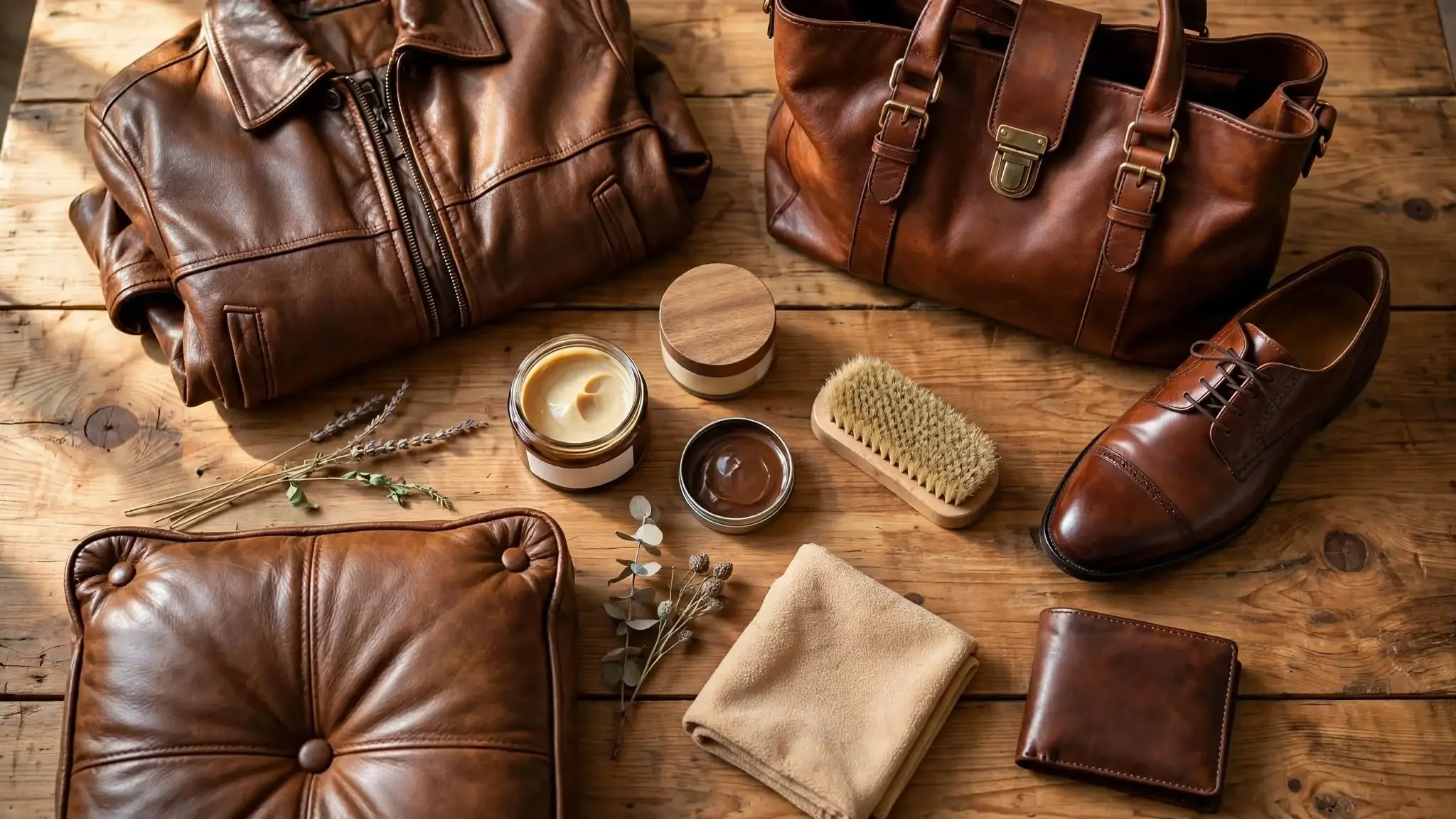
The core leather care tips are clean with a soft damp cloth, condition every 3 to 6 months, keep away from direct heat and water, store in breathable fabric bags, and use products made specifically for leather. The right approach varies by leather type and item, and this guide covers all of it.
Most people buy leather because it lasts. And it does, when it is cared for. Leave a leather bag unconditioned for a year and it starts to crack. Let a leather jacket sit damp in a wardrobe and it will develop mold. Treat a stain with the wrong product and you set it permanently.
None of this is complicated, but the details matter. This guide covers leather care for every item type, every leather type, and every situation, including the ones the basic guides skip.
Your Leather Care Schedule at a Glance
Before anything else, here is the reference table you should bookmark. This covers every common leather item with the care routine and frequency that keeps it in good shape.
| Item | Clean | Condition | Waterproof Spray | Deep Clean / Professional |
|---|---|---|---|---|
| Leather Bag / Handbag | Monthly wipe-down | Every 3 to 4 months | Twice a year | Every 1 to 2 years |
| Leather Jacket | After each season | Before storage + spring | Start of rainy season | Every 2 to 3 years |
| Leather Shoes / Boots | After every wear | Every 4 to 6 weeks | Start of winter / rainy | When soles or upper fail |
| Leather Belt | Monthly wipe | Every 6 months | Not usually needed | If cracking or stiffening |
| Leather Sofa / Upholstery | Weekly wipe | Every 6 to 12 months | Not usually needed | Every 2 to 3 years |
| Leather Car Seats | Monthly wipe | Every 3 months | Not usually needed | When cracking begins |
| Leather Wallet | Monthly wipe | Every 6 months | Not needed | Rarely needed |
Care by Leather Type
Full-Grain Leather
Full grain is the highest quality leather. It has not been sanded or corrected, so it carries the natural texture of the hide. This is what most luxury bags, quality shoes, and premium furniture use.
Full-grain leather conditions well, develops a natural patina over time, and is very forgiving of regular use. Clean with a slightly damp cloth and a leather cleaner. Condition every 3 to 4 months with a quality wax or cream conditioner. This leather breathes well, so store in fabric, not plastic.
Top-Grain Leather
Top-grain has been lightly sanded to remove imperfections and usually has a pigmented coating. It looks uniform and clean. Most mid-range bags and shoes use top-grain. Care is similar to full-grain, but conditioning matters more here because the sanded surface is less naturally resilient. Stick to cream conditioners rather than wax-based products.
Suede
Suede is the most delicate leather you will encounter, and the most different to care for. It is made from the underside of the hide, which is soft and napped. Water and oil will stain it visibly and quickly.
For suede, never use liquid cleaners. Instead use a suede brush to restore the nap after each use and a suede eraser for marks. A suede protector spray applied before you use a new suede item is the single most effective thing you can do. If suede gets wet, let it dry naturally and brush gently once dry. Do not apply conditioner made for smooth leather to suede.
Nubuck
Nubuck is similar to suede but made from the grain side of the hide, sanded to a velvety finish. It is slightly more durable than suede but needs the same kind of care: suede brush, suede eraser, and a nubuck-specific protector spray. Do not use standard leather conditioners on nubuck.
Patent Leather
Patent leather has a high-gloss lacquered finish. It is more moisture-resistant than other leathers but scratches easily and can crack in cold temperatures. Clean with a damp cloth and a tiny drop of petroleum-free leather cleaner. To restore shine, a patent leather polish or even a small amount of petroleum jelly on a cloth works well. Store in soft cloth bags so the finish is not scratched by other items.
Bonded or Faux Leather
Bonded leather is made from ground leather fibers bonded with adhesive and a polyurethane coating. It looks like leather but peels and flakes as it ages because the layers separate. There is no conditioning treatment that fully prevents this, because the issue is structural. Clean gently with a damp cloth, and use a vinyl or faux leather conditioner to slow the process. If it is peeling extensively, professional repair can sometimes address it, but the material has a limited lifespan by nature.
The Four Core Steps of Leather Care
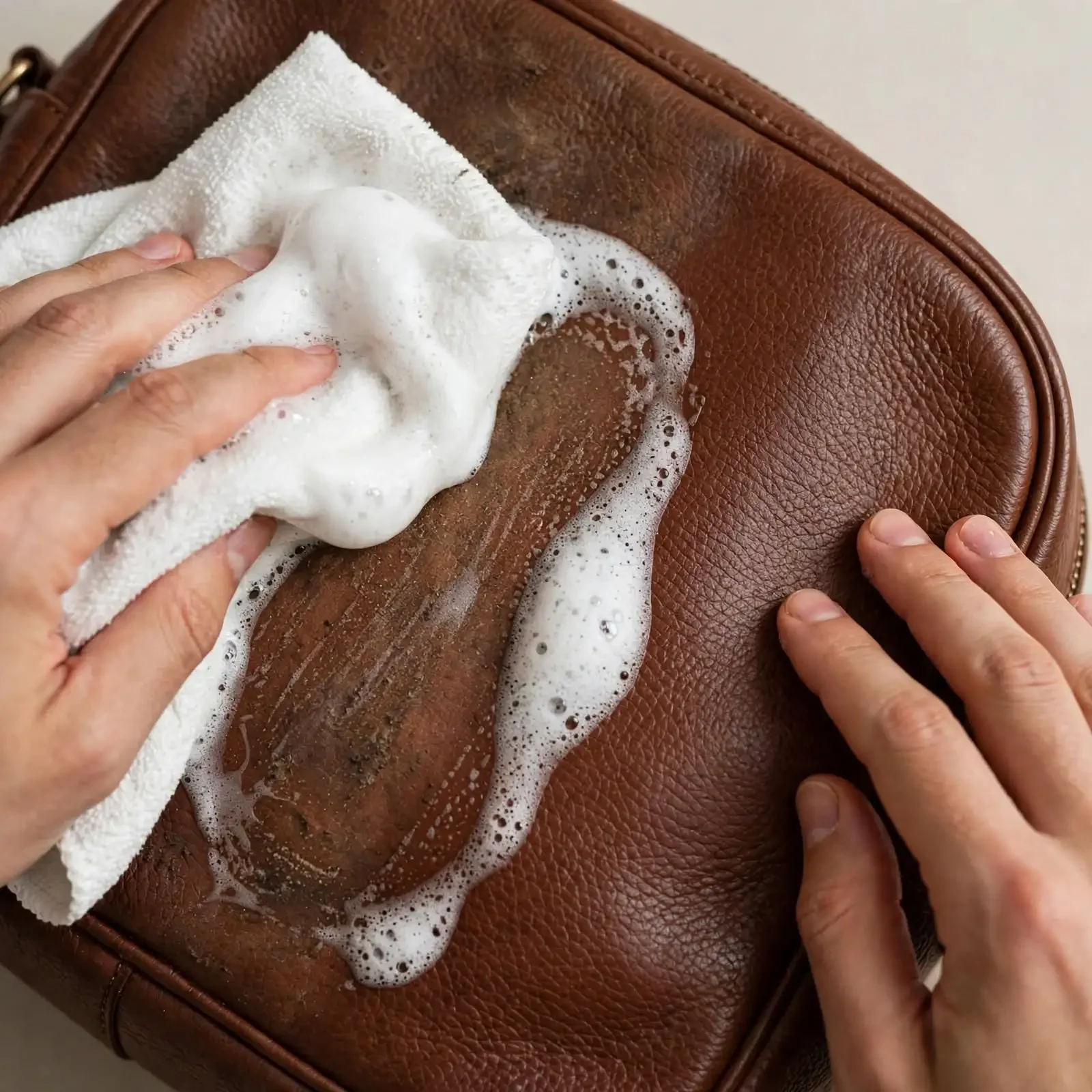
Step 1: Cleaning
Start with a soft dry cloth to remove dust and loose dirt. For more thorough cleaning, use a leather cleaner or a very lightly damp cloth with a tiny amount of mild pH-neutral soap. Work in small sections with light circular motions.
A few key rules:
Always test on a hidden area first.
Use distilled water rather than tap water where possible. Tap water can leave mineral marks on some leathers.
Never soak the leather. You want the surface barely damp, not wet.
Wipe with a dry cloth after cleaning and let the item air dry fully before moving to conditioning.
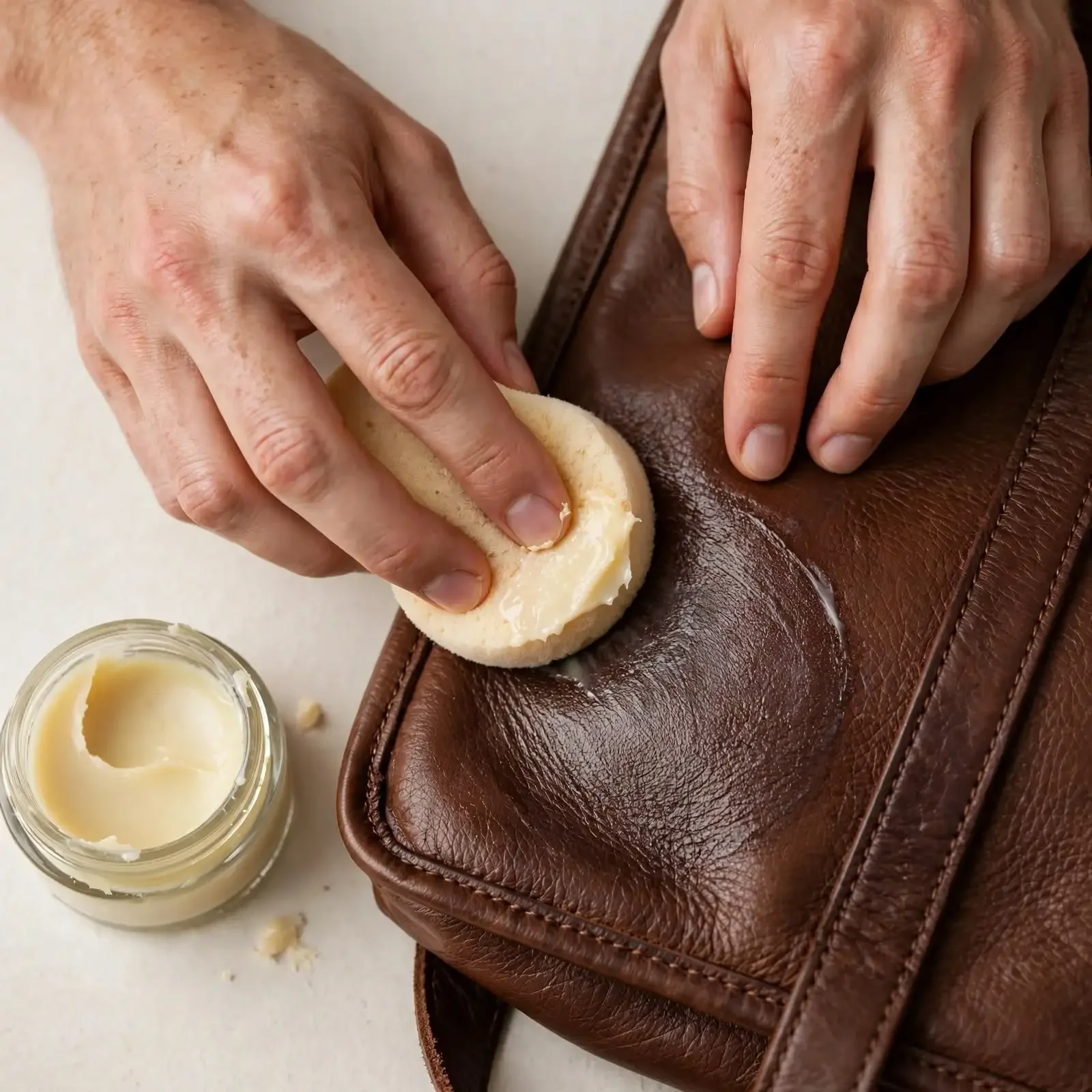
Step 2: Conditioning
Conditioning is what stops leather from drying out and cracking. Leather contains natural oils that evaporate over time, especially in air-conditioned rooms, dry climates, and hot car interiors.
Apply a small amount of leather conditioner to a soft cloth, not directly to the leather. Work it in with circular motions. Let it absorb for 15 to 30 minutes, then buff off any excess with a clean cloth.
On frequency: every 3 to 4 months is the general guideline. If you live in a dry climate or your leather item lives in a car or near a heater, condition more often, maybe every 6 to 8 weeks.
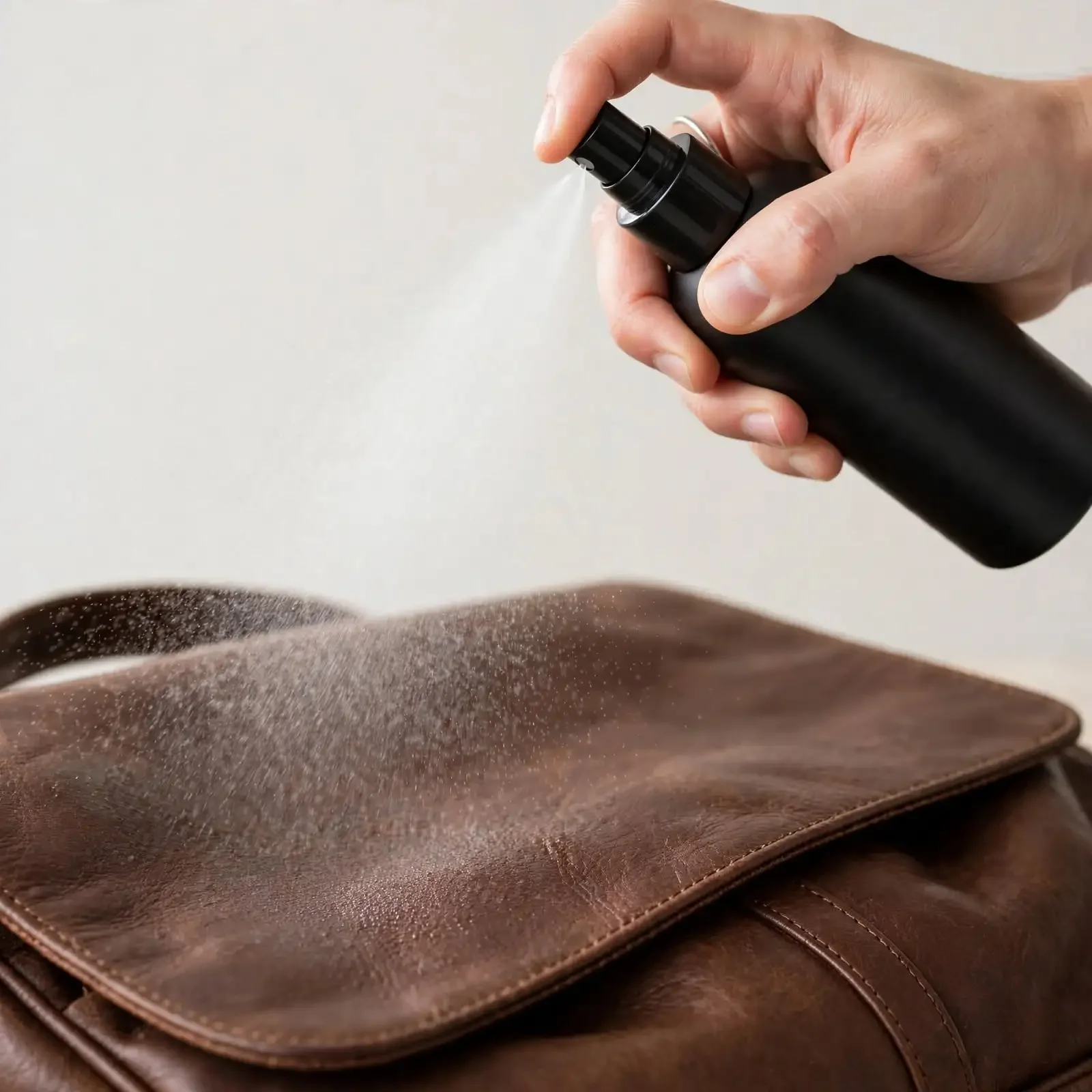
Step 3: Protection
A leather protector spray creates a barrier against water, stains, and UV damage. Apply to clean, conditioned leather. Hold the can about 20 cm away and spray in light, even passes. Let it dry completely before using the item. Reapply every 3 to 6 months, or before each rainy season.
For shoes and boots, this step is especially important before winter. For jackets and bags, it adds meaningful protection against rain and incidental spills.

Step 4: Storage
How you store leather between uses directly affects how long it lasts.
Store bags stuffed with acid-free tissue paper to hold their shape. Do not use newspaper, as the ink transfers.
Hang leather jackets on wide, padded hangers. Wire hangers cause shoulder creasing that becomes permanent.
Store leather shoes with shoe trees inside to absorb moisture and maintain structure.
Always use breathable fabric dust bags, not plastic. Plastic traps moisture and promotes mold.
Keep leather away from direct sunlight and radiators. A cool, dry place with good airflow is ideal.
Care by Item Type
Leather Bags and Handbags
Empty your bag fully before storing it. Wipe the inside lining with a slightly damp cloth and let it air. For structured bags, use tissue paper inside to maintain shape. Clean the hardware with a dry cloth to prevent tarnishing.
If your leather bag has suffered damage, including cracked handles, peeling corners, or failing stitching, these are all things a professional leather repair service can fix. The team at Lebanon Leather Work handles leather bag repairs including handle replacement, stitching restoration, corner repair, and colour matching. A repaired bag nearly always looks better than a replacement, and costs a fraction of the price.
Leather Jackets
Wipe a leather jacket down with a barely damp cloth after wearing it in the rain or working up a sweat. Let it air dry fully on a padded hanger before storing. Condition twice a year, once before storage and once when you bring it out for the season.
Do not fold a leather jacket for storage. The creases can become permanent, especially on stiffer leather. Always hang it in a breathable garment bag if storing for more than a few weeks.
For deep cleaning or restoration of a jacket that has faded, scuffed, or developed surface cracks, professional leather restoration gives significantly better results than home attempts.
Leather Shoes and Boots
Shoes need more frequent conditioning than any other leather item because they take more physical stress. After each wear, wipe off dirt with a dry brush or cloth. Every few weeks, clean properly, condition, and polish as needed.
For boots worn in winter, rinse off salt residue as soon as possible. Salt is one of the fastest ways to dry out and crack leather boots. Condition after any salt exposure, not just on schedule.
If your leather shoes or boots have worn soles, broken stitching, or damage to the upper, professional shoe and boot repair can restore them to full function at a fraction of replacement cost. Lebanon Leather Work provides shoe and boot repair services for all leather types, including restoration and resoling.
Leather Upholstery: Sofas, Chairs, and Car Seats
Leather furniture and car seats operate in a very different environment from bags and shoes. They experience body heat, UV through windows, and the friction of daily sitting. They need conditioning more than cleaning.
Wipe leather sofas and chairs weekly with a dry cloth to prevent dust building up in the grain. Condition every 6 to 12 months with a conditioner appropriate for furniture leather, which tends to be treated differently than bag or shoe leather.
Car seats should be conditioned every 3 months because of the extreme heat cycles inside a parked car. Hot summers will dry leather car seats out noticeably fast without conditioning.
If your leather sofa, chair, or car seats have cracked, torn, or faded beyond what at-home conditioning can address, professional upholstery repair is the practical solution. Lebanon Leather Work restores leather furniture and automotive upholstery across New Jersey, with repairs that are typically invisible and cost 60 to 80 percent less than replacement.
Leather Belts
Belts accumulate body oils along the inner surface and crease at the buckle hole from daily use. Wipe the outer surface with a leather conditioner every 6 months. The inner surface can be wiped with a barely damp cloth. Rotate which belt hole you use to slow creasing at one point.
Stain Removal by Stain Type
Oil or Grease Stains Blot the area immediately with a dry cloth. Do not rub. Sprinkle a small amount of cornstarch or unscented talcum powder over the stain and let it sit for several hours or overnight. The powder draws out the oil. Brush it away gently and repeat if needed. Do not use water on a fresh oil stain, as it will set it.
Ink Stains Act immediately. Dab a small amount of rubbing alcohol on a cotton swab and gently work the edge of the stain inward toward the center. This prevents spreading. For dried ink, a commercial leather ink remover works best. Do not use hairspray on leather, despite what older guides suggest. It contains alcohol and other compounds that damage the finish.
Water Stains Counterintuitive but effective: dampen the entire panel around the stain with a barely damp cloth so the water mark dries evenly rather than leaving a tide line. Let it dry naturally. Follow with conditioning once fully dry.
Food Stains Blot off any solid material gently first. Then clean the area with a leather cleaner or a tiny amount of mild soap on a damp cloth. Rinse with a clean damp cloth and dry. Condition after.
Mold or Mildew Mix equal parts water and white vinegar. Dampen a cloth with the solution and gently wipe the affected area. The vinegar kills the mold spores. Wipe with a clean damp cloth, dry fully, and then condition once the leather is completely dry. Store the item somewhere with better airflow to prevent recurrence.
Dye Transfer (usually from clothing) This is one of the harder stains to remove at home, particularly on light-coloured leather. A leather-specific dye transfer remover or cleaner is your best option. For severe dye transfer on a quality piece, professional colour restoration will get better results than home methods.
Seasonal Leather Care
Before Winter Apply waterproofing spray to boots, shoes, and any outdoor bags before the wet season starts. Salt from roads and pavements is one of the fastest ways to damage leather, so rinse boots after exposure and condition immediately. Store lighter leather items that you will not use in winter in breathable bags with their shape maintained.
During Summer Heat and UV damage leather faster than most people realize. A car interior can reach 70 degrees or more on a summer day, which dries car seat leather very quickly. Condition car seats at the start of summer. Keep leather bags out of direct sunlight when possible. A UV protector spray designed for leather adds meaningful protection.
In Humid or Rainy Conditions Humidity encourages mold growth on leather that is not properly aired or stored. If your leather items live in a wardrobe without ventilation, use silica gel packets nearby to absorb excess moisture. If a leather item gets soaked, pat it dry gently with a towel (do not rub), then let it air dry away from direct heat. Once fully dry, condition immediately, because drying from wet strips the oils faster than normal use.
What Never to Use on Leather
Baby Wipes Many people use baby wipes because they are gentle and convenient. Most contain alcohol, preservatives, and moisture that can strip leather's protective coating over time and cause discolouration. A barely damp cloth is always a better option.
Hand Sanitizer Hand sanitizer contains high concentrations of alcohol, which is one of the fastest ways to dry out and crack leather. Never apply it directly to leather or handle leather goods with unwashed sanitizer on your hands.
Dish Soap or Household Cleaners These are too harsh for leather. They strip the natural oils and can bleach or crack the surface. Even gentle dish soaps used regularly will damage leather over time. Always use a pH-neutral product made specifically for leather.
Hairdryers and Heaters When leather gets wet, the temptation is to speed up drying. Heat dries leather unevenly and cause shrinkage and cracking. Always let leather air dry at room temperature, away from any heat source.
Olive Oil or Coconut Oil These are suggested frequently on DIY websites. Both can cause leather to darken unevenly, attract dust, and eventually become rancid in the material. Use a conditioner made specifically for leather instead.
Petroleum Jelly (Vaseline) Petroleum jelly softens leather temporarily but can cause long-term darkening and attracts dirt. The exception is patent leather, where a tiny amount on a cloth for shine restoration is sometimes acceptable.
Breaking In New Leather
New leather is often stiff, especially quality full-grain leather. This stiffness is normal and will ease with use. To speed up the break-in process without damaging the leather:
Apply a light coat of leather conditioner and let it absorb fully.
Wear new leather shoes around the house for short periods before long outings.
Flex a stiff leather bag gently by hand, repeatedly, to soften the panels.
Do not soak new leather in water to soften it. This weakens the fibers and causes uneven stretching.
When to Call a Professional
Home care handles maintenance. Professional leather repair handles damage. Here is the honest line between the two.
You can handle at home:
Regular cleaning and conditioning
Light surface stains caught quickly
Scuffs on smooth leather (a matching shoe polish often addresses these)
Waterproofing and protection
You need professional help for:
Cracks or tears in the leather surface
Stitching that is failing or has failed
Colour fading across a significant area
Hardware failure (clasps, zippers, buckles)
Handles that are separating or structurally weak
Mold that has penetrated into the material
Stains that have set and resisted home treatment
Attempting major repairs at home on a quality leather piece almost always makes the problem worse and more expensive to fix later. A professional leather repair service can often make the damage invisible. Doing it yourself with the wrong product risks making it permanent.
Lebanon Leather Work provides professional leather repair and restoration services across New Jersey for bags, jackets, upholstery, shoes, and boots. Free estimates are available for all repair work. Contact: lebanonleatherwork@gmail.com or visit 1271 US-22, Lebanon, NJ 08833.
Frequently Asked Questions
How often should I condition leather?
Most leather items should be conditioned every 3 to 6 months. Leather shoes worn regularly need conditioning every 4 to 6 weeks because they absorb more physical stress. Items in dry climates, hot cars, or air-conditioned rooms may need conditioning more frequently, as these conditions draw out the natural oils faster.
Can I use olive oil or coconut oil to condition leather?
No. Olive oil and coconut oil can darken leather unevenly, attract dust into the grain, and eventually become rancid inside the material. Always use a conditioner specifically formulated for leather. These are not expensive and are widely available.
What should I do if my leather bag gets wet?
Pat the bag dry gently with a clean cloth, do not rub. Stuff it with dry tissue paper to help it hold its shape. Let it air dry at room temperature, away from any heat source. Once completely dry, apply a leather conditioner, because drying from wet strips the oils from the leather.
How do I remove an oil stain from leather?
Blot the stain immediately with a dry cloth. Apply cornstarch or unscented talcum powder over the stain and leave it for several hours. The powder absorbs the oil. Brush away and repeat if necessary. Do not use water on a fresh oil stain as it pushes the oil deeper into the leather.
Can leather be repaired if it starts cracking?
Yes, in most cases. Small surface cracks can be treated with leather filler and colour-matched dye by a professional, with results that are typically invisible. Cracks left to worsen become harder and more expensive to repair. If your leather bag, jacket, or furniture shows cracking, professional repair is the right step. Lebanon Leather Work handles leather crack repair across New Jersey.
Why is my leather jacket or bag developing white spots?
White or grey spots or a powdery residue on leather is usually one of two things: salt deposits from perspiration or rain, or mold from moisture exposure. Salt deposits can be removed with a damp cloth followed by conditioning. Mold should be treated with a diluted white vinegar solution, allowed to dry, then conditioned. If the spots persist, professional assessment is recommended.
How do I care for suede leather?
Suede requires completely different care from smooth leather. Use a suede brush to restore the nap after each use. For marks, use a suede eraser before any liquid product. Apply a suede protector spray before the first use and reapply every few months. Keep suede away from water and do not apply standard leather conditioners to it, as these will flatten the nap and stain the material.
When should I get leather professionally repaired rather than treating it at home?
Professional repair is the right call for cracking, tears, stitching failure, hardware issues, colour fading across a large area, and stains that have not responded to home treatment. Attempting major repairs at home often makes the damage harder and more expensive to fix. Lebanon Leather Work provides free estimates for all leather repair and restoration work, so there is no cost to finding out what is possible.