
Types of Leather Jackets
By Tamer Mourshed - Master Leather Craftsman, Lebanon Leather Work | Lebanon, NJ Read time: ~13 minutes
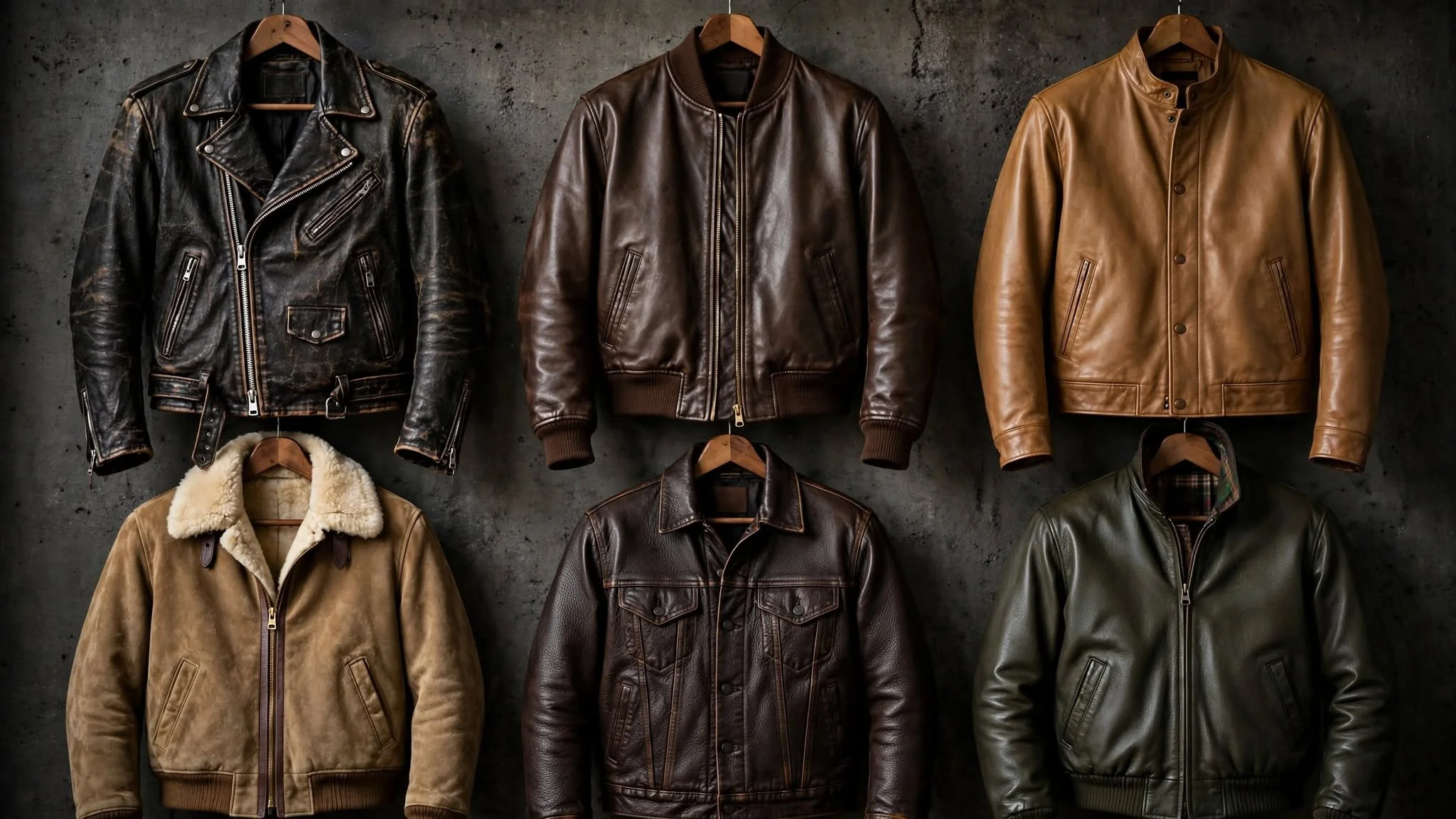
The Complete Guide to Every Style, Leather Grade, and What Makes One Worth Keeping. The main types of leather jackets are the biker jacket, double rider, café racer, bomber jacket, aviator/shearling jacket, trucker jacket, varsity jacket, suede jacket, leather trench coat, leather blazer, field jacket, leather peacoat, and motorcycle racing jacket. They differ by origin, construction, silhouette, and leather type. The leather grade - full-grain, lambskin, cowhide, goatskin, or faux leather - determines how long a jacket lasts more than any other single factor.
Not all leather jackets are the same investment. A full-grain cowhide biker jacket built properly can last 40 years and improve with every season. A faux leather jacket with the same visual profile will begin peeling within two years, regardless of how carefully you treat it.
Most guides covering types of leather jackets treat the subject as a fashion conversation - which silhouette looks good with what. This guide treats it as a craftsman conversation. After more than two decades working with leather at our workshop in Lebanon, NJ, I can tell you that the single most important question isn't "which style do I like?" - it's "what is this jacket actually made of, and how long will it last?" Answering that changes everything about how you shop.
This guide covers every major style, the leather grades and construction quality that separate long-term pieces from short-term purchases, what to look for before you buy, and how custom-made leather jackets - which we build at Lebanon Leather Work - fit into the picture.
The 13 Types of Leather Jackets, Explained by a Craftsman
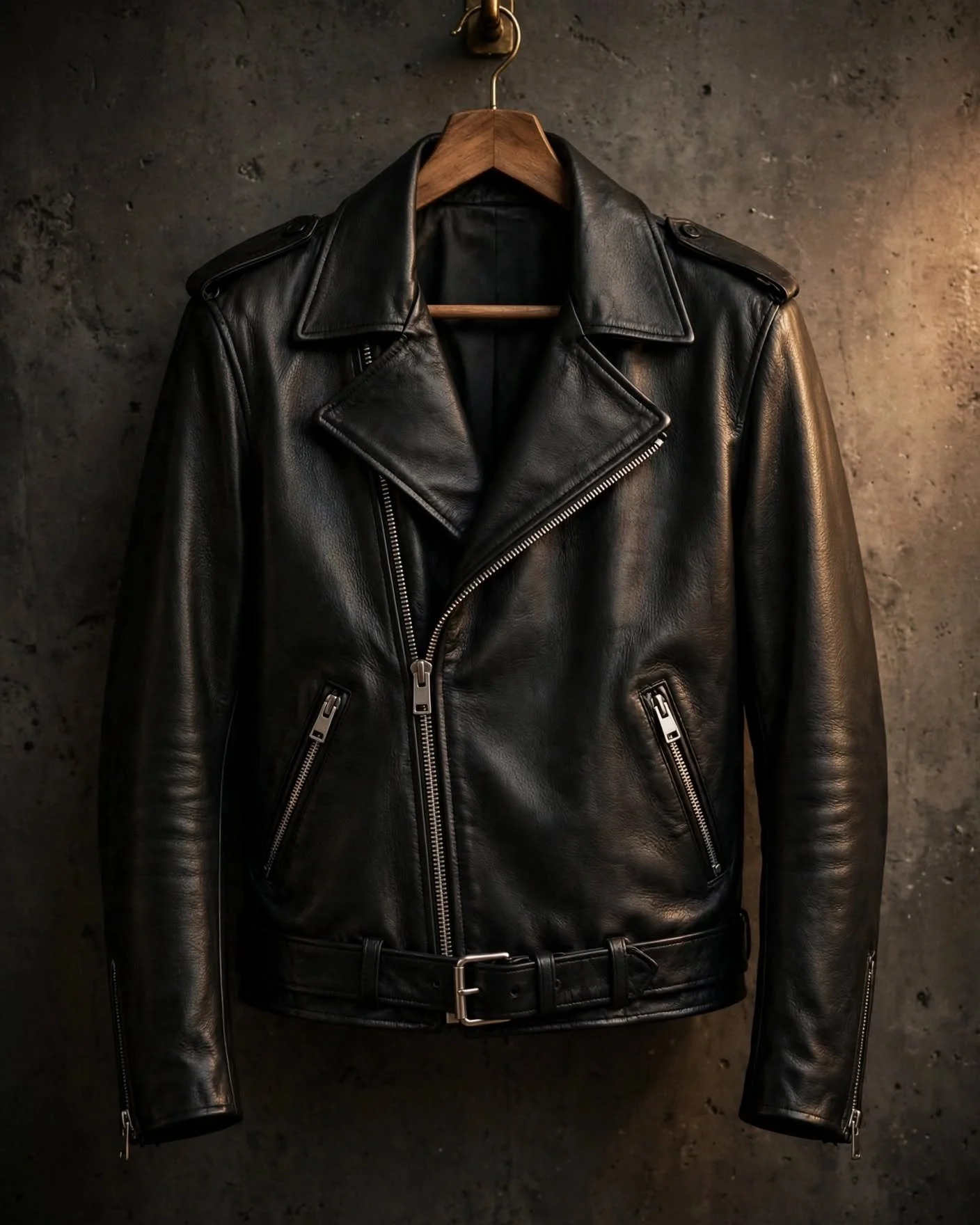
1. Biker Jacket (Moto Jacket)
The most iconic leather jacket in history.
The biker jacket arrived in American culture in 1928 when Irving Schott designed what became known as the Perfecto for motorcyclists. Marlon Brando wore it in The Wild One in 1953 and created an image so powerful it still drives demand seventy years later.
Defining features: asymmetrical off-center zipper, cropped body length, wide lapels, epaulette shoulders, diagonal zip pockets, and a belt or cinch at the waist. The design was entirely functional - the off-center zipper reduces wind entry when leaning forward on a motorcycle, the cropped length sits above the bike seat, and the wide lapels fold flat against wind.
Best leather for biker jackets: Full-grain cowhide or horsehide. Horsehide - the traditional choice for early American biker jackets - is denser, more resistant to abrasion, and develops a more dramatic patina than cowhide. Cowhide is more widely available and nearly as durable. Either, in full-grain grade, produces a jacket that improves with age rather than deteriorating.
Best for: Casual, streetwear, weekend, and counter-cultural fashion contexts. One of the few jacket styles that works as boldly in 2026 as it did in 1953.
Longevity notes: A quality full-grain biker jacket is a 30–50-year purchase. A faux leather biker jacket begins peeling and cracking within 1–3 years. The silhouette looks identical on the rack. The difference reveals itself inside of two winters.
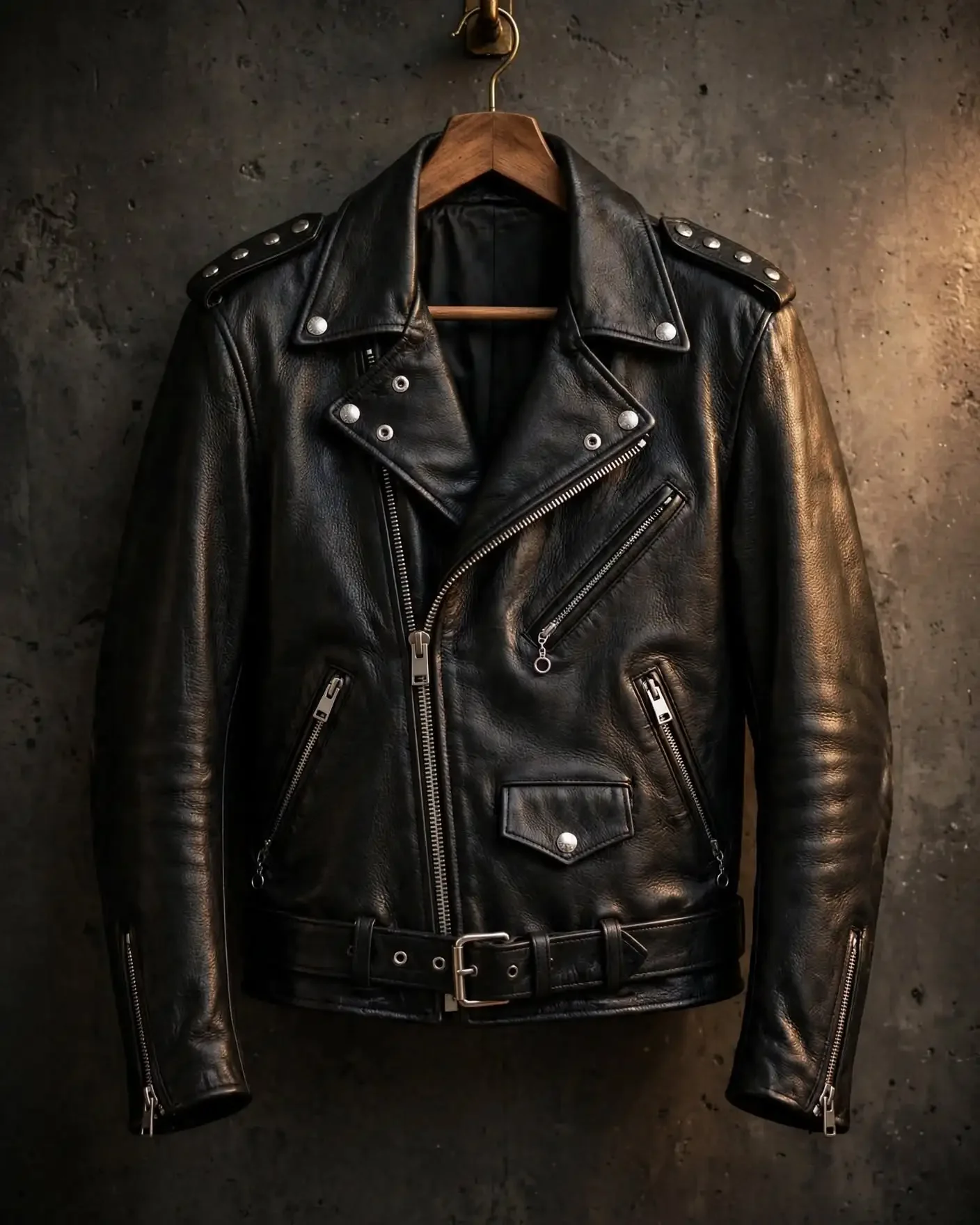
2. Double Rider Jacket
The double rider is the most specific and technical expression of the biker jacket family. The term refers to a jacket where both rider and passenger are in mind - slightly more coverage, more structured lapels, a more pronounced belt.
The Schott Perfecto 618 is the reference point. Key identifiers beyond the standard biker features: the off-center zip angles more dramatically across the chest, the snap-button lapels can be worn open or closed, and the overall silhouette is more structured and rigid than a modern fashion biker jacket.
Best leather: Horsehide or heavy full-grain cowhide - specifically the stiffer, heavier gauges. The stiffness is part of the jacket's character; it breaks in over years to conform to the wearer's body, at which point it fits like nothing else.
Best for: Heritage and workwear enthusiasts, motorcyclists, those investing in a jacket they intend to own for decades.
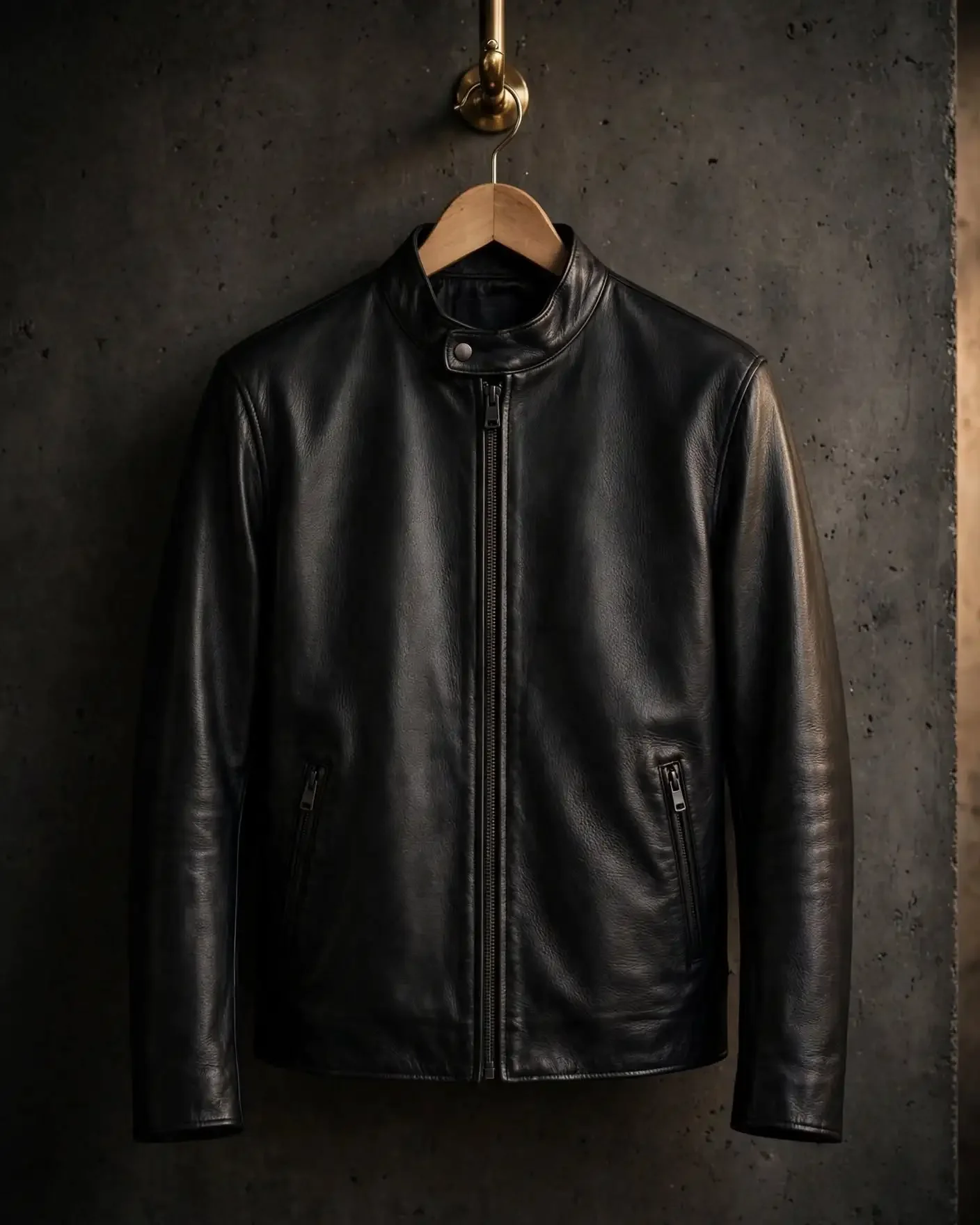
3. Café Racer Jacket
Named after the British motorcycle subculture of the 1960s, where young riders raced between cafes and stripped their bikes of everything non-essential in pursuit of speed, the cafe racer jacket is the minimalist's biker jacket.
Defining features: clean, uncluttered design with a band collar (no lapels), a center-front zipper, and a slim, fitted silhouette. No epaulettes, no diagonal pockets, no hardware overload. Where the double rider communicates rebellion, the café racer communicates precision.
Best leather: Full-grain or top-grain cowhide in a medium weight - heavy enough to have presence but light enough not to restrict movement. Lambskin café racers exist and feel luxurious but sacrifice the durability that the style's heritage demands.
Best for: Those who want the biker aesthetic without the bulk or visual noise. Pairs exceptionally well with slim trousers and clean footwear. Equally appropriate for men and women.
Longevity notes: A quality cafe racer in full-grain leather will last 20–35 years with conditioning and occasional professional reconditioning. The clean design means there are fewer components to fail.
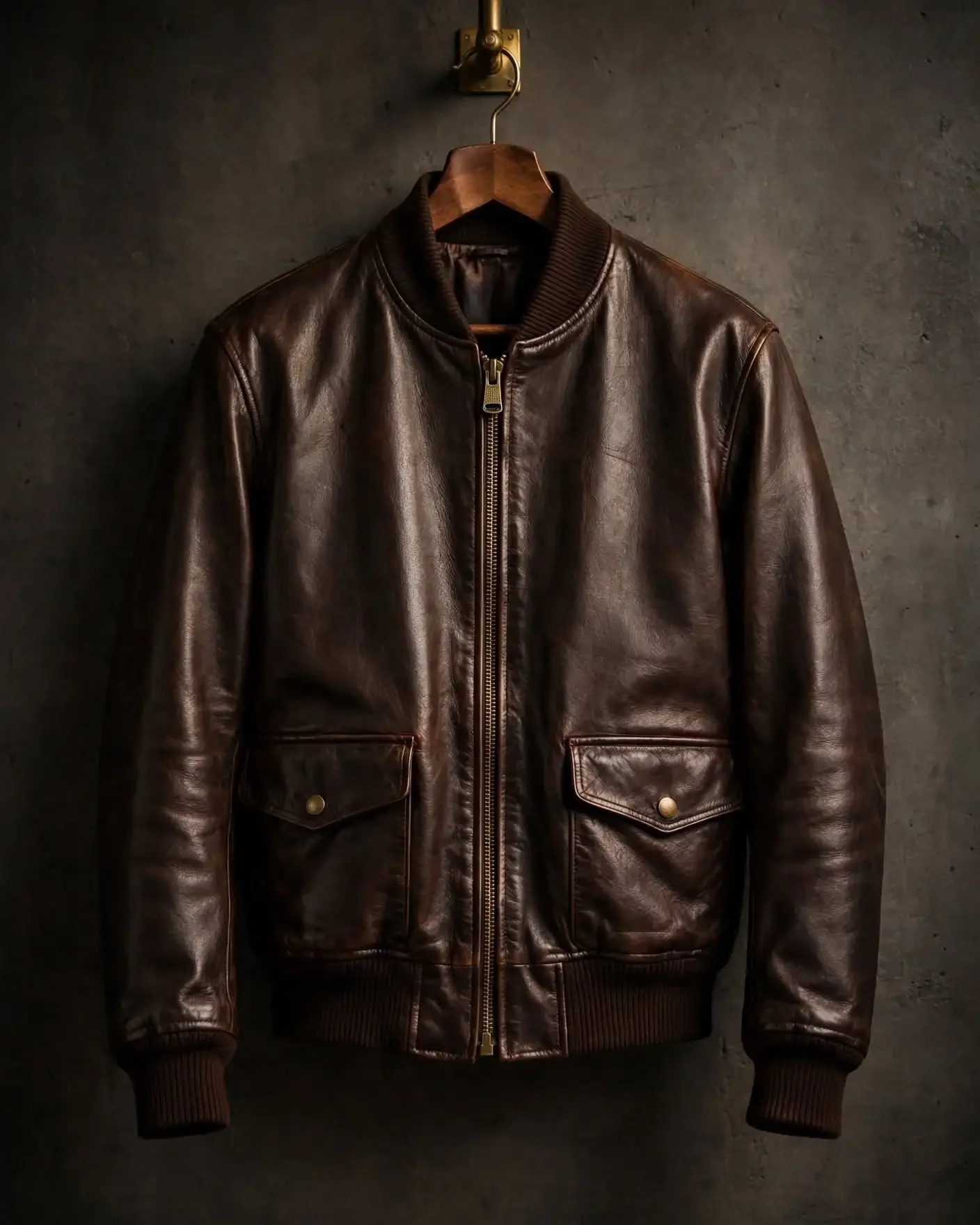
4. Bomber Jacket (Flight Jacket)
The bomber jacket has one of the most specific origin stories of any garment: the U.S. Army Air Corps commissioned it in 1917 as cockpit temperatures at altitude were dropping pilots' body temperatures to dangerous levels. The early versions were sheepskin or leather, heavily insulated. The A-2 jacket - the definitive WWII bomber jacket - was a ribbed-cuff, ribbed-hem, front-zipper design in goatskin or horsehide.
The silhouette has remained essentially unchanged: ribbed cuffs and hem, a front zipper, a slightly relaxed body, and a collar that can stand up against wind or lie flat. The MA-1, the post-war successor, shifted to nylon - which is why not all bomber jackets are leather.
Best leather: The A-2 original used goatskin and horsehide - both excellent choices. Lambskin is widely used in fashion versions for its softness. Full grain in any of these hides produces a jacket worth keeping.
Best for: Casual to smart casual. One of the most gender-neutral silhouettes in outerwear. Works with jeans, chinos, dresses, and skirts with equal ease.
Longevity notes: A leather bomber in full-grain goatskin or lambskin, properly maintained, lasts 15–25 years. The ribbed cuffs and hem are the first components to show wear - these can be replaced by a skilled leather craftsman when they go.
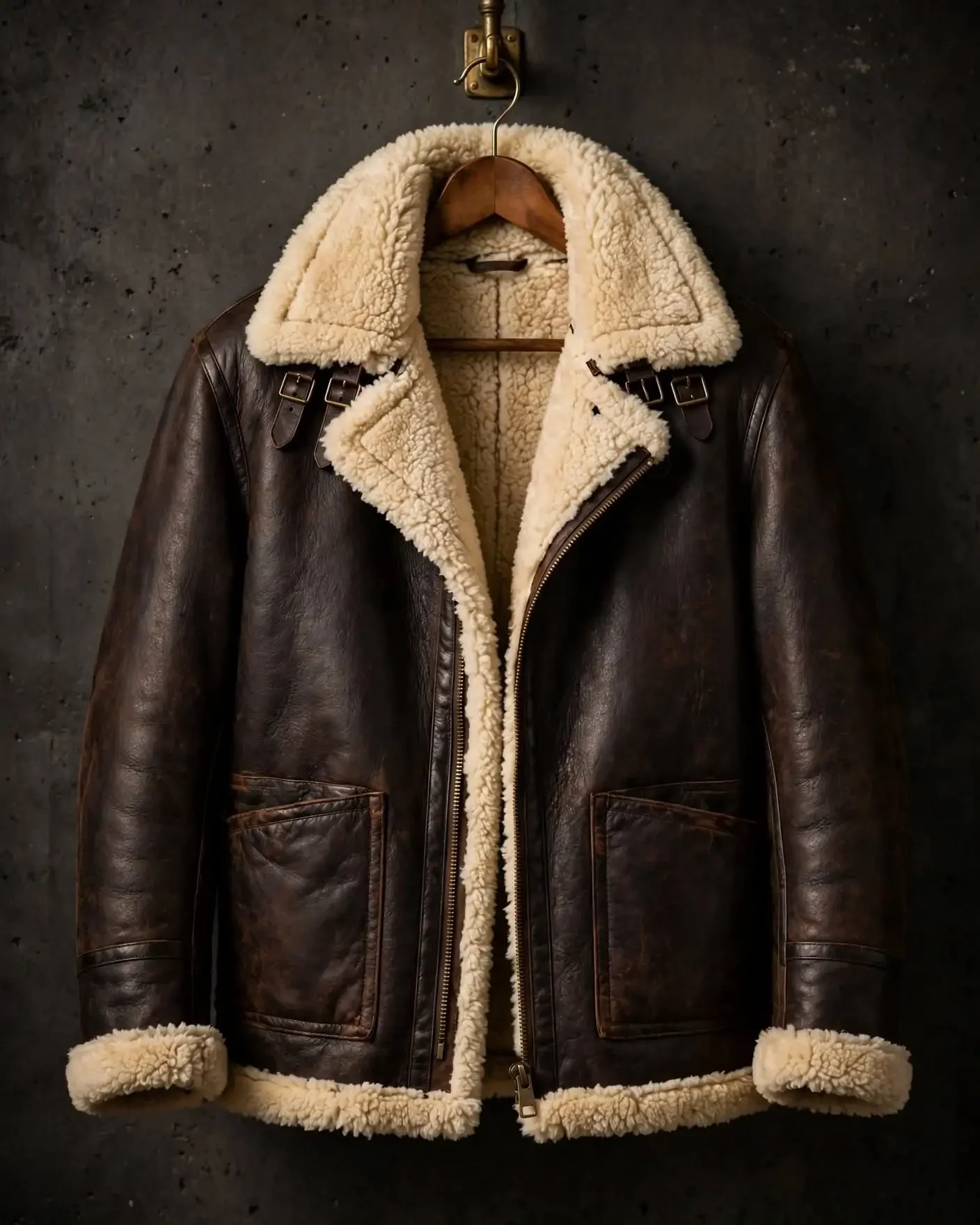
5. Aviator Jacket and Shearling Jacket (B-3)
Where the A-2 bomber was the warm-weather flight jacket, the B-3 was the extreme cold-weather solution. The B-3 is a sheepskin jacket - the hide forms the outside, and the natural wool remains on the inside as lining, creating insulation that doesn't require any additional fill.
The B-3 arrived in 1934 and was rated for temperatures as low as -60°F. Its identifying features: very large shearling collar that folds up to cover the lower face, a heavy leather exterior, and a front closure that is either a massive zipper or a series of buckles.
The modern shearling jacket descends from the B-3 and retains the defining feature of natural wool lining on sheepskin exterior. It is among the warmest outerwear available at any price point.
Best leather: Genuine sheepskin with natural wool lining - not faux shearling, which uses synthetic fiber glued to a backing. Genuine shearling molds to the wearer over time; synthetic shearling mats and compresses irreversibly.
Best for: Cold weather. The shearling jacket is function-first outerwear that happens to be beautiful. Available in men's and women's silhouettes.
Longevity notes: Genuine sheepskin shearling jackets can last 20–30+ years with appropriate care. They require specialist cleaning - not machine washing - and periodic conditioning of the leather shell.
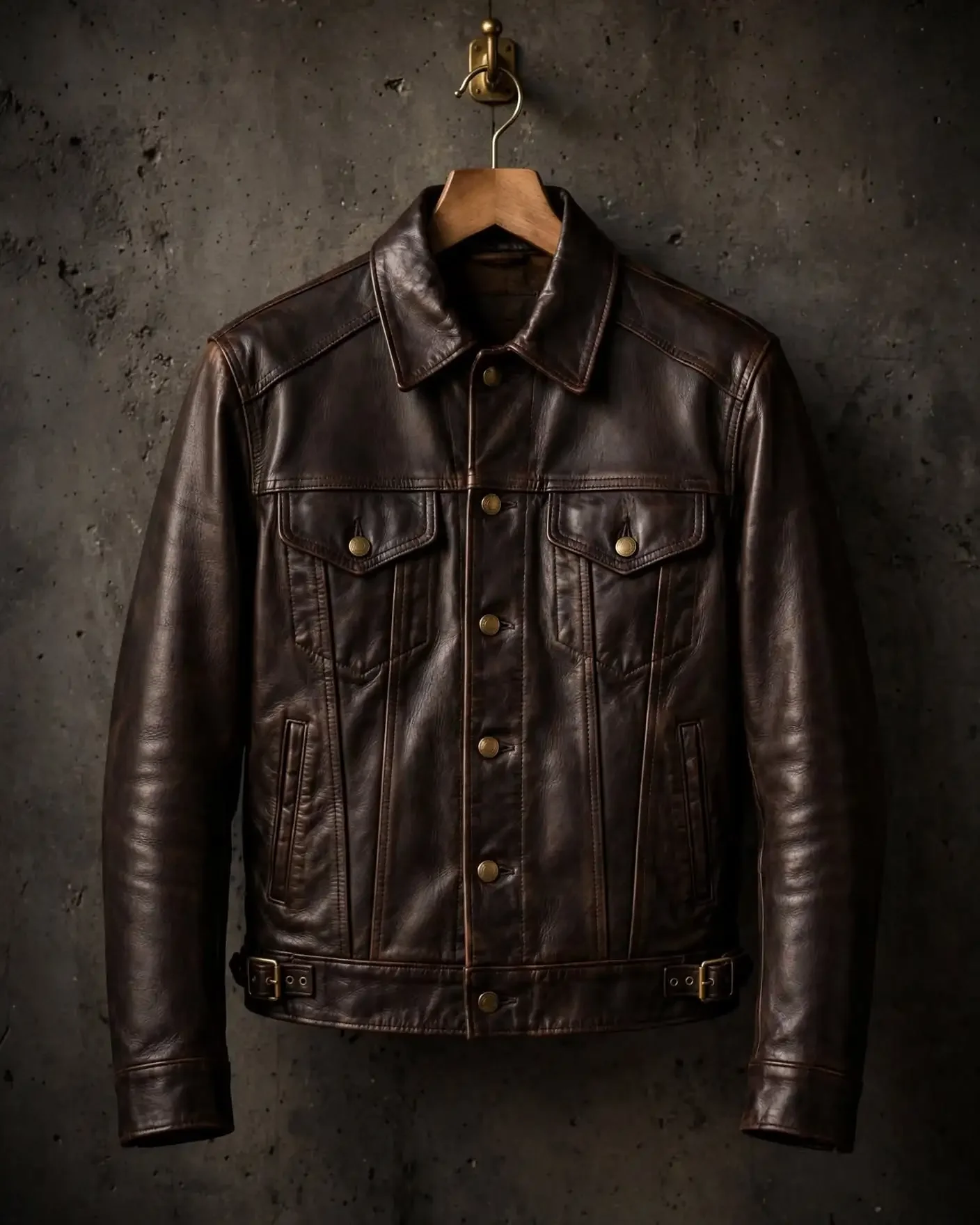
6. Trucker Jacket
The trucker jacket traces its origins to the American West in the late 19th century -specifically to denim workwear made for cowboys, miners, and railroad laborers. The leather trucker replaces the denim of the original with leather while preserving the structure: a front button placket, two chest flap pockets, a slightly cropped length, and a fitted silhouette through the body and shoulders.
The leather trucker sits between the biker jacket and the field jacket in terms of visual weight - more structured than the field jacket, less aggressive than the biker. It is one of the most underrated silhouettes in leather outerwear.
Best leather: Full-grain cowhide or top-grain cowhide. Medium weight - enough to hold the structured chest pockets without buckling.
Best for: Casual wear. Pairs naturally with jeans, work trousers, and casual shirts. Appropriate for men and women. A particularly versatile choice for transitional seasons.
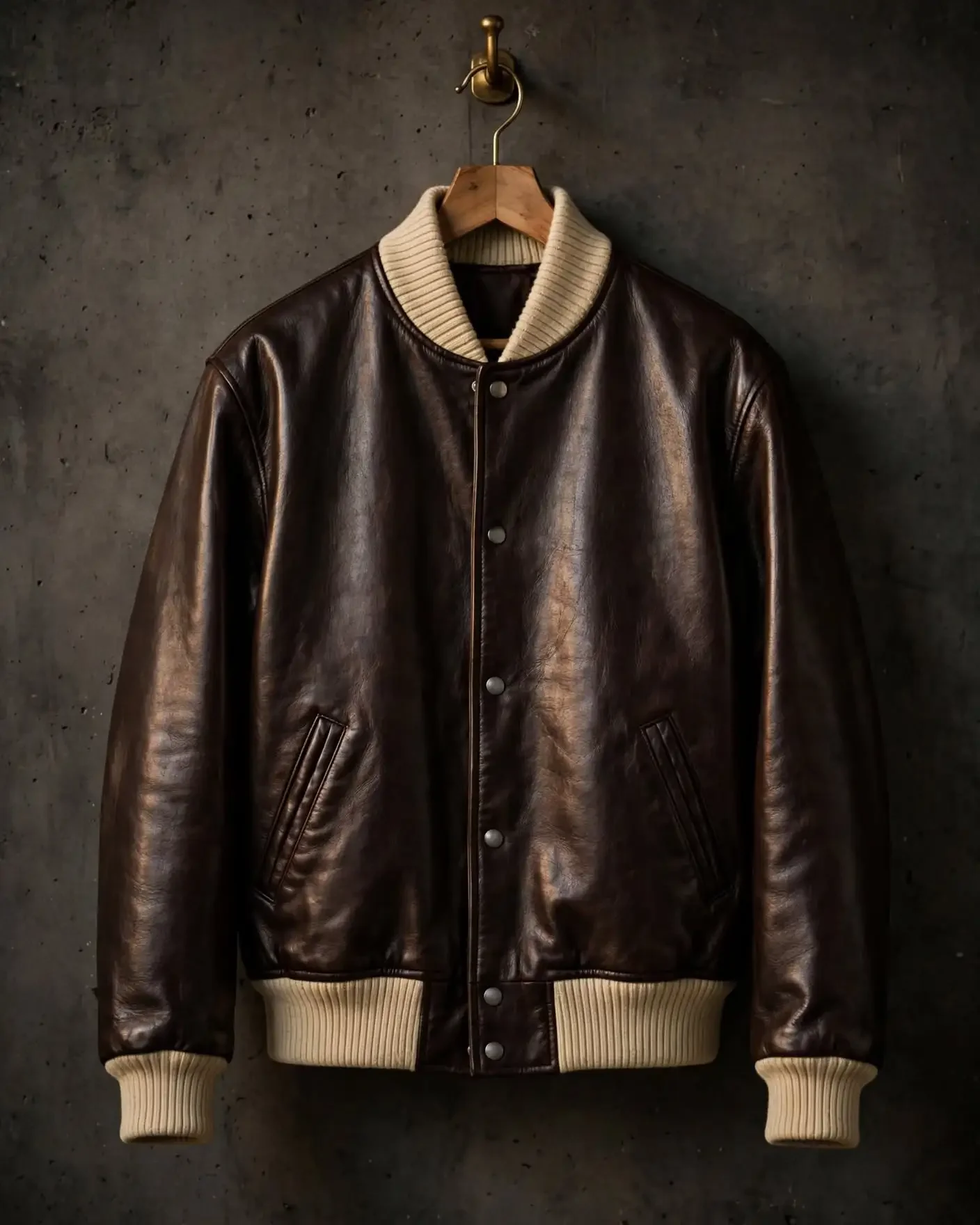
7. Varsity Jacket (Letterman Jacket)
The varsity jacket began as a purely American academic tradition - Harvard University reportedly issued the first letter sweaters to members of the varsity baseball team in 1865. By the early 20th century, the design had evolved to include leather sleeves on a wool body, creating the two-tone silhouette most associated with the style today.
Defining features: wool body with leather sleeves (sometimes fully leather), ribbed collar, cuffs and hem, and front snap or button closure. Often carries embroidered patches or chenille lettering.
Best leather: The sleeves in a quality varsity jacket use full-grain or top-grain cowhide or lambskin. The leather-to-wool ratio determines the jacket's warmth and durability.
Best for: Casual, streetwear, and collegiate-influenced styling. One of the few jacket styles that reads as both nostalgic and current simultaneously. Popular across men's and women's fashion.
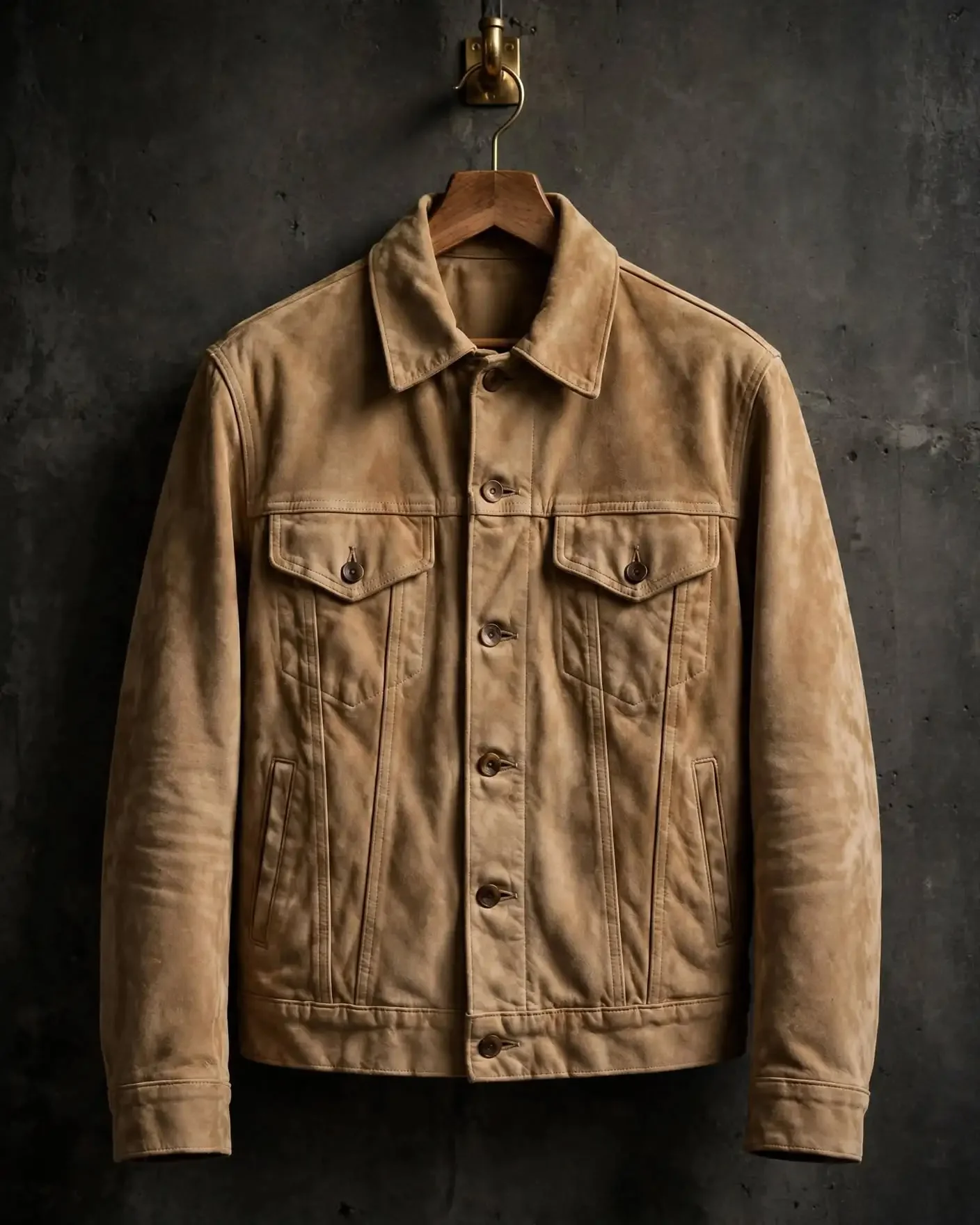
8. Suede Jacket and Nubuck Jacket
Suede is made from the underside of a hide - the napped, velvety surface that results from splitting and buffing the inner layers. It is softer and more pliable than smooth leather but less resistant to moisture and surface abrasion. Nubuck is full-grain leather buffed on the grain side to create a surface similar to suede but more durable.
Both are primarily casual jacket materials, associated with 1960s and 1970s Western and bohemian aesthetics - the fringe suede jacket is the most extreme expression. In more contemporary forms, suede bombers, truckers, and blazers carry quiet luxury that smooth leather can't replicate.
Best for: Casual and smart casual settings. Spring and fall - suede's lighter weight and breathability make it less appropriate for heavy winter wear than smooth leather.
Care note: Suede and nubuck require different care than smooth leather - a suede brush, protective spray, and immediate attention to any moisture exposure. They should never be treated with standard leather conditioners. This is one of the most common care mistakes we see at our workshop.
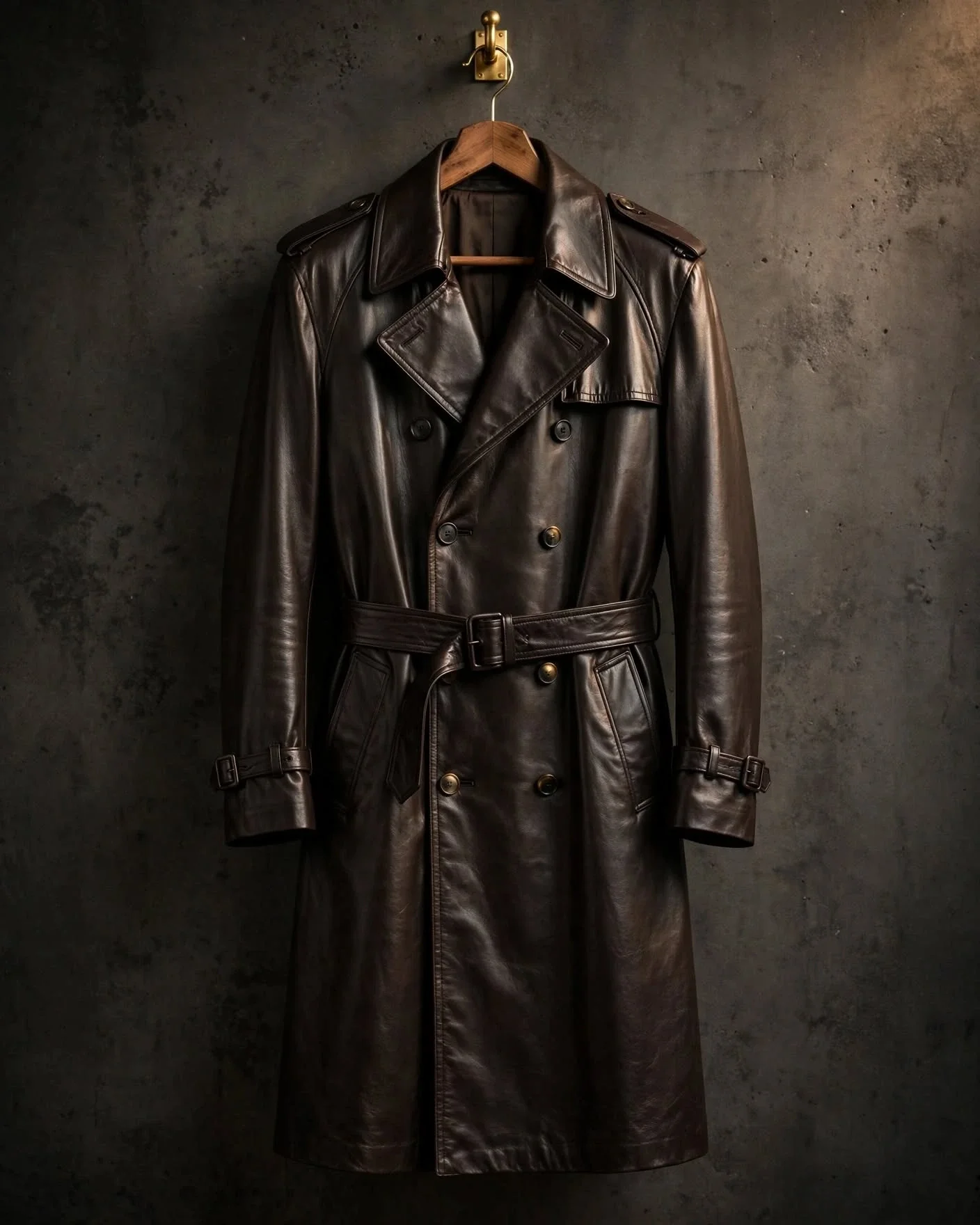
9. Leather Trench Coat
The trench coat was designed for British Army officers in World War I - "Tawny" Thomas Burberry and the House of Aquascutum both claim the origin. The military version was built for protection against wet trench conditions: long enough to cover the knee, belted at the waist, with a D-ring belt, storm flap, epaulettes, and a gun flap.
The leather trench coat translates all of this structure into leather, adding weight, visual drama, and a significantly longer lifespan. The belted waist, wide lapels, long length, and double-breasted front are the defining visual elements.
Best leather: Full-grain cowhide in a medium to heavy gauge. The length and structure of a trench coat demand leather heavy enough to hold its shape without looking deflated.
Best for: Smart casual to formal contexts. One of the most powerful silhouettes in any wardrobe - the leather trench coat makes a statement in a way that shorter leather jackets don't.
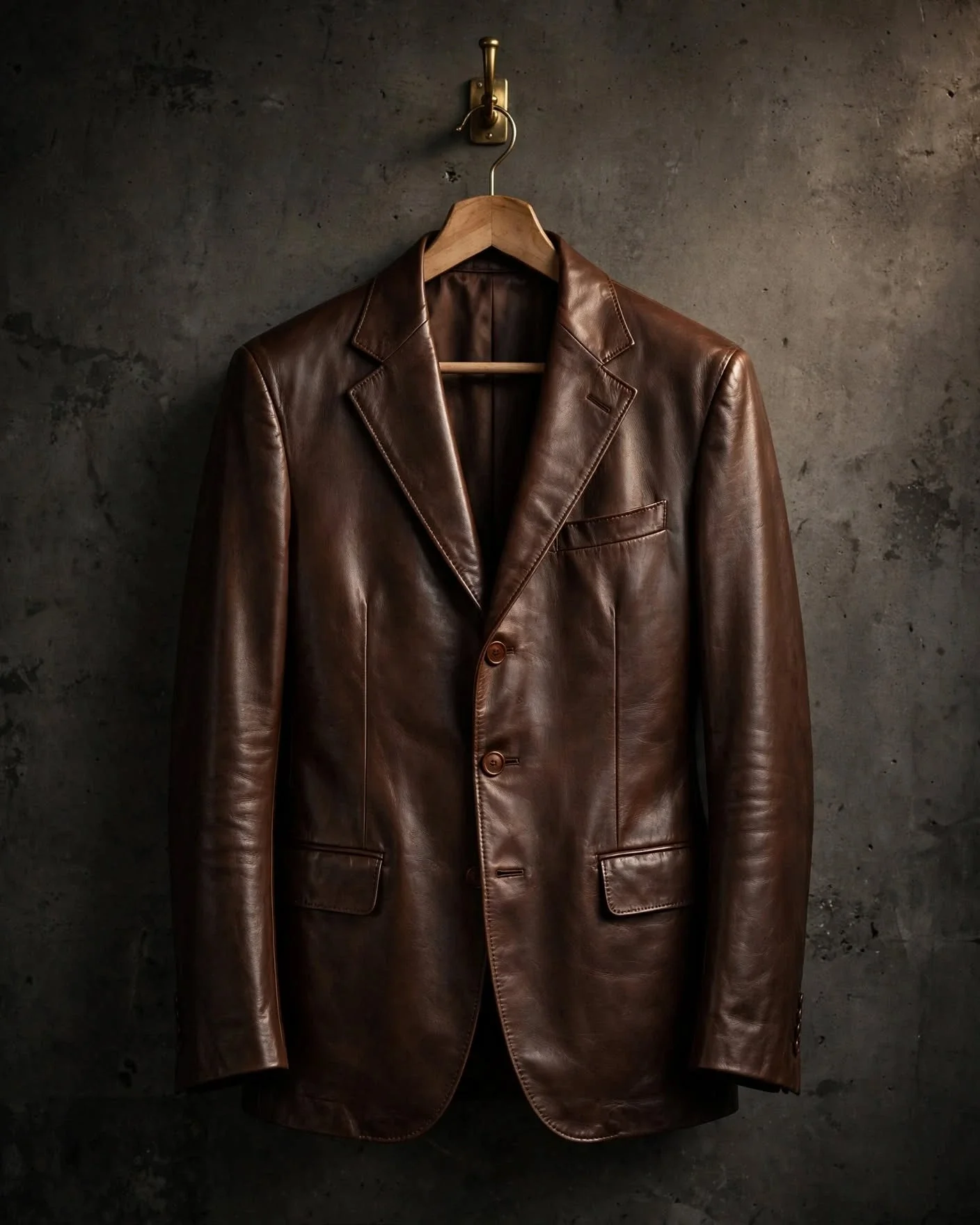
10. Leather Blazer
The leather blazer applies tailored blazer construction -structured chest, notch or peak lapels, two or three front buttons - to leather rather than wool or cotton. The result is a jacket that works in settings where a traditional biker or bomber would be too casual.
Best leather: Full-grain or top-grain lambskin or calfskin - the supplest grades that allow the jacket to drape with the fluid quality a blazer requires. Heavier cowhide makes a blazer that feels stiff.
Best for: Business casual, smart casual, and fashion-forward formal contexts. One of the most versatile leather jacket styles for professional environments.
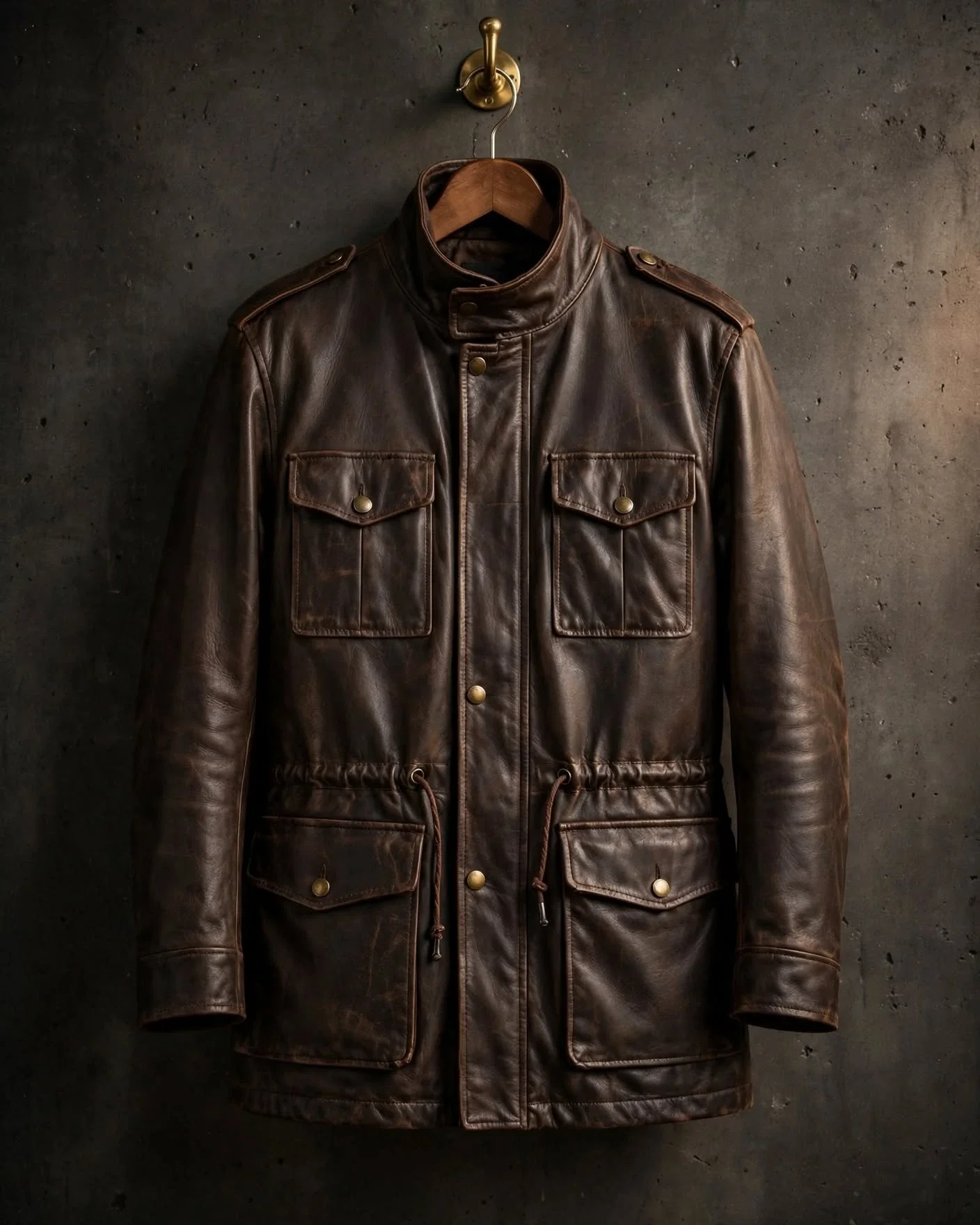
11. Field Jacket
The field jacket was designed in the 1940s for U.S. Army infantry - multiple front pockets for carrying equipment, a slightly longer length than a regular jacket, a snap-button or zip front, and construction designed to move freely with the body in demanding conditions.
The leather field jacket replaces the original cotton M-65 fabric with leather, creating a jacket with the same utilitarian silhouette in a significantly more durable material.
Best leather: Full-grain cowhide in olive, brown, or black. The utilitarian origins of the field jacket are part of its appeal - it should look like it was built for work.
Best for: Casual and outdoors contexts. Particularly popular in heritage and workwear-influenced fashion.
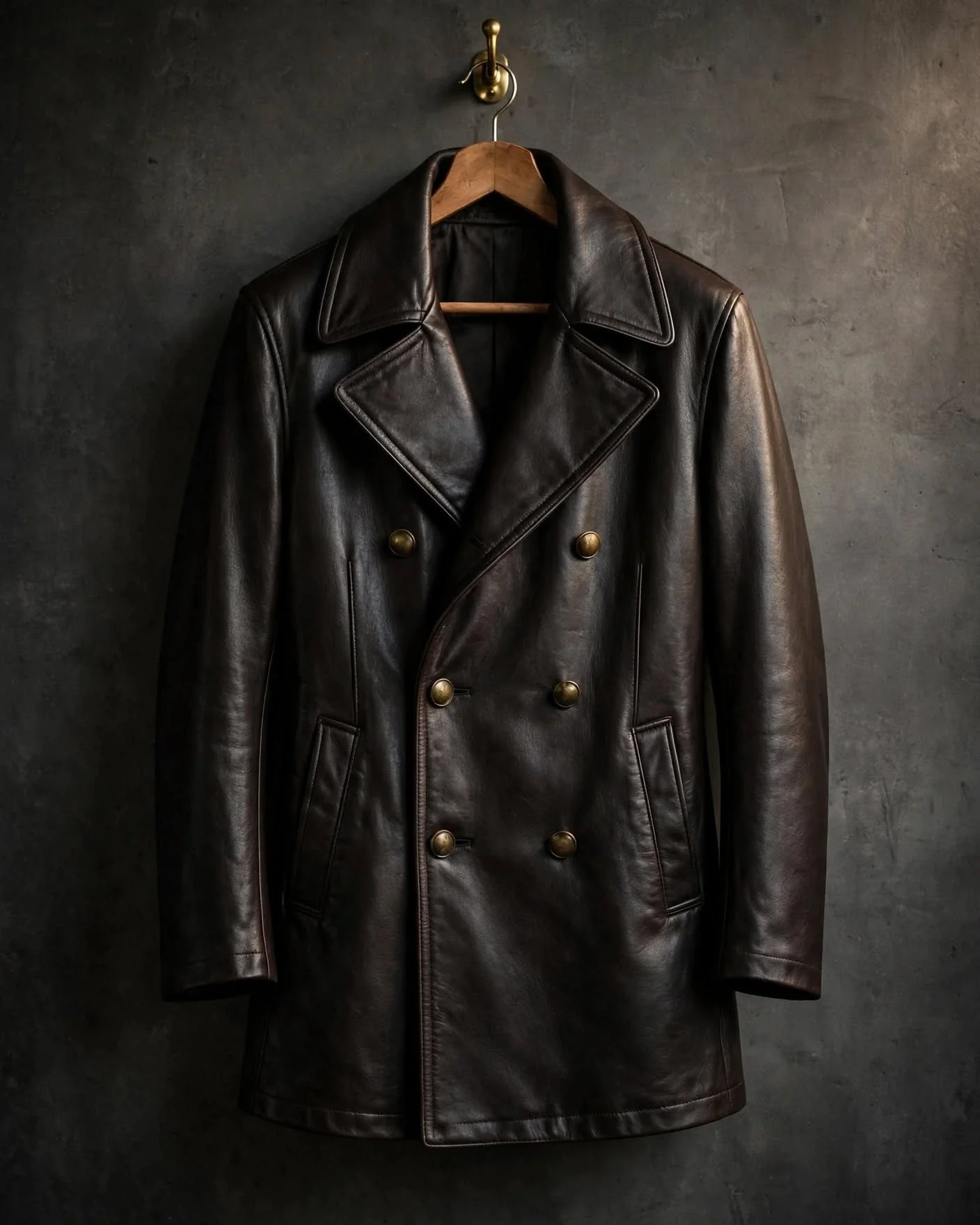
12. Leather Peacoat
The peacoat has naval origins - British and Dutch sailors wore a heavy, double-breasted wool coat in the 1800s, designed for exposure to cold ocean winds on deck. The leather peacoat keeps the defining structure - double-breasted front, wide lapels, wide-set buttons, and a body length reaching mid-thigh or below - in leather.
Best leather: Full-grain cowhide in a medium-heavy gauge. The double-breasted structure and length require leather with enough body to hold the silhouette.
Best for: Smart casual and business casual. One of the more formal leather jacket silhouettes - appropriate in settings where a biker or bomber would be too casual.
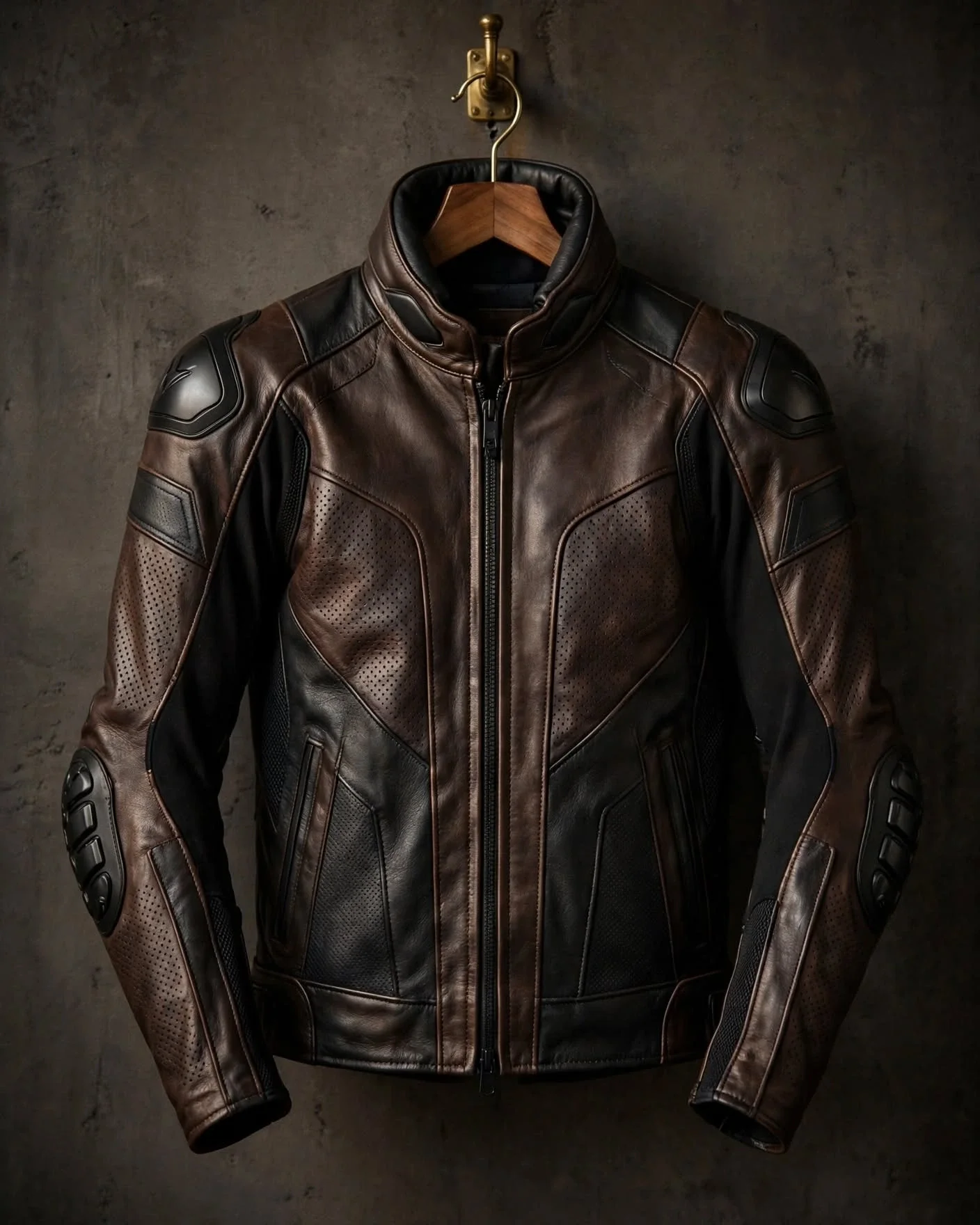
13. Motorcycle Racing Jacket
Distinct from the fashion biker jacket, the motorcycle racing jacket is functional protective gear. It incorporates CE-rated armor at the shoulders, elbows, and back, abrasion-resistant leather of a minimum 1.2–1.4mm thickness, and a fit designed for riding position rather than walking posture.
Quality motorcycle racing jackets are built to European safety standards (EN 17092) that require testing for abrasion, impact absorption, and seam strength. They are not fashion items - they are equipment.
Best leather: Full-grain or corrected-grain cowhide at a minimum 1.2mm gauge. Kangaroo leather is used in high-end racing leathers for its exceptional strength-to-weight ratio.
Best for: Motorcycling - specifically for safety in the event of a fall. Some racing jackets cross over into casual wear due to their distinctive aesthetic, but they are heavier and less flexible than fashion biker jackets.
The Leather Grades That Determine How Long Each Jacket Lasts
This is the section that will save you money over a lifetime of buying leather jackets. Competitors covering this keyword don't include it. Read it carefully.
Full-grain leather is the highest grade available. The natural grain surface is completely intact - no sanding, no buffing, no surface corrections. Full-grain leather retains the hide's complete fiber structure, which gives it superior strength, breathability, and the ability to develop a patina over decades of wear. A full-grain leather jacket, properly maintained, can last 30–50 years.
Top-grain leather has been lightly sanded to remove surface imperfections, then given a protective finish coat. Slightly less durable than full grain, more uniform in appearance, and significantly more durable than lower grades. Most mid-to-high-quality leather jackets use top-grain. Expected lifespan: 10–20 years with good care.
Corrected grain / "Genuine leather" has been heavily sanded and given an embossed artificial grain. The processing removes much of the fiber strength. "Genuine leather" on a hang tag is a specific grade designation - it actually means third tier, not authentic quality. Expected lifespan: 3–8 years under regular use.
Faux leather (PU leather / vegan leather) is a polyurethane-coated fabric with no genuine hide content. It looks like leather on the rack. It begins peeling and cracking within 1–3 years under regular wear, typically at flex points - the elbows, the collar crease, and where the jacket wraps around the body. Faux leather is also significantly less breathable than genuine leather, making it less comfortable to wear.
Animal Hide Type Also Matters Significantly:
Cowhide - the most common leather for biker, field, trench, and trucker jackets. Dense, durable, and abrasion resistant. Becomes more supple with age and conditioning. Heavy-gauge cowhide (1.2mm+) is the standard for motorcycle protection.
Horsehide - traditionally the premium choice for American moto jackets. Denser fiber structure than cowhide, more abrasion-resistant, heavier and stiffer when new. Develops one of the most dramatic patinas of any leather over time. Less widely available and more expensive than cowhide.
Lambskin - the softest leather used in jackets, with a naturally supple drape that cowhide takes years to develop. Used primarily in fashion jackets and blazers. More susceptible to abrasion and surface damage than cowhide - not appropriate for motorcycle use but excellent for fashion applications.
Goatskin - naturally lighter and more wrinkle-resistant than cowhide, with a distinctive pebbled texture. Used in the original A-2 bomber jacket and in high-quality café racers. Very durable relative to its weight.
Sheepskin - the shell leather in shearling jackets. When the wool is left on, it creates the shearling lining. Strong, warm, and naturally water-resistant. Requires specialist care.
Longevity at a Glance
| Jacket Type | Best Leather for Longevity | Expected Lifespan (Quality) | Faux Leather Lifespan |
|---|---|---|---|
| Biker / double rider | Full-grain cowhide or horsehide | 30–50 years | 1–3 years |
| Café racer | Full-grain cowhide | 20–35 years | 1–3 years |
| Bomber jacket | Full-grain goatskin or lambskin | 15–25 years | 2–4 years |
| Aviator / shearling | Genuine sheepskin shearling | 20–30 years | 2–5 years (faux shearling) |
| Trucker jacket | Full-grain cowhide | 15–25 years | 2–4 years |
| Suede jacket | Split suede or nubuck | 8–15 years | N/A |
| Leather trench coat | Full-grain cowhide | 20–30 years | 2–4 years |
| Leather blazer | Full-grain or top-grain lambskin | 15–25 years | 2–4 years |
| Varsity jacket | Full-grain cowhide sleeves | 15–25 years | N/A |
| Field jacket | Full-grain cowhide | 15–25 years | 2–4 years |
What Separates a Jacket Worth Keeping from One You'll Replace in Two Years
This is what we look at when a jacket comes into our workshop - and what you should look at before you spend a dollar.
Stitching: Count the stitches per inch. Quality leather jackets run 8–10 stitches per inch - tight enough to hold under stress without piercing the leather so frequently that it weakens along seam lines. Stress points (the armhole seams, the lower pocket corners, the collar attachment) should be double-stitched. If the stitching is loose, uneven, or single-stitched at stress points, the jacket will fail at seams long before the leather shows age.
Hardware: YKK is the benchmark zipper brand -recognized worldwide for reliability and durability. Brass, antique brass, or stainless-steel hardware holds its finish and function over years; plated steel hardware corrodes and the plating chips. A zipper that's difficult to operate when new will be impossible to operate in five years.
Lining: Quality jackets use viscose, silk-blend, or leather lining - materials that breathe with the leather and move smoothly against clothing. Cheap polyester lining bunches, traps heat, and often separates from the jacket interior within a few seasons. Check how the lining is attached at the collar: stitched lining is correct; lining glued at the collar edge will separate.
Edge finishing: Run your fingers along the edges of the hem, cuffs, and pocket openings. Edges should be folded and stitched or heat-sealed. Raw edges painted with edge paint will crack and peel - and when edge paint cracks, it's a difficult repair. Turned and stitched edges are the craft standard.
Weight and feel: Genuine leather has a natural weight and a distinctive earthy smell that cannot be perfectly replicated in synthetic materials. A faux leather jacket is lighter and uniform; a genuine leather jacket has weight that distributes naturally as you hold it. The smell test is not infallible, but a heavy chemical or plastic smell is a reliable signal of synthetic material.
The bend test: Fold a corner of the jacket tightly and release it. Genuine leather returns to its original position without creasing. Faux leather creases and the crease may remain permanently - especially in cold temperatures.
Custom-Made Leather Jackets: Built Exactly for You
There is one option above everything sold in stores: a leather jacket built specifically for your measurements, your leather choice, your hardware preferences, and your design vision.
At Lebanon Leather Work, we build custom leather jackets from scratch. Every aspect is specified by you: the style (biker, bomber, café racer, blazer, or something original), the leather type and color, the hardware, the lining, the stitching detail, any personalization or embroidery. We cut, stitch, and finish entirely by hand at our Lebanon, NJ workshop.
The practical result: a jacket that fits your body precisely, not a standardized sizing block. For people with broad shoulders and a narrow waist, a long torso, muscular arms, or proportions that off-the-rack sizing doesn't accommodate - custom is the only way to get a jacket that hangs and moves correctly.
Custom jackets take 8–10 weeks from consultation to delivery. They are an investment comparable to the upper end of ready-to-wear quality. And they are built to last decades, because they are made from full-grain leather with the quality of construction that the garment deserves.
Inquire about a custom leather jacket →
How to Care for Your Leather Jacket by Type
Smooth leather (full-grain, top-grain cowhide, goatskin, horsehide): Condition every 3–6 months with a dedicated leather conditioner - not furniture polish, not petroleum-based products, not olive oil. Apply a thin coat, let it absorb overnight, and buff gently the following day. Store on a wide, padded hanger to maintain the shoulder shape.
Lambskin: The same conditioning schedule, but lambskin requires gentler products and lighter application. Lambskin is more susceptible to over-conditioning (which can darken and soften the leather permanently) than thicker hides. Treat it like a fine garment, not workwear.
Suede and nubuck: Use a suede brush to restore the nap - always brush in one direction. Apply a suede-specific water-repellent spray before first wear and refresh every season. Never use smooth leather conditioners on suede. Address any moisture exposure immediately by blotting (never rubbing) and allowing to dry naturally away from heat.
Shearling: The leather shell should be conditioned periodically with a product appropriate for sheepskin. The wool lining should not be washed with standard detergents - use a specialist shearling cleaner. Professional cleaning is recommended for heavily soiled shearling jackets.
For stain-specific guidance, our guide to removing stains from leather covers the safe approaches by stain type and leather grade.
When a Leather Jacket Needs Professional Repair - and When It's Worth It
Quality leather jackets deserve repair before they are replaced. The most common issues we address at our Lebanon, NJ workshop:
Zipper failure - the zipper is usually the first hardware component to fail, and it is almost always replaceable by a skilled leather craftsman. The old zipper is carefully removed and a new one stitched in along the original seam. The repair is rarely visible. This is among the most common - and most unnecessarily ignored - repairs we see.
Lining failure - the lining tears or separates, often at the sleeve seams or along the back panel. A full re-lining restores the jacket to factory condition and can address any interior issues discovered during the process.
Surface cracking and dryness - genuine leather that has dried out and cracked at the elbows, collar, or fold lines can be reconditioned and color-restored to close the cracks and restore flexibility. The earlier this is addressed, the better the outcome.
Color fading or discoloration - UV exposure, salt, and water staining all cause color loss over time. Professional color restoration and re-dyeing can bring a faded jacket back to a condition approaching new.
Seam failure - stitching that has broken at stress points can be re-stitched before it leads to full panel separation.
A leather jacket worth $500–$2,000 new is worth $100–$300 in professional repair.
Ready to Commission a Jacket Built for You?
If you have a jacket style in mind that doesn't exist in stores the way you want it - specific leather, specific hardware, specific fit - we build custom leather jackets at our Lebanon, NJ workshop.
The process begins with a conversation. Walk in, call, or email with your vision. We'll discuss the leather options, construction approach, timeline, and cost. Nothing is committed until you're ready.
Workshop: 1271 US-22, Lebanon, NJ 08833
Email: lebanonleatherwork@gmail.com
Phone: (551) 333-8186
Frequently Asked Questions
What are the main types of leather jackets?
The main types of leather jackets are the biker jacket (asymmetric zipper, cropped fit), double rider (structured biker variant), café racer (minimalist band collar), bomber jacket (ribbed cuffs and hem), aviator or shearling jacket (wool-lined sheepskin), trucker jacket (button placket, chest pockets), varsity jacket (wool body, leather sleeves), suede jacket, leather trench coat, leather blazer, field jacket, leather peacoat, and motorcycle racing jacket with protective armor.
What is the most iconic type of leather jacket?
The biker jacket -particularly the double rider style originally designed by Irving Schott in 1928 - is the most iconic leather jacket in history. Its association with Marlon Brando in The Wild One (1953) created a cultural image that has driven the jacket's popularity for over 70 years. The asymmetric zipper and cropped silhouette remain immediately recognizable.
What leather is best for a leather jacket?
Full-grain leather is the best leather for any jacket intended to last. It retains the complete fiber structure of the hide, develops a patina over time, and is significantly more durable than corrected grain, "genuine leather," or faux leather. Cowhide and horsehide are the most durable choices for biker and moto jackets; lambskin and goatskin offer a softer, lighter option for fashion jackets and bombers.
How long does a leather jacket last?
A full-grain leather jacket properly maintained can last 30–50 years. A top-grain leather jacket lasts 10–20 years. Corrected-grain or "genuine leather" jackets last 3–8 years. Faux leather jackets typically begin peeling and cracking within 1–3 years. The leather grade is the single most important determinant of lifespan, followed by construction quality (stitching, hardware, lining).
What is the difference between a biker jacket and a café racer jacket?
Both are motorcycle-inspired leather jackets, but they differ significantly in design. The biker jacket features an asymmetric off-center zipper, wide lapels, epaulette shoulders, diagonal pockets, and a structured belt - a busy, aggressive silhouette. The café racer has a center zipper, a band collar (no lapels), a clean minimal design, and a slim fit. The biker jacket communicates rebellion; the café racer communicates precision and restraint.
Can you get a custom-made leather jacket?
Yes. A custom leather jacket - where the style, leather grade, color, hardware, lining, and fit are all specified to your measurements and design preferences - can be commissioned from skilled leather craftsmen. Lebanon Leather Work in Lebanon, NJ accepts custom leather jacket commissions. The process takes approximately 8–10 weeks and results in a jacket that fits your precise measurements rather than a standardized size block. Learn more about our bespoke leather goods and custom jacket service.
What is the difference between a bomber jacket and an aviator jacket?
Both originate from military flight gear. The bomber jacket - specifically the A-2 - is a smooth leather jacket with ribbed cuffs, ribbed hem, and a front zipper, designed for warm-weather cockpit use. The aviator jacket (the B-3) is a sheepskin shearling jacket with the wool left on as lining, designed for extreme cold at altitude. In modern usage, "aviator jacket" often refers to any shearling-lined leather jacket, while "bomber" refers to the smooth leather ribbed-cuff silhouette.
How do I know if a leather jacket is good quality before I buy?
Check five things: stitching (8–10 stitches per inch, double-stitched at stress points), hardware (YKK zippers, brass or stainless steel), lining (viscose or leather, not cheap polyester), edge finishing (folded and stitched, not painted raw edges), and the bend test (fold a corner - genuine leather springs back, faux leather creases and holds the crease). The leather's smell also matters - genuine leather has an earthy, natural smell; faux leather has a chemical or plastic smell.
Can leather jackets be repaired?
Yes. Broken zippers can be replaced by a skilled craftsman, torn or separated linings can be re-lined, cracked leather can be reconditioned and color-restored, and failed seam stitching can be re-stitched. A leather jacket in full-grain or top-grain leather is almost always worth repairing rather than replacing - the repair cost is typically a fraction of a comparable replacement. See our leather jacket repair service for what we address at our Lebanon, NJ workshop.
How do I care for a leather jacket?
For smooth leather (cowhide, goatskin, horsehide): condition every 3–6 months with a dedicated leather conditioner, store on a wide padded hanger, and keep away from heat sources and prolonged direct sun. For lambskin: lighter conditioning more frequently, handle gently. For suede: brush with a suede brush in one direction, protect with suede spray, never use smooth leather conditioners. For shearling: professional cleaning recommended; specialist sheepskin conditioner for the shell. Never machine wash any genuine leather jacket.