
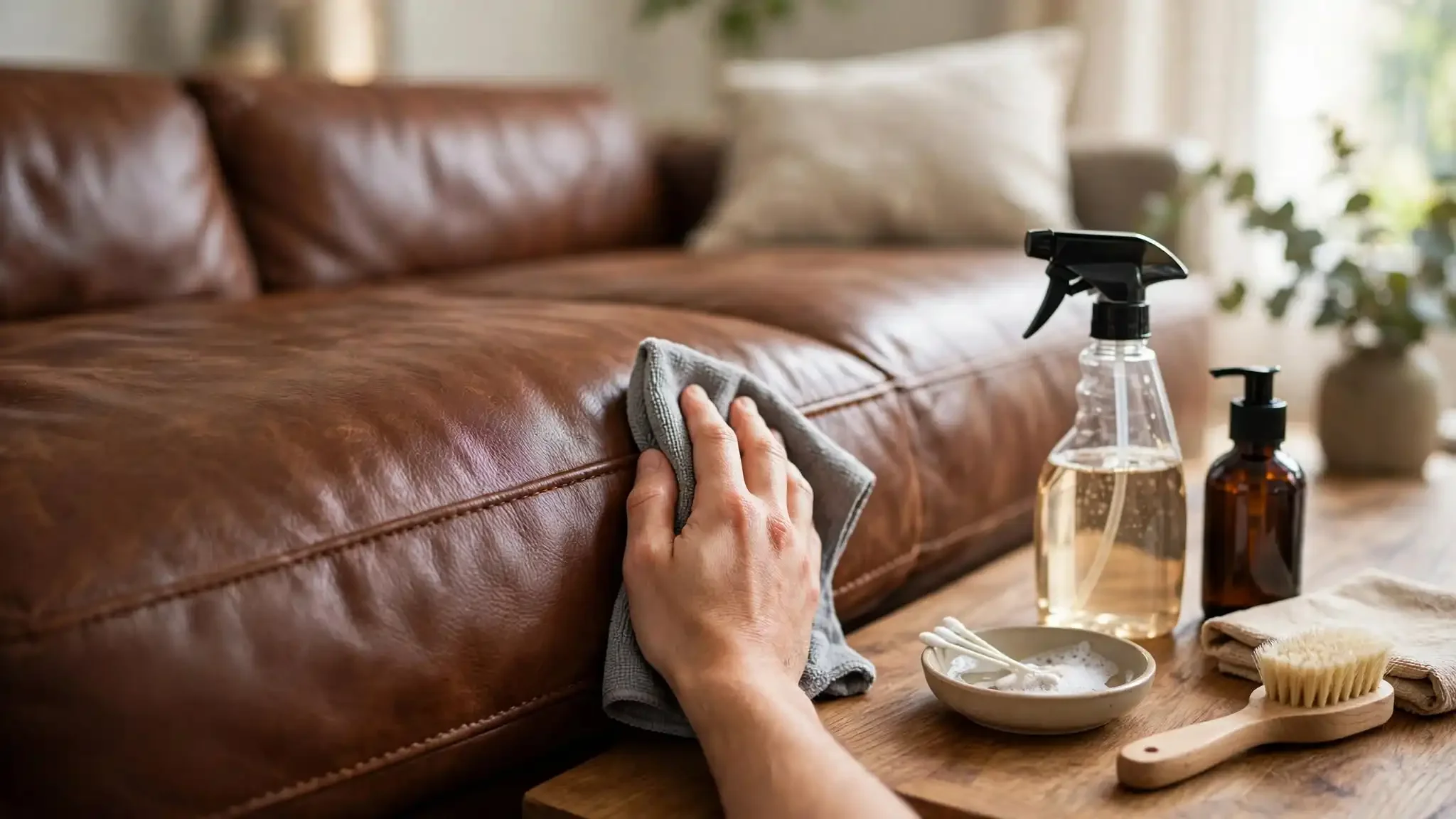
To clean a leather couch, vacuum with a soft brush attachment, wipe with a barely damp microfiber cloth and pH-balanced leather cleaner, dry naturally at room temperature, and apply a leather conditioner once dry. Do not use dish soap, baby wipes, or any product not made for leather.
That is the short answer. The longer answer matters because leather reacts differently depending on its type, the stain you are dealing with, and whether you have pets or children adding to the challenge. Get the approach wrong and you can set a stain permanently, strip the protective coating, or crack the surface.
This guide gives you the full picture: how to identify your leather, routine cleaning steps, stain removal by type, pet-specific advice, white leather care, and a clear schedule for what to do and when.
Know Your Leather Type Before You Touch It
This is the step almost every cleaning guide skips, and it is the most important one. The same cleaning method that works on pigmented leather can permanently damage aniline leather. Spend two minutes identifying what you have before you do anything else.
Pigmented or Protected Leather This is the most common leather used in couches sold in the US. It has a visible coating on top that gives it a uniform color and makes it more resistant to staining. If you drip a small amount of water on the surface and it beads up rather than soaking in, you have pigmented leather. This type is the most forgiving to clean.
Semi-Aniline Leather Semi-aniline has a lighter protective coating than pigmented leather, so it has more of the natural grain visible. Water absorbs slightly but not as fast as on aniline leather. It needs gentle care and is prone to showing water marks if over-wetted.
Aniline Leather Aniline leather has no surface coating. It looks rich and natural, shows the hide's texture clearly, and develops a deep patina over time. It also stains very easily and absorbs liquids fast. If a drop of water soaks into your couch immediately and leaves a dark patch, you likely have aniline leather. Home cleaning is very limited here. A professional leather cleaner is the safest option for anything beyond light dusting.
Faux Leather and PU Leather Faux leather is made from polyurethane and is increasingly common in mid-range couches. It looks similar to real leather but feels different and tends to peel and crack over time. It cleans easily with a damp cloth and mild soap but does not benefit from leather conditioner.
Nubuck Nubuck is real leather buffed to a velvety surface, similar to suede. Do not apply liquid cleaners to nubuck. Use a nubuck brush and dry treatments only.
If you are not sure what you have, check the care tag under a cushion or on the base of the couch. The code "W" means water-based cleaners are fine, "S" means solvent-only, "WS" means either works, and "X" means vacuuming only. If there is no tag, treat it as semi-aniline and proceed with the lightest method.
What You Need Before You Start
Gather everything before you begin.
Two or three clean microfiber cloths (lint-free)
Vacuum cleaner with a soft brush attachment
Distilled water (mineral deposits in tap water can leave marks on leather)
pH-balanced leather cleaner made for furniture leather
Leather conditioner appropriate for your couch's leather type
Small soft-bristled brush for seams and crevices
A separate container for water
How to Clean a Leather Couch: Step by Step
Step 1: Vacuum First
Before anything damp touches your couch, vacuum the entire surface using the soft brush attachment. Work along all the seams, between cushions, and along the back and sides. Crumbs, dust, and pet hair become abrasive when you start wiping. Removing them first protects the leather surface.
Tilt or remove cushions and vacuum the base of the couch where debris tends to collect. If leather looks clean to the eye, it still carries fine dust in the grain. Always vacuum first.
Step 2: Spot Test Your Cleaner
Apply a small amount of your leather cleaner to a hidden area: the back of the couch or the underside of an arm. Wait three minutes and check for discoloration, darkening, or any change in texture. If the leather looks the same, proceed. If anything changes, try a different product.
This two-minute step has saved countless couches. Do not skip it.
Step 3: Spot Clean Any Stains First
Before doing a full clean, address individual stains. Dampen a microfiber cloth with your cleaner and work on each stained area with very gentle, small circular motions. Use light pressure. You are lifting the stain, not scrubbing the leather.
For specific stain types, see the stain removal section below. Treating the right stain the right way gives you the best result.
Step 4: Clean the Full Surface
Dampen a clean microfiber cloth with distilled water and a small amount of pH-balanced leather cleaner. The cloth should feel barely damp, not wet. Work across the couch in sections: start with the seat cushions, move to the back panels, then the arms and sides.
Use gentle circular motions and light pressure. Overlap slightly between sections to avoid leaving lines. If the leather starts to feel damp rather than just slightly moist, you have used too much liquid. Move to a dry cloth and let that section air out before continuing.
Step 5: Wipe Off Residue
Go over the whole couch again with a clean cloth dampened with plain distilled water. This removes any leftover cleaner. Soap or cleaner residue left on leather dries the surface over time.
Step 6: Dry Naturally
Let the couch air dry at room temperature. Do not aim a fan directly at it. Do not use a hair dryer or put it near a radiator or heating vent. Allow at least two hours before sitting on it.
Step 7: Condition the Leather
Once the couch is completely dry, apply leather conditioner. Conditioning replaces the natural oils cleaning removes. Without it, the leather dries out slightly after every clean, and over months and years that adds up to cracking and stiffness.
Apply a small amount of conditioner to a clean cloth and work it into the leather in circular motions, covering the full couch. Let it absorb for 20 minutes, then buff off any excess with a dry cloth.
Stain Removal by Stain Type
| Stain Type | First Action | Treatment Method | Avoid |
|---|---|---|---|
| Oil / Grease | Blot immediately, no rubbing | Sprinkle cornstarch or talcum powder, leave 4 to 6 hours, brush off gently | Water (spreads oil deeper) |
| Ink / Pen | Act fast | Dab edge inward with cotton swab and rubbing alcohol. Test hidden area first. | Rubbing (spreads ink) |
| Water Mark | Dampen the full panel | Wipe entire panel with barely damp cloth so the line dries evenly. Condition after. | Drying with heat |
| Food / Sauce | Lift solid residue gently first | pH-balanced leather cleaner on a damp cloth, blot gently, wipe clean | Dish soap, scrubbing |
| Red Wine / Coffee | Blot immediately with dry cloth | Blot repeatedly with clean dry cloth, then damp cloth with leather cleaner. Do not rub. | Leaving it to sit |
| Pet Urine | Blot up all liquid immediately | Enzyme-based cleaner safe for leather, blot and air dry. Condition after. | Vinegar directly on leather (damages finish) |
| Mold / Mildew | Take couch away from fabric furnishings first | Equal parts white vinegar and water, dab the area, dry fully, then condition | Sealing off airflow after treatment |
| Dye Transfer (from clothes) | Act quickly | Leather dye transfer remover product. Professional help for large or set stains. | Bleach or any whitening product |
| Body Oil Buildup | Prevention is better than treatment | Leather cleaner on the armrests and headrest area monthly. Full clean quarterly. | Letting buildup harden over time |
Oil and Grease
Blot up any excess with a dry cloth immediately. Do not rub or apply water. Pour a small amount of cornstarch or unscented talcum powder over the stain and leave it for four to six hours, or overnight for a heavy stain. The powder pulls the oil out of the leather fibers. Brush it away gently and repeat if the stain remains.
Ink
Use a cotton swab dipped in rubbing alcohol and work from the outer edge of the ink toward the center. Turn the swab frequently so removed ink does not transfer back onto the leather. Test on a hidden area first, since alcohol can lighten some leather finishes. For dried or deep ink, a dedicated leather ink remover product works better.
Red Wine, Coffee, or Tea
Blot immediately with a clean dry cloth, pressing firmly without rubbing. Change cloths as they absorb liquid. Once you have blotted up as much as possible, apply leather cleaner on a damp cloth and work the area gently. Do not let these stains sit even for a few minutes. The tannins in red wine stain leather deeply and quickly.
Mold and Mildew
This happens more often than people expect, especially in basements, humid rooms, or when a couch has been covered and not aired for a long period. Mix equal parts white vinegar and water. Dampen a cloth in the solution and wipe the affected area. The vinegar kills the spores. Wipe with a clean damp cloth, let it dry fully in a well-ventilated space, then condition the leather. Address the room's airflow or humidity to prevent recurrence.
Cleaning a Leather Couch with Pets in the House
This is one of the most searched follow-on topics for leather couch cleaning, and no competing guide covers it properly. Here is what pet owners actually need to know.
Pet Hair Regular vacuuming with a soft brush attachment handles pet hair on leather better than any other method. A lightly dampened rubber glove rubbed across the surface also collects pet hair efficiently. Do not use lint rollers with strong adhesive on leather surfaces, as they can lift the protective coating over time.
Pet Scratches Small surface scratches from cat claws or dog nails can sometimes be buffed out with a leather conditioner and a soft cloth. The natural oils fill and minimize light surface scratches over time. Deeper scratches need professional repair. Keeping nails trimmed and using a throw blanket on the couch are the best prevention strategies.
Pet Urine This needs to be addressed immediately. Urine penetrates leather fast and the ammonia in it can damage both the surface coating and the leather beneath. Blot up as much liquid as you can with a dry cloth, pressing firmly. Then apply an enzyme-based cleaner designed for upholstery, which breaks down the urine proteins that cause lasting odor. Blot the area clean and let it air dry completely. Condition after drying. Do not pour vinegar directly onto real leather as it strips the finish.
Pet Odors For lingering pet smell in leather, wipe the couch down with a barely damp cloth, then apply a leather deodorizing spray designed for upholstery. Some people use a very light misting of diluted baking soda solution on the cushion covers, but this should be used with caution on pigmented leather and avoided entirely on aniline leather.
Cleaning a White or Light-Colored Leather Couch
White and light-gray leather couches have become increasingly popular in US homes over the last few years, and they come with specific cleaning challenges that dark leather does not.
Light leather shows dye transfer from dark clothing very easily. If you regularly sit on a white leather couch in dark jeans, the denim dye transfers onto the leather over time and builds up. The prevention is a leather protectant spray applied every three to four months, which creates a barrier that slows the transfer.
For cleaning white leather, use a leather cleaner specifically labeled as safe for light or white leather. Some cleaners contain ingredients that work fine on dark leather but leave slight discoloration on white. Test on the back of the couch before applying anywhere visible.
Avoid leaving any moisture on white leather longer than necessary. Water marks show more visibly on light leather because they dry with a slightly different sheen.
For yellowing that develops on white leather over time, especially in rooms with direct sun exposure, a leather color refresher product for white leather can restore the original tone. This is not a DIY process for heavy yellowing, but light refreshing products are available that work well at home.
Cleaning a Large Leather Sectional Sofa
Sectionals present a specific challenge because they are large, heavy, and have more joints and connections between sections than a standard couch. A few practical points for sectional cleaning:
Clean one section at a time so you are not reaching across the full piece or letting one section get overly damp while you finish others. Disconnect sections where possible to get into the connection gaps, which collect significant debris.
Pay attention to the creases where sections meet. These areas trap dust and body oils and are often the first to show wear. Work a soft brush along these seams before wiping.
Condition each section individually after cleaning. A full sectional takes more conditioner than most people expect, and under-conditioning the connecting areas is a common cause of cracking at those stress points.
What Never to Use on a Leather Couch
This section is completely absent from every competitor on this list. These are the products people commonly reach for that cause the most damage.
Dish Soap A very small amount in water is acceptable for a one-time clean on pigmented leather. Used regularly, even gentle dish soaps strip the leather's oils and dry out the surface. Use a leather-specific cleaner instead.
Baby Wipes Most baby wipes contain alcohol, fragrances, and preservatives that break down leather's protective coating over repeated use. They feel gentle but are not made for leather.
Vinegar Applied Directly White vinegar diluted in water is useful for mold treatment, but applying straight vinegar to leather strips its protective coating. Always dilute it and use it sparingly and specifically, not as a general cleaner.
Baking Soda Often suggested for odors. Baking soda is mildly abrasive and alkaline. It can dull or lighten the finish on leather, especially on aniline and semi-aniline types.
Nail Polish Remover Acetone dissolves leather's surface coating and permanently strips color. Even a small amount applied to colored leather leaves a pale, damaged patch.
Olive Oil, Coconut Oil, or Baby Oil These darken leather unevenly, attract dust, and go rancid inside the material over time. Dedicated leather conditioners are widely available and inexpensive.
Hairdryer or Heater Heat applied during drying causes uneven evaporation, which leads to stiffness and cracking. Leather must always air dry at room temperature.
Leather Couch Cleaning and Care Schedule
| Task | Frequency | Notes |
|---|---|---|
| Vacuum with soft brush | Once a week | Prevents dust and crumbs becoming abrasive against the leather |
| Wipe down armrests and headrest | Every 2 to 3 weeks | These areas collect body oils fastest |
| Spot clean spills and stains | Immediately when they occur | Delay is the primary cause of permanent stains on leather |
| Full surface clean | Every 2 to 3 months | More often for households with children, pets, or heavy use |
| Condition the leather | Every 6 to 12 months | Always condition after a full clean. Dry climates and air-conditioned rooms may need it more often. |
| Apply leather protectant spray | Every 3 to 4 months | Especially useful for white and light-colored leather |
| Rotate and reposition cushions | Monthly | Promotes even wear across the full couch |
| Professional deep clean or repair | Every 2 to 3 years | Or when cracking, fading, or stains appear that home methods cannot address |
What to Do When Your Leather Couch Starts Cracking
Cracking leather is a sign the material has dried out over time, usually from under-conditioning, direct heat exposure, or sunlight. Small surface cracks are a warning, not a death sentence for your couch.
At home, apply a leather conditioner generously to the cracked areas and let it absorb for 30 minutes. Buff off excess. Do these two or three times over a week. Light surface cracking in the finish layer often softens visibly with consistent conditioning.
For deeper cracks that have reached the leather itself, home conditioning will not fully repair them. A leather crack filler and color-matched dye, applied by a professional, can make cracks invisible. Doing this early prevents the cracks from spreading into larger splits that require more extensive repair.
If your leather couch has cracking, tears, faded patches, or failing stitching, the team at Lebanon Leather Work provides professional leather upholstery repair</a> for sofas, sectionals, chairs, and other leather furniture across New Jersey. Repairs typically cost 60 to 80 percent less than replacing the couch and are often invisible when completed correctly. Free estimates are available for all upholstery repair work.
When to Call a Professional Instead of Cleaning at Home
Home cleaning handles maintenance. These situations call for professional help.
You should call a professional when the leather has surface cracks or tears that home conditioning is not improving, when a stain has set and resisted two or three rounds of home treatment, when there is widespread color fading across a section of the couch, when stitching along seams is failing or has pulled apart, or when the couch has a lingering odor after thorough cleaning.
Attempting aggressive home treatments on these issues almost always makes the problem harder and more expensive to fix. A professional leather craftsman can often restore what looks like permanent damage to a condition that is invisible to a seated person.
Lebanon Leather Work handles leather sofa and upholstery repair across all 21 New Jersey counties and accepts shipped pieces from clients nationwide. Contact LebanonLeatherWork@gmail.com for a free assessment before deciding whether to repair or replace.
Frequently Asked Questions
How do you clean a leather couch at home without damaging it?
Vacuum first with a soft brush attachment, then wipe with a barely damp microfiber cloth and a pH-balanced leather cleaner. Work in sections with gentle circular motions. Wipe off any cleaner residue with a clean damp cloth and let it air dry at room temperature. Apply leather conditioner once fully dry.
How often should you clean a leather couch?
Vacuum weekly. Wipe down the armrests and headrest area every two to three weeks. Do a full surface clean every two to three months, more often in households with pets or children. Condition the leather every six to twelve months, always after any full clean.
Can you use dish soap to clean a leather couch?
A very small amount diluted in water is acceptable for a one-time clean on pigmented leather. Used regularly, dish soap strips the leather's natural oils and dries the surface out over time. A cleaner made specifically for leather is a better choice for routine use.
How do you get pet urine smell out of a leather couch?
Blot up all liquid immediately with a dry cloth. Apply an enzyme-based upholstery cleaner designed to break down urine proteins and blot clean. Allow the area to air dry completely, then apply leather conditioner. For persistent odors, a leather deodorizer spray can help. Do not apply vinegar directly to real leather as it strips the protective coating.
What should you never put on a leather couch?
Never use baby wipes, dish soap used regularly, nail polish remover, baking soda, olive oil, coconut oil, vinegar applied straight (undiluted), or any heat source for drying. All of these either dry out the leather, strip its protective coating, or cause surface discoloration over time.
How do you remove ink from a leather couch?
Dip a cotton swab in rubbing alcohol and dab from the outer edge of the ink mark inward. Turn the swab frequently to avoid spreading the ink. Test on a hidden area first. For dried or deeply set ink, a dedicated leather ink remover product gives better results. If the ink mark is large, professional stain removal is the safer option.
How do you clean a white leather couch?
Use a leather cleaner specifically labeled as safe for white or light leather. Test on the back of the couch first. Remove dye transfer from dark clothing with a dye transfer remover product for leather. Apply a leather protectant spray every three to four months to slow future dye transfer. For yellowing that develops over time, a color-refreshing product for white leather can restore the original tone.
My leather couch is cracking. Can it be repaired?
Yes, in most cases. Small surface cracks in the finish layer often improve with consistent conditioning applied several times over a week. Cracks that have reached the leather itself need professional repair, typically using leather crack filler and color-matched dye. Lebanon Leather Work provides leather couch repair across New Jersey and accepts mail-in pieces from clients nationwide. Free estimates are available for all leather upholstery repair work.